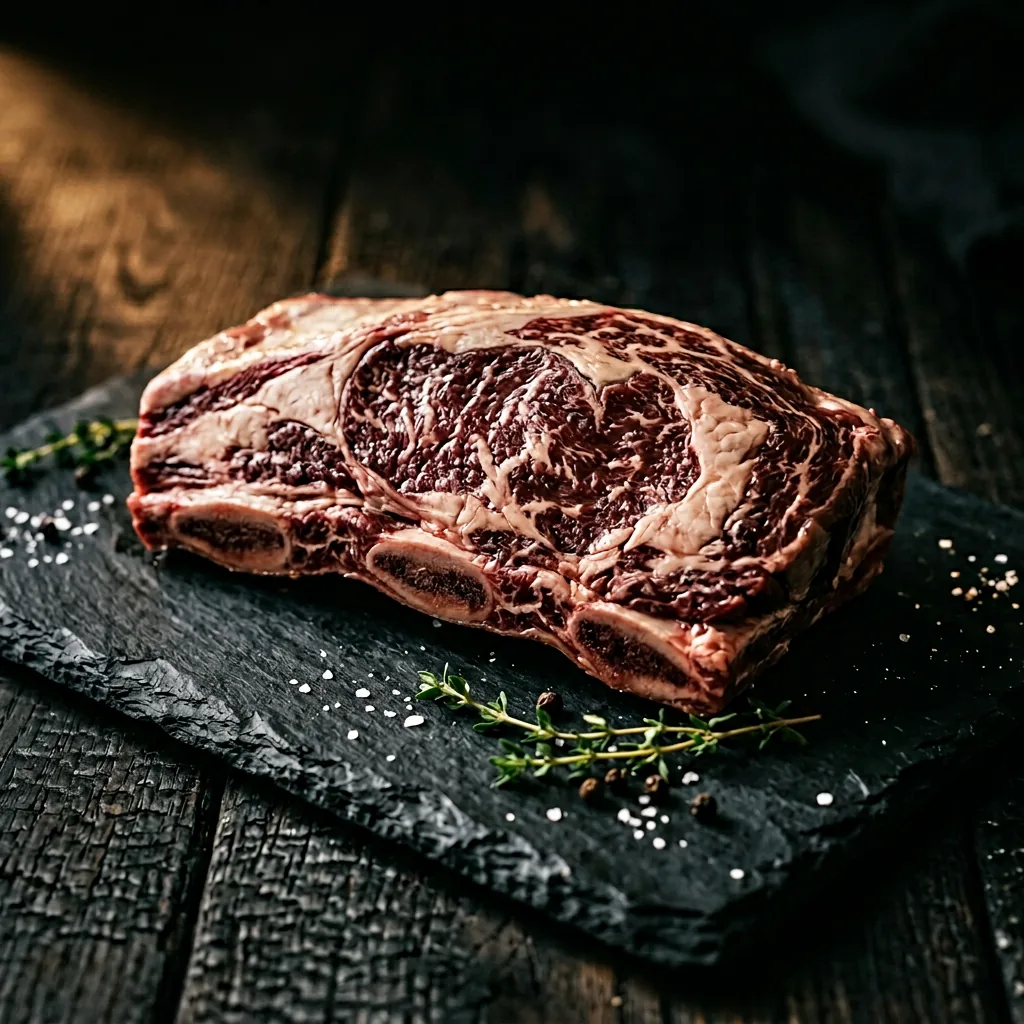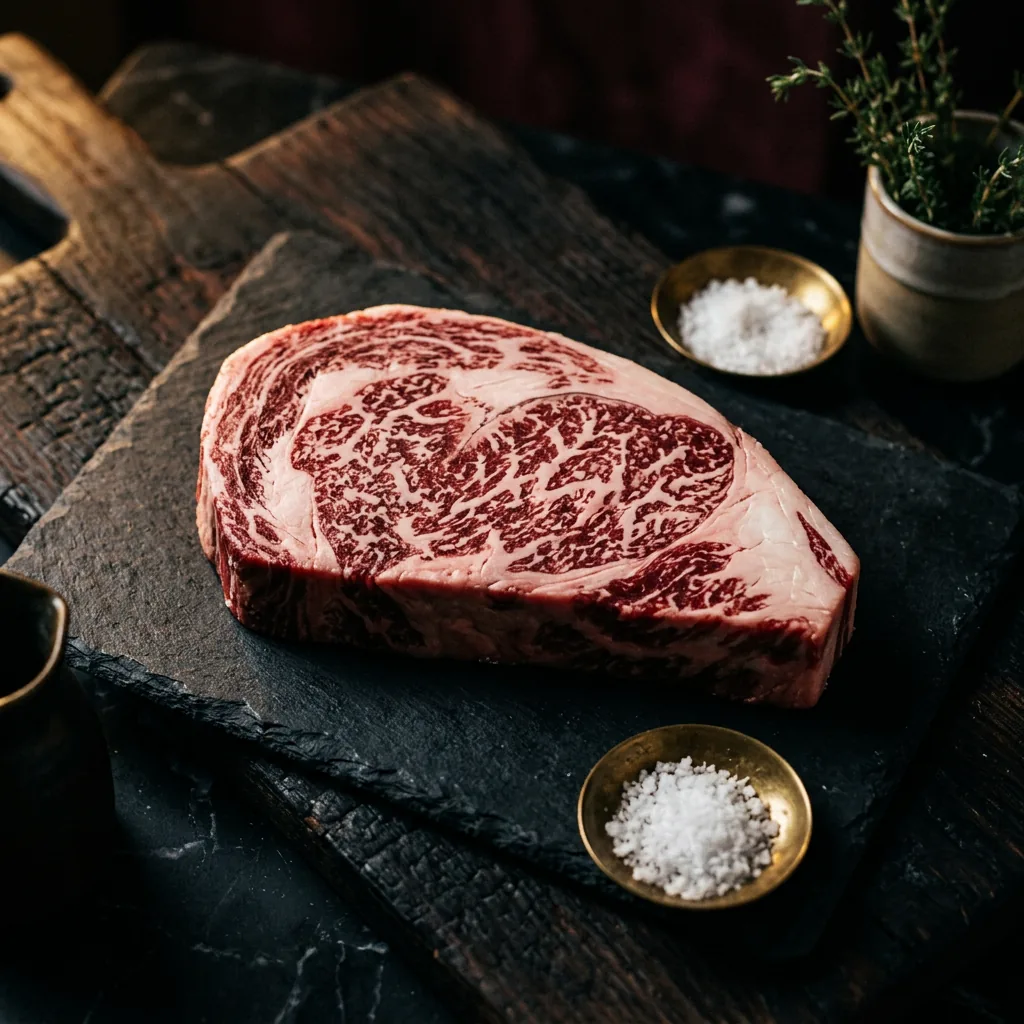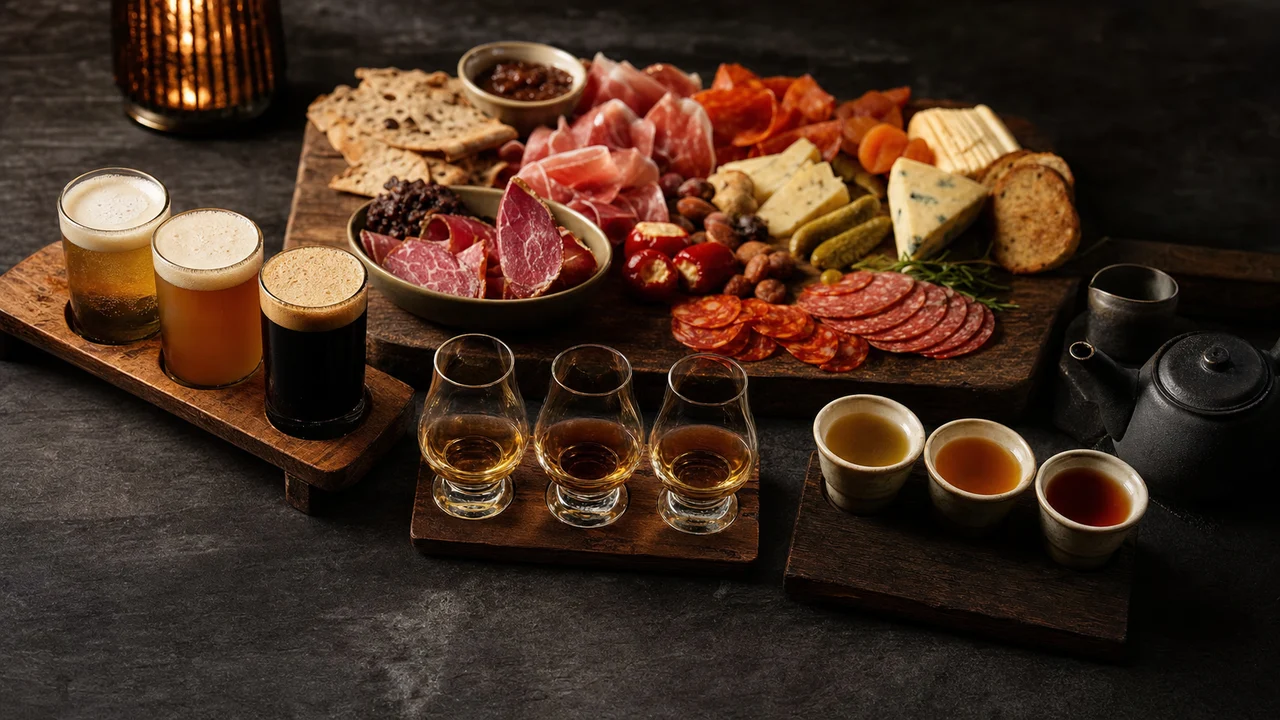
Wine occupies the most prominent position in the conversation about meat pairings, but it is far from the only beverage capable of performing that role with intelligence and precision. A well-chosen Belgian dubbel rivals a great Bordeaux beside braised short ribs. The right aged Scotch whisky completes an A5 Wagyu tasting in ways that no tannic red wine can. And in cultures where viticulture never established itself — Japan, China, Korea, Taiwan — tea has functioned as the primary beverage companion for roasted and grilled meat for centuries, with a structural logic that maps almost perfectly onto the wine pairing framework. Understanding the shared principles across beer, spirits, and tea gives you complete flexibility at the table.
The Shared Framework: Three Levers Across Every Category
All successful beverage pairings share the same structural requirements regardless of what is in the glass or pot: something to cut richness and refresh the palate (acidity, carbonation, or astringent tannin), sufficient weight to stand beside the protein without disappearing, and aromatic complexity that complements rather than collides with the dominant character of the dish. Wine achieves these through fermentation chemistry and oak aging. Beer achieves them through carbonation, hop bitterness, and malt character. Spirits through distillation and barrel maturation. Tea through oxidation, roasting, and polyphenolic tannins from the leaf. Different chemistry, shared destination.
Beer: Two Levers Wine Cannot Replicate
Beer pairs through the same levers as wine — acidity, weight, and structure — but adds two capabilities wine cannot deliver: carbonation and hop bitterness.
Carbonation is a physical palate cleanser. Fine CO₂ bubbles scrub fat from the palate surface in a way that flat beverages cannot, making even a moderately bitter beer feel more refreshing than a heavy wine alongside a fatty cut. A Czech pilsner alongside Wiener Schnitzel works because the carbonation does exactly what high wine acidity does, at lower alcohol.
Hop bitterness from iso-alpha acids can amplify char flavors in grilled meat, mirror gamey intensity in venison, or cut through the sweetness of a long-braised rib. Applied incorrectly — a heavily hopped IPA beside delicate veal — the bitterness overwhelms everything subtle.
| Beer Style | Best Meat Pairings | Key Mechanism |
|---|---|---|
| Belgian dubbel | Braised short ribs, beef cheeks | Dried fruit and warm malt echo slow-cook sweetness |
| Imperial stout | Grilled ribeye, charred brisket | Roast-on-roast: coffee-chocolate amplifies Maillard crust |
| Hefeweizen | Pork sausage, grilled chicken | Banana esters + clove phenols harmonize with spiced meat |
| Saison | Lamb, game birds | Earthy, peppery wild-ferment character matches lanolin and herb |
| Czech pilsner | Veal schnitzel, pork loin | Clean bitterness + fine carbonation = neutral elegance |
| Rauchbier (Bamberg-style) | Pork belly, smoked brisket | Beechwood-smoked malt beside smoked fat: regional coherence |
Belgian dubbel beside braised short ribs is one of the most underappreciated pairings in the meat-and-beverage canon. The caramelized fig, raisin, and dark cherry character of a great dubbel — Westmalle, Rochefort 8, Chimay Red — echoes precisely the slow-cooked sweetness produced by collagen conversion over several hours in a braising liquid. Imperial stout beside a ribeye with a hard sear is roast-on-roast: the coffee, dark chocolate, and roasted grain of a well-made imperial stout amplifies the pyrazine and furan compounds of the Maillard crust. Rauchbier from Bamberg — Schlenkerla's beechwood-smoked malt beside pork belly — is arguably the most geographically coherent pairing in German culinary tradition: smoked cereal beside smoked fat, from the same cultural origin.
Pro tip: Serve beer at the correct temperature. Belgian abbey ales and imperial stouts benefit from 10–13°C — too cold suppresses the ester complexity entirely. Czech pilsners are best at 6–8°C where the carbonation is crisp. Serving a dubbel ice-cold flattens it to something unrecognizable.
Spirits: Structural Weight and Aromatic Resonance
Spirits are almost never appropriate as a primary pairing at full pour sizes — the alcohol concentration overwhelms food perception when consumed continuously throughout a meal. Instead, they function most effectively as complementary small pours: 1.5–2cl beside a final course or as a deliberate flavor-bridge moment at the table.
Aged Speyside or Highland Scotch alongside wagyu a5 ribeye has genuine structural logic. A 15-year Glenfarclas or Glenlivet carries caramel, dried fruit, and vanilla from sherry cask — a flavor profile that mirrors the fat-derived richness of A5 wagyu without adding aggressive tannin. Islay peat clashes with delicate wagyu marbling and is better saved for after the meal.
Cognac VSOP or XO beside dry-aged ribeye is grounded in shared maturation chemistry. Both have undergone extended oxidative processes — enzymatic aging in the beef, barrel maturation in the spirit — producing caramelized, nutty, oxidized compounds on the same aromatic spectrum. They speak the same molecular language and recognize each other on the palate.
Mezcal joven beside wood-fired short ribs is a smoke-on-smoke pairing of startling directness. The charred agave heart character — earthy, volcanic, with clean dry smoke — echoes live-fire cookery in a way that no other spirit category matches.
Aged rum (Caribbean, 12–18 years) beside pork belly pairs the sugarcane-derived warmth, tropical fruit, vanilla, and caramelized complexity of aged rum against the slow-rendered fat of roasted pork. The sweetness of the spirit and the sweetness of slow-cooked fat are mutually reinforcing rather than redundant.
Pro tip: When spirits are on the table alongside food, use smaller pour sizes than you would for after-dinner service — 1.5–2cl rather than 4–5cl. The goal is aromatic companionship, not alcoholic competition. A small measure of the right spirit is more instructive than a large one.
Tea: The Ancient Pairing Framework
In Japan, Taiwan, mainland China, and Korea, tea is the original sophisticated pairing practice — developed over centuries of deliberate matching of different tea styles with grilled, roasted, braised, and steamed meat. The structural mechanism directly parallels wine: polyphenolic tannins from tea leaves bind to fat and protein on the palate, refreshing the mouth between bites; the weight and aromatic character of the brewed tea provide structural presence alongside the dish.
Aged pu-erh beside wagyu a5 ribeye is one of the most compelling non-alcoholic pairings available. A well-stored sheng or shou pu-erh at 10–15 years carries earthy, mineral, camphor, and mushroom complexity that cuts the fat of extreme marbling without any alcohol interfering with the subtle fat-derived flavors of the meat. In premium wagyu tasting contexts in Tokyo and Kyoto, aged pu-erh tea service is increasingly offered alongside — and preferred over — wine for guests who want to perceive the full nuances of A5 fat character.
Roasted oolong — Da Hong Pao, Dong Ding, heavily oxidized Tieguanyin — beside Korean BBQ short rib (galbi): the toasted, malt-adjacent, floral-mineral character of heavily roasted oolong harmonizes directly with caramelized meat surface from an open grill. The roasting of the tea leaf mirrors the Maillard products on the meat in a way that makes the pairing feel inevitable.
Smoked Lapsang Souchong beside venison or wild boar represents the most literal aromatic pairing in the tea category. This Fujian province black tea, dried over pinewood fires, carries a distinctly smoky, piney, intensely aromatic character that maps precisely onto the forest character of lean, wild-harvested game.
Hojicha — roasted Japanese green tea — beside lighter pork preparations, roasted chicken, or veal provides a soft, nutty, barely-bitter companion at low caffeine levels, bridging delicate protein and structural pairing without asserting itself inappropriately.
Summary
The structural logic of successful beverage pairing — provide acidity or carbonation, match weight to weight, find aromatic resonance without collision — operates identically whether the glass holds wine, beer, whisky, or brewed tea. Beer adds carbonation and hop bitterness to the toolkit. Spirits offer concentrated aromatic resonance in small doses. Tea provides tannin, mineral complexity, and palate refreshment at zero alcohol. The grape is one tool among many, and the most complete pairing vocabulary moves fluently between all four categories depending on what the dish, the occasion, and the table demand.