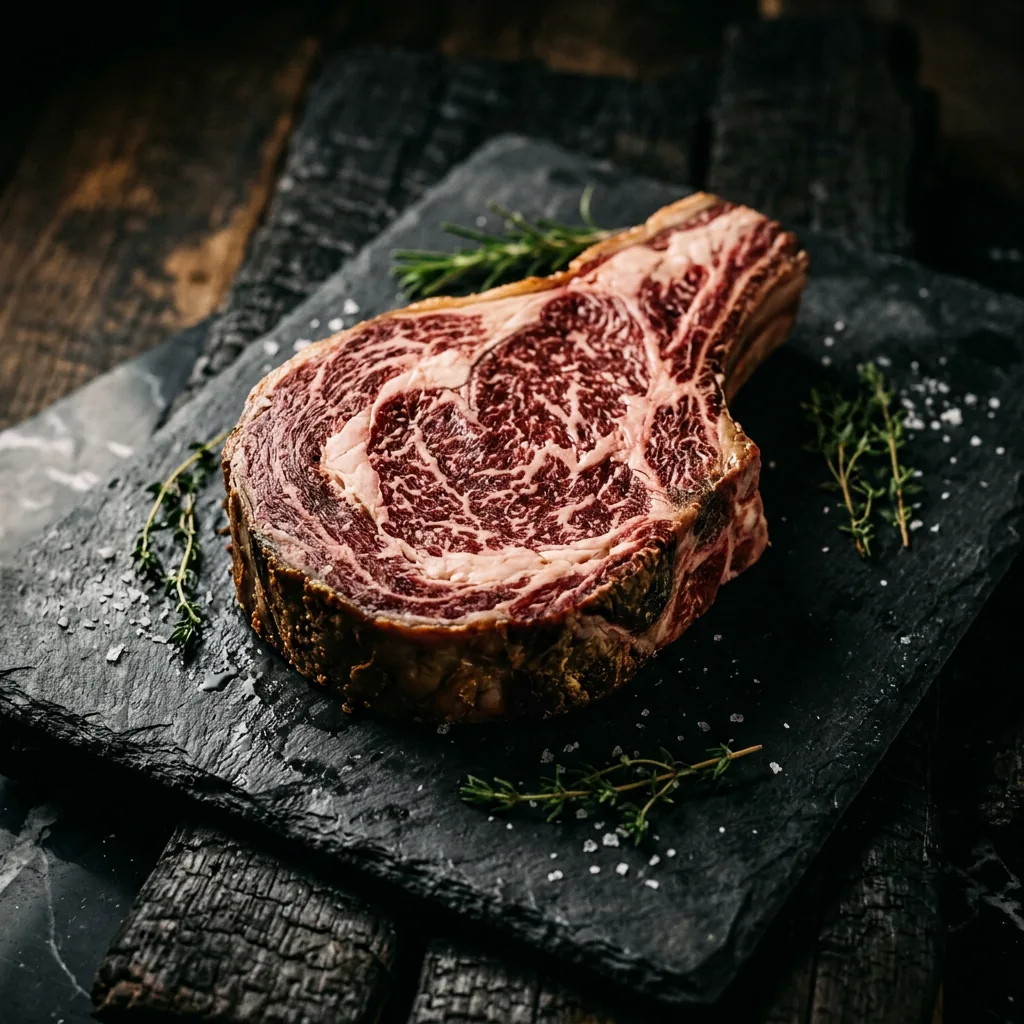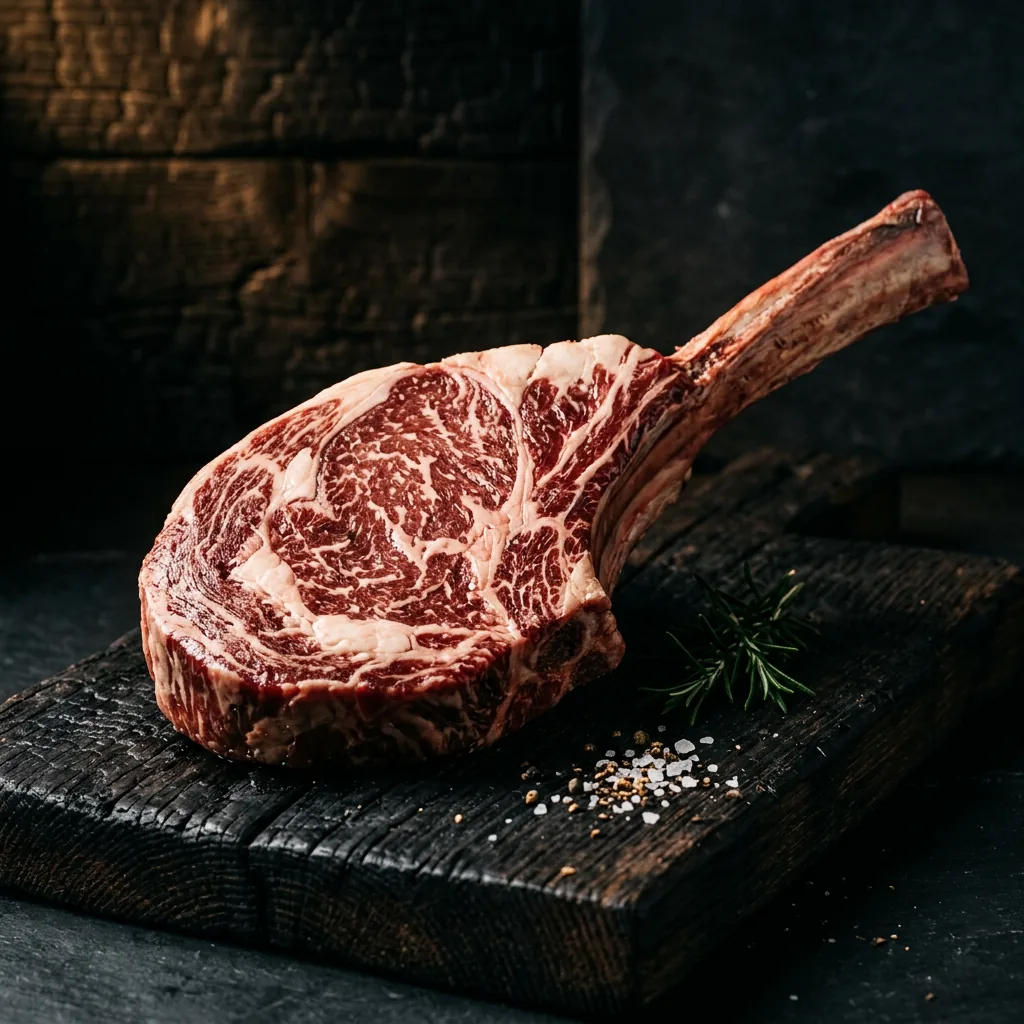
All beef is aged. From the moment of slaughter, enzymatic and biochemical processes begin transforming raw muscle into the complex, nuanced ingredient we call steak. The question is never whether beef is aged, but how — under what conditions, for how long, and what those conditions accomplish at a molecular level. Wet-aging, the modern industrial default, produces tender, clean-tasting beef in 14 to 28 days with virtually no weight loss. Dry-aging — exposing the primal cut to controlled cold, specific humidity, and constant circulating air for 28 to 120 or more days — produces something categorically different: concentrated, layered, almost cheese-like in its mature flavor, with a texture that no other process can replicate. Understanding both paths precisely allows you to choose with intention rather than accept whatever arrives in the case.
What Aging Does at the Molecular Level
Two distinct processes work simultaneously during any form of aging, and both are essential to understanding why aged beef eats differently from fresh-slaughtered product.
The first is enzymatic tenderization. Calpain proteases — a family of calcium-dependent enzymes naturally present in muscle tissue — are the primary agents. They progressively cleave the structural proteins that bind muscle fibers together, particularly the Z-disk proteins troponin-T and desmin that anchor the contractile filaments of the sarcomere. As these structural connections are dismantled, the grain opens, the fibers slide more freely, and the steak becomes measurably more tender under bite. A parallel family, the cathepsin enzymes, operates in a more acidic micro-environment and contributes additional fragmentation of connective tissue proteins. Both families are active in both wet and dry aging — this is why virtually all reputable steakhouses serve beef aged at minimum 21 days, regardless of method. Fresh beef, under 14 days from slaughter, is measurably tougher.
The second process is moisture loss — and here the two methods diverge fundamentally. In wet aging, the beef is vacuum-sealed in its own juices almost immediately after slaughter and remains in that anaerobic environment throughout the cold chain. Virtually no moisture escapes the bag. In dry aging, exposure to controlled circulating air drives continuous evaporation from the exposed surface of the primal. A 5 kg rib primal loses 15–25% of its starting weight over 30–45 days. The flavor compounds that survive this moisture loss — maillard precursors, fat-soluble aromatics, organic acids, amino acids — are proportionally concentrated per gram of remaining meat. This is the chemical basis for the dramatic flavor intensity difference between a 45-day dry-aged ribeye and a wet-aged one from the same animal and feeding program.
The Wet Path: Clean, Reliable, Underestimated
Wet-aged beef has an image problem in enthusiast circles that it does not deserve. The method — vacuum-sealing primals at approximately 0–2°C and holding them through distribution — is not a cost-cutting shortcut but a legitimate aging pathway with a distinct flavor profile. The anaerobic (oxygen-free) environment created by the vacuum bag prevents the oxidative rancidity and mold colonization that would occur in exposed meat, meaning the beef's natural flavor compounds evolve cleanly without the fungi-derived notes that characterize dry-aged product.
Wet-aged beef at 28+ days from quality cattle — Black Angus, Hereford, or Charolais — is genuinely excellent. The calpain enzymes work just as efficiently in the bag as in the open air; tenderness development is comparable to dry-aging at equivalent durations. The flavor is accessible, forward, and clean: the breed characteristics, the feeding program (grain-finished versus pasture-raised), and the animal's genetics all speak clearly through a wet-aged product in a way that can be partially obscured by the intensity of extended dry-aging.
Most premium supermarket beef in Germany — including top-tier Black Angus and premium Simmental programs — is wet-aged. It requires no dedicated infrastructure, carries no weight-loss cost, and produces consistent results across enormous production volumes. At the butcher counter, wet-aged beef at 21–28 days from a named breed and a transparent supply chain is a perfectly honest choice.
Pro tip: Wet aging gives you tenderness without surprise. Dry aging gives you tenderness with a story. Neither is objectively superior — they are different expressions of the same raw material.
The Dry Path: Concentration, Funk, and the Pellicle
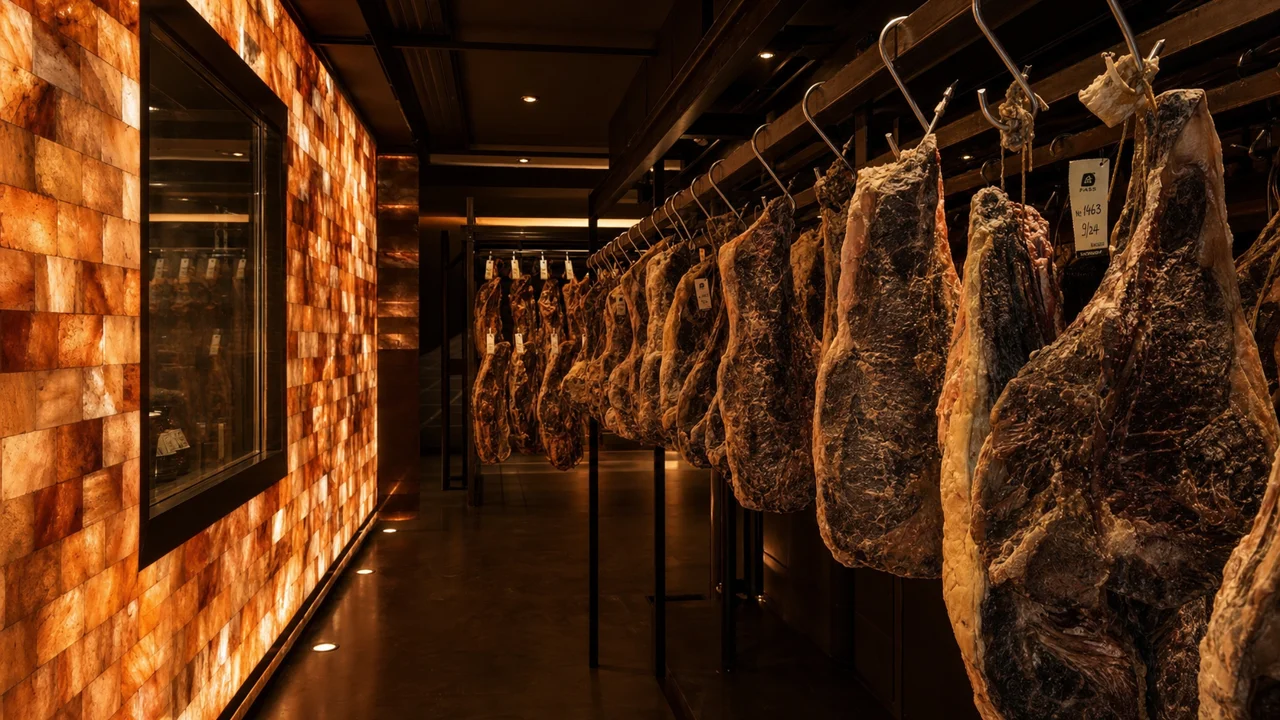
Dry-aging is performed in dedicated chambers at precisely 1–3°C with 80–85% relative humidity and constant air movement — a balance point where evaporation is substantial but surface desiccation is not so extreme that it creates cracking or uncontrolled moisture loss. HEPA filtration is common in commercial operations to control which microorganisms colonize the exposed meat surface.
Three simultaneous processes define the dry-aged result:
Moisture concentration is the most important and most misunderstood effect. As water evaporates, every flavor-active compound per gram of remaining meat becomes more intense. The beef-forward umami character deepens. Fat-soluble aromatics in the intramuscular fat — which survive the evaporation intact — become proportionally richer. A tomahawk that has lost 20% of its starting weight through evaporation delivers 20% more flavor intensity per gram in the surviving meat.
Surface enzymatic activity from naturally occurring molds — principally Thamnidium elegans and related species of the Mucorales order — colonizes the hardened outer pellicle. These molds produce their own enzymatic activity (including lipases that break down surface fats) and aromatic metabolites: compounds reminiscent of blue cheese, toasted nuts, aged butter, and earthy grain. This mold crust is entirely trimmed before service, but the aromatic compounds it produces penetrate several millimeters into the sub-surface meat, contributing the characteristic "funk" that polarizes inexperienced tasters and delights connoisseurs.
Interior calpain activity continues identically to wet aging, though some researchers suggest the higher enzyme-to-substrate concentration created by moisture loss may enhance tenderization slightly — the mechanism is the same but the effective concentration of both enzymes and substrates increases as water departs.
| Aging Duration | Dominant Character | Trimming Loss | Approx. Price Premium |
|---|---|---|---|
| 21–28 days (wet) | Clean, breed-forward, tender | <1% | None (baseline) |
| 28 days (dry) | Mild concentration, early depth | 15–18% | 30–50% |
| 45 days (dry) | Pronounced funk, nutty, intense | 22–28% | 80–120% |
| 90 days (dry) | Blue-cheese dominant, polarizing | 30–35% | 150–200%+ |
| 120+ days (dry) | Highly specialized, near-cheese | 35–40%+ | By negotiation |
Pro tip: At 28 days of dry-aging, you get tenderness and mild concentration. At 45 days, the cheese-like funk begins in earnest. Beyond 90 days, you are in highly specialized, polarizing territory — an experience completely unlike conventional steak, and one that requires no accompaniment.
The Economics of Dry-Aging
The price differential between wet-aged and dry-aged beef has a straightforward mechanical explanation. A dry_aged_ribeye at 45 days from a Munich specialty butcher typically runs €90–130/kg versus €30–45/kg for a comparable wet-aged cut of the same breed. This is not premium pricing for its own sake. The 22–28% evaporative weight loss means you are paying for the starting primal weight but receiving only 72–78% of it as sellable meat. Add the 6–8% trim loss from removing the dried pellicle and any moldy or discolored surface, plus the infrastructure cost of dedicated aging chambers, temperature control, humidity management, and the carrying cost of capital tied up in aging inventory — and the €90–130/kg figure is arithmetically honest.
At a restaurant, the markup amplifies further: a 400g dry-aged rib cut served as a main course at €85–100 reflects not just the meat cost but the storage, the loss, and the expertise of whoever managed the aging program.
Choosing Between Them
The choice is not a quality judgment; it is an occasion judgment. For a clean, precise steak that allows the breed, the feed, and the animal's genetics to speak clearly — wet-aged from a reputable source at 21–28 days. For an occasion where the beef itself is the event, where the conversation turns to what is on the plate because it tastes like almost nothing else — dry-aged at 45+ days from a butcher who can tell you the age, the primal cut, and the animal. Neither is universally better. A wet-aged A5 Wagyu ribeye will outperform a poorly managed 60-day dry-aged commodity cut every time. The aging method is a multiplier on underlying quality, not a substitute for it.
For the thoughtful buyer: ask your butcher the age, the method, and whether the beef has been vacuum-packed at any point in the process. If it spent time in a bag before the dry-aging room, the mold colonization and surface concentration effects are compromised — you are paying dry-aged prices for wet-then-dry product, which is a legitimate but distinct process.
The Bottom Line
Wet-aging tenderizes cleanly, preserves the breed's character, and delivers consistent results at accessible price points. Dry-aging concentrates flavor through evaporation, introduces complex mold-derived aromatic compounds, and produces a product that is categorically different from any other beef — richer, more intense, and deeply polarizing in the best possible sense. Understanding both methods at a molecular level allows you to buy with knowledge, ask the right questions of your butcher, and choose the right expression of beef for every occasion.