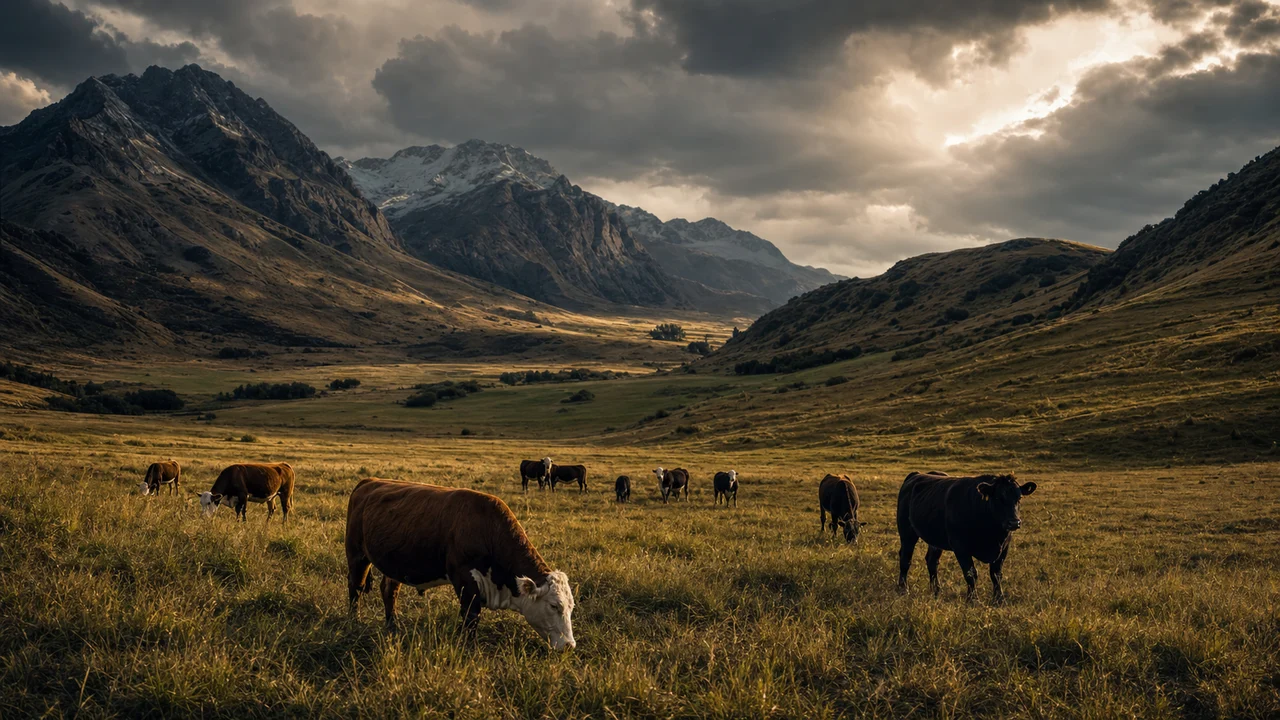
In wine, terroir is the accepted language for the way a place — its soil, climate, aspect, elevation, and accumulated human tradition — shapes the character of what grows there. The same concept applies, with equal legitimacy and precision, to meat. A Herdwick lamb raised on the mineral-rich fells of Cumbria tastes categorically different from a Dorset lamb on chalk downland. A Pata Negra Ibérico pig finished on Extremadura acorns during the montanera is not merely a higher grade of pork — it is a fundamentally different product, culinarily and biochemically. Understanding these differences is the foundation of meat sommelier expertise.
What Is Meat Terroir?
Meat terroir describes the cumulative, measurable effect of breed genetics, pasture botanical composition, local microclimate, elevation, animal husbandry tradition, water mineral content, and post-slaughter processing on the flavor, texture, fat composition, and character of the final product.
The concept has formal recognition in European food law: Protected Designation of Origin (PDO) and Protected Geographical Indication (PGI) status for meats codifies the link between geography and quality in legally binding form. Designations such as Agneau de Pré-Salé, Ternasco de Aragón, and Bœuf de Charolles represent centuries of accumulated empirical knowledge that a specific combination of place, breed, and practice produces something sufficiently distinctive to protect legally.
The evidence for meat terroir is not anecdotal. Gas chromatography studies of lamb fat from different British regions consistently identify distinct terpene and volatile fatty acid profiles corresponding to pasture composition. Blind tastings by trained panels regularly allow regional origin identification well above chance. This is measurable science.
Breed Genetics: The Primary Variable
Before landscape and before diet, breed determines the biological potential of the animal — the architectural blueprint within which terroir operates.
Muscle fiber composition: High-exercise animals — hill sheep, wild game, extensively grazed upland cattle — develop a higher proportion of slow-twitch, oxidative muscle fibers — darker, richer in myoglobin, with more complex and assertive flavor. Intensively raised, low-exercise animals develop more fast-twitch fibers: paler, milder, more tender but with less flavor complexity. The difference between venison_loin and intensively farmed chicken is the extreme expression of this principle.
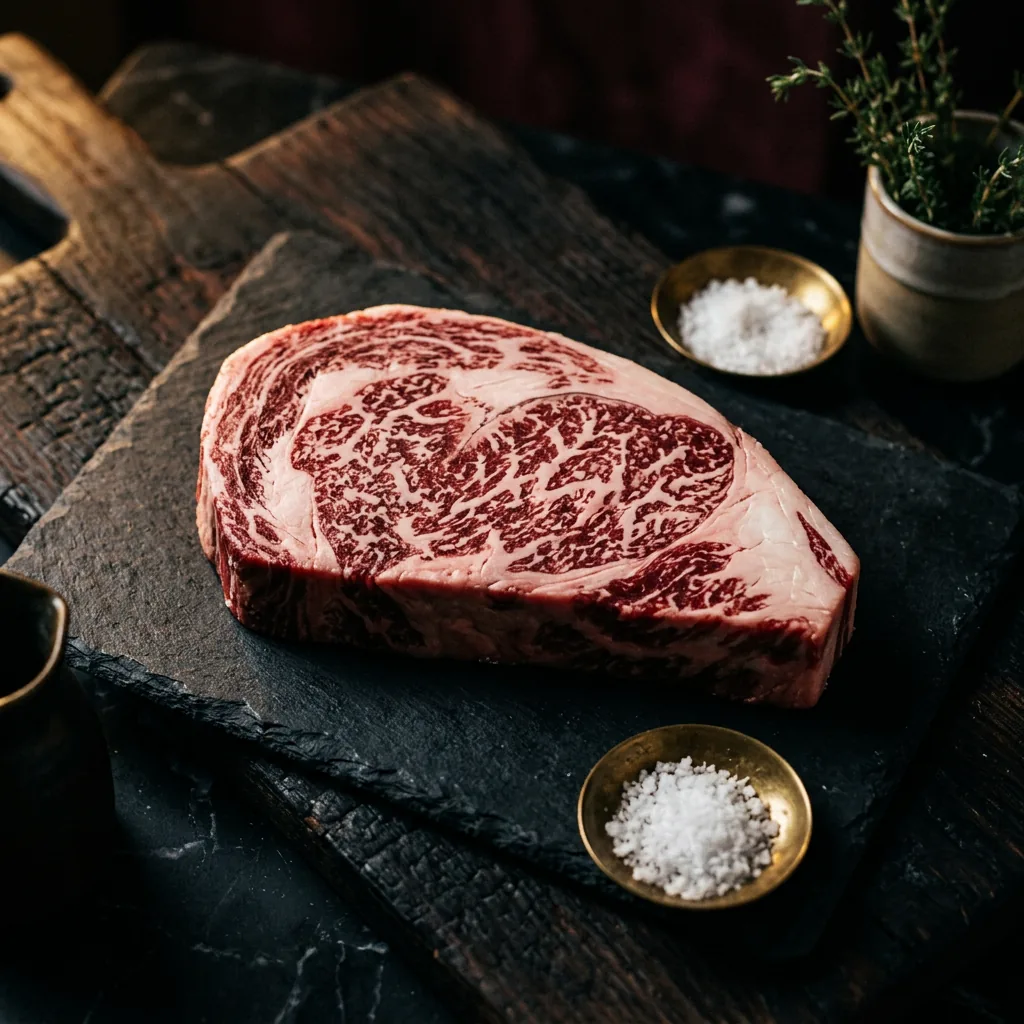
Intramuscular fat architecture: Wagyu cattle carry a mutation in the FASN (fatty acid synthase) gene that enables extraordinary oleic acid-rich intramuscular fat accumulation impossible in other breeds under any feeding regime. A purebred Wagyu on grass will still marble more than a purebred Angus on high-energy grain — genetics set the ceiling, diet operates within it. The wagyu_a5_striploin represents this genetic ceiling expressed through specific Japanese feeding protocols.
Ibérico pigs and Mangalitza share analogous fat genetics: both produce lard-type fat with high oleic acid content and oxidative stability, producing a melt-in-mouth texture that other pig breeds cannot approach. The Mangalitza — native to Hungary and Austria, nearly extinct by the 1980s — is now a prized heritage breed across central Europe, its revival driven by recognition that genetics, not feeding alone, determine fat quality.
Pro tip: When selecting premium meat, look for breed designation alongside grade. "British lamb" tells you very little; "Herdwick, Lake District, 18 months" tells you everything relevant about expected flavor, fat character, and cooking approach. Breed information is available from quality butchers and is worth actively requesting.
Pasture Composition: Diet as Flavor Encoding
The plants an animal eats contain hundreds of aromatic compounds — terpenes, polyphenols, carotenoids, volatile organic compounds — many of which are fat-soluble and accumulate in adipose tissue over time, encoding the botanical composition of the landscape directly into the flavor of the meat's fat.
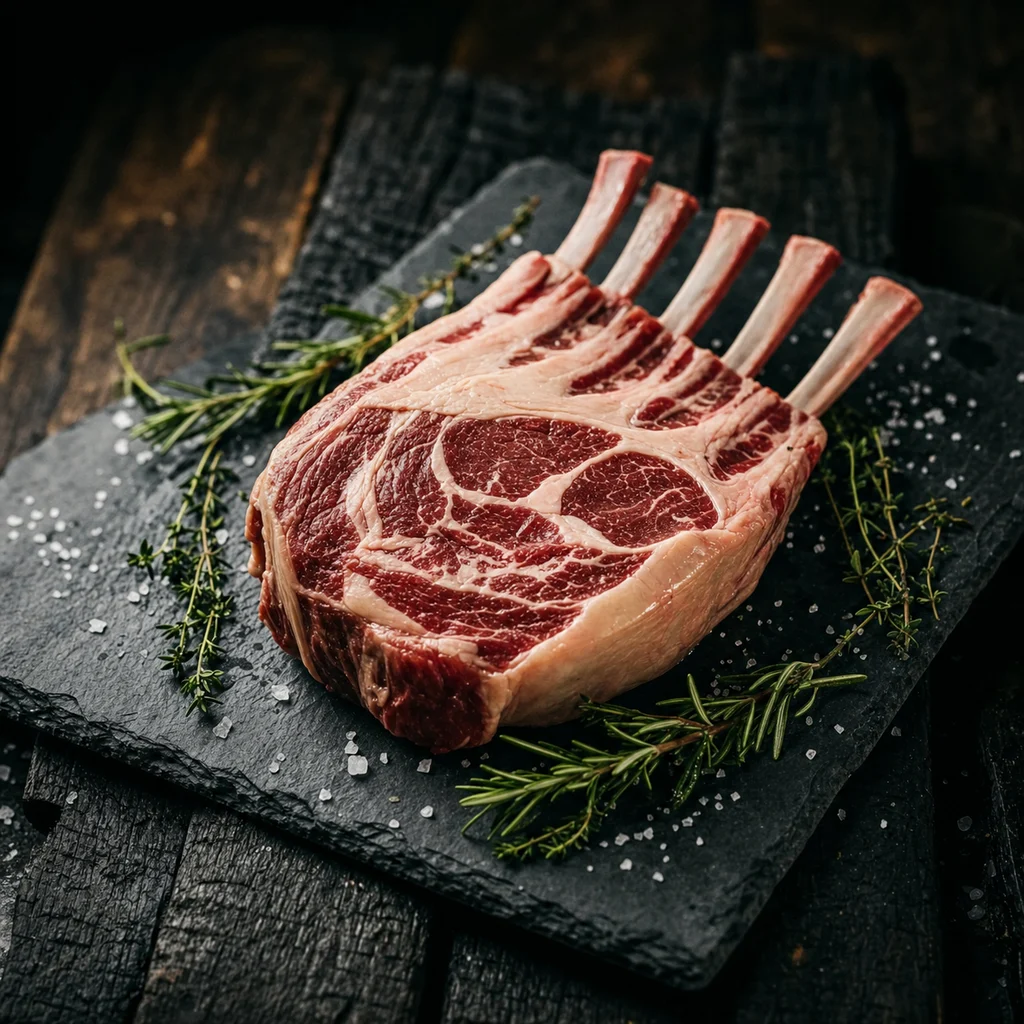
Pré-salé lamb (from Mont-Saint-Michel Bay in Normandy, PDO-protected) grazes on pastures saturated with Atlantic salt spray and colonized by halophyte herbs: sea purslane, sea lavender, glasswort, sea aster. Salt minerals and aromatic terpenes from these plants are measurably present in the lamb_rack fat. The flavor is described universally as pre-seasoned — herbal, mineral, with a gentle salinity that no brining can replicate. It is the most dramatic single example of diet-to-flavor encoding in European meat.
*Ibérico pigs in the montanera season (October–January) consume 6–10 kg of bellotas (acorns) daily across the Extremadura dehesa — a protected agro-forestry mosaic of cork and holm oak. The acorns' extreme oleic acid content builds directly into the pig's fat, producing the sweet, nutty, meltable fat that defines [jamon_iberico_bellota](/atlas/jamon_iberico_bellota) at its finest. The dehesa ecosystem is maintained by the pigs' rooting behavior; the pigs are nutritionally shaped by the dehesa*. It is the most literal expression of terroir in the entire European meat world.
Elevation and Microclimate: The Mountain Factor
Animals raised at altitude develop characteristically distinct meat from lowland equivalents, driven by two mechanisms: the energetic demands of navigating steep terrain (building denser, more active slow-twitch muscle) and the botanical diversity of alpine flora, which contains higher concentrations of terpenes and secondary metabolites than lowland improved pasture.
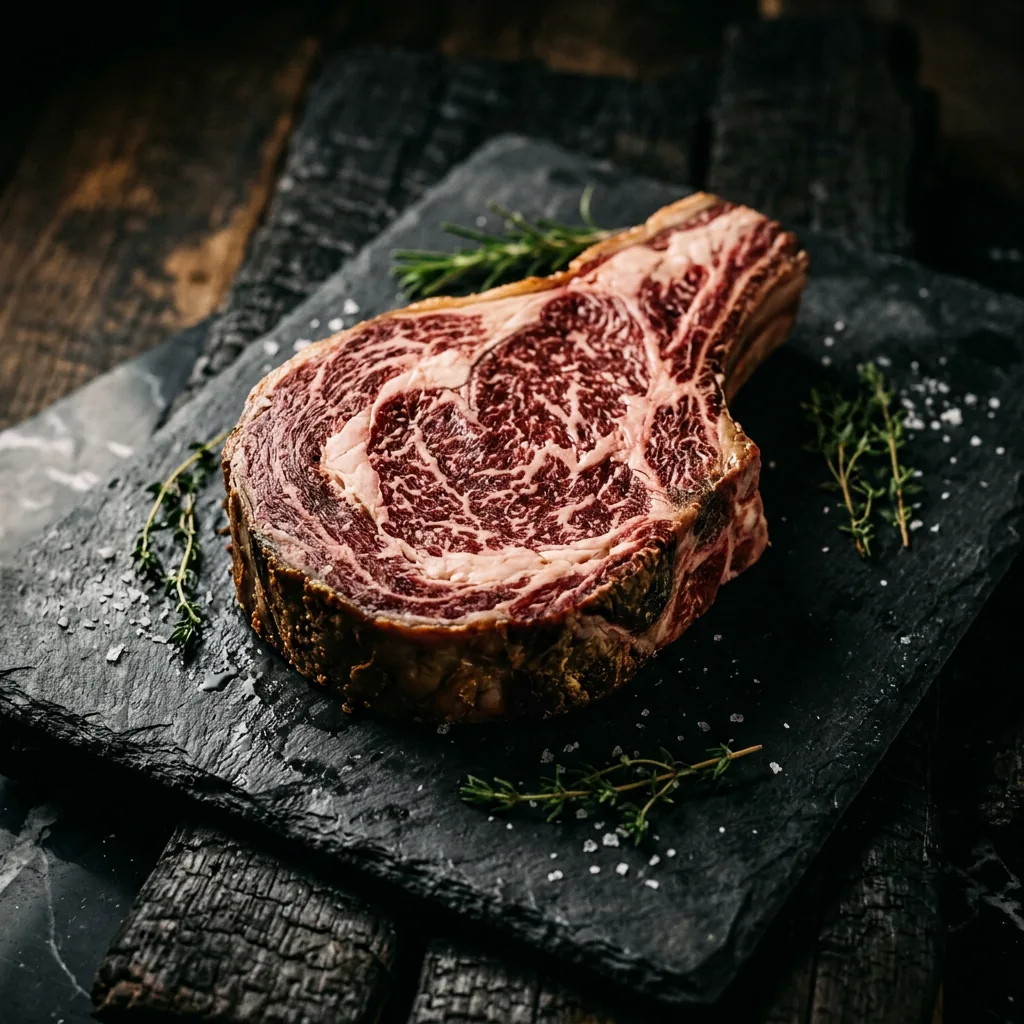
*Austrian and Swiss Almrind** (alpine cattle grazed at 1,500–2,500 m during the Almwirtschaft seasonal migration) produces beef with noticeably complex herbal character compared to identical breeds at lower elevations. The Almwirtschaft tradition is a protected agricultural practice and a direct, measurable flavor differentiator. A [ribeye](/atlas/ribeye) from an Austrian Almrind* animal carries herbal and mineral notes entirely absent from grain-finished continental beef.
Ternasco de Aragón (PDO) and Corsican lamb (carrying the island's aromatic macchia — rockrose, myrtle, lentisk, immortelle) express the specific herb flora of their landscapes in their fat profiles. Blind tastings with trained panels demonstrate regional origin identification well above chance for these populations.
Seasonality: When Each Meat Is at Its Peak
Like the finest produce, meat has seasons of excellence that skilled butchers and chefs track with the same attention a sommelier gives to a growing calendar.
| Species | Peak Season | Notes |
|---|---|---|
| Red grouse | 12 August – October | "Glorious Twelfth" opens season; birds finest before aging into toughness |
| Pheasant whole | October – November | Young poults roast; older birds braise; January birds braise only |
| Partridge whole | September – October | Most delicate of game birds; serve pink throughout |
| Wild red deer stag | September – October | Pre-rut peak condition; post-rut hormonal changes affect flavor |
| Spring lamb | April – July | Tender, mild, delicate; 3–5 months old |
| Hogget (12–24 months) | Autumn–Winter | Deeper, more complex flavor; slower cooking required |
| Ibérico bellota pig | January – March (slaughter after montanera) | Peak bellota fat accumulation from October–January feeding |
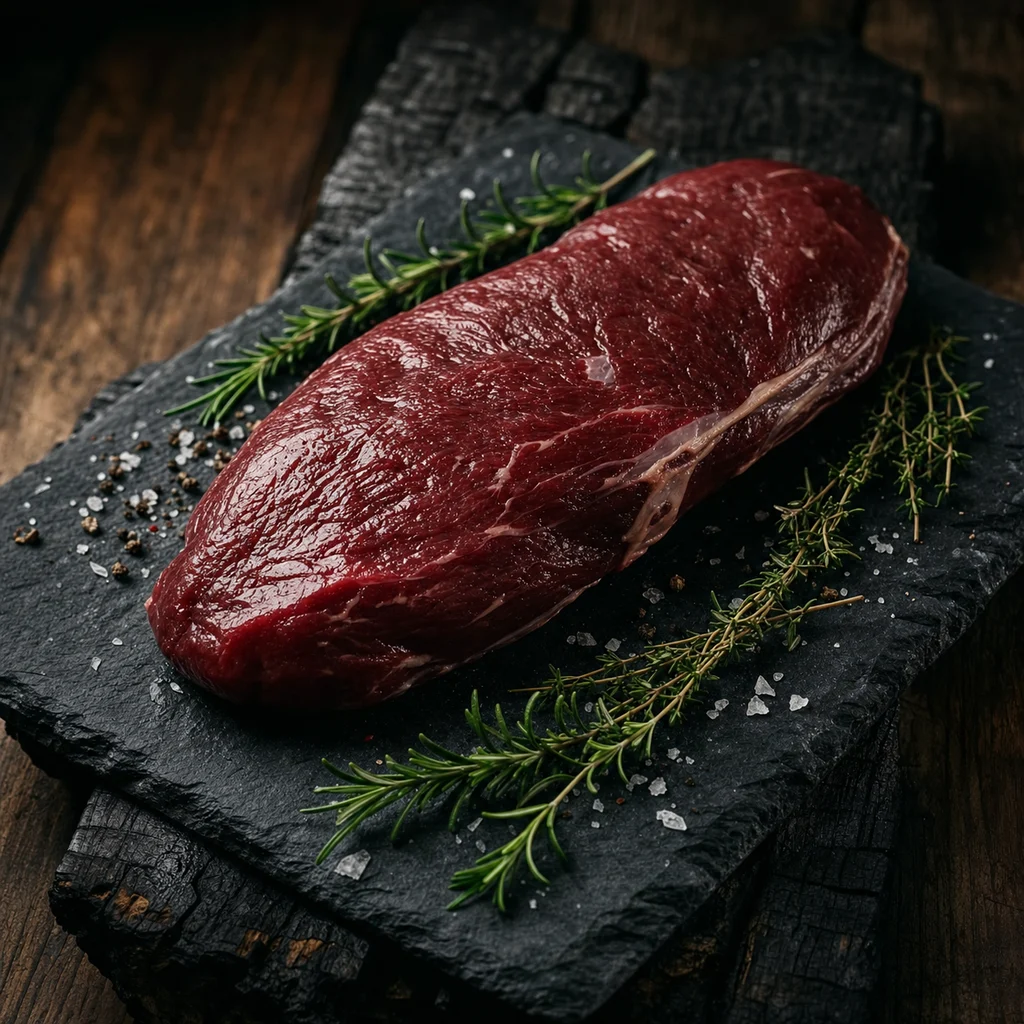
The venison_loin from a British red deer stag taken in September represents the pinnacle of European wild game — the animal at pre-rut peak body condition, with dark, mineral, iron-forward character and just enough back fat to baste the loin during roasting. Post-rut stag venison requires longer hanging (14–21 days) and more careful preparation.
Pro tip: Build a seasonal purchasing calendar around game seasons if operating in the UK, Germany, Austria, or France. Access to just-in-season red grouse or pre-rut venison places you in a fundamentally different quality tier from commodity purchasing. These windows are narrow — red grouse season peaks across approximately six weeks — and reward proactive supplier relationships established well in advance.
Aging as Terroir Expression
The decision to dry-age and the duration are not merely technical choices — they are themselves a terroir expression, varying by regional tradition, breed suitability, and the fat composition of the specific animal.
Scottish and Irish grass-fed beef (Angus, Highland, Hereford × Angus cross) are ideally suited to extended dry aging. Their mineral-rich, grass-fed fat oxidizes slowly and builds extraordinary nutty, fermented, complex notes during a 28–45 day dry-age. A 45-day Scottish Highland ribeye aged in a dedicated aging room is arguably the most complex single ingredient in Western meat cookery — a product impossible without the specific combination of grass-fed diet, breed genetics, and aging environment.
Wagyu — including wagyu_a5_striploin — is rarely aged beyond 14–21 days. Its abundant oleic acid-rich intramuscular fat oxidizes more readily than the harder, more saturated fat of grass-fed temperate breeds. Extended aging produces rancidity rather than complexity for these animals.
Building a Terroir Vocabulary
The meat sommelier's ability to translate origin and process into sensory language is their most practically useful professional skill:
| Descriptor | Associated Terroirs and Processes |
|---|---|
| Mineral / iron-forward | High-elevation pasture; peat-water regions; Scottish upland beef; hill lamb |
| Herbal / aromatic | Alpine meadow, wild herb scrubland; Corsican, Aragonese, Pyrenean lamb |
| Saline / pre-seasoned | Salt marsh (pré-salé); coastal halophyte-grazed lamb; Mont-Saint-Michel |
| Nutty / sweet | Acorn-finished Ibérico; grain-finished Wagyu; extended 35+ day dry-age |
| Grassy / clean | Pure grass diet; new-season spring lamb; young grass-finished beef |
| Fermented / complex | Long dry-age 28+ days; mature animals; specific aging traditions |
| Buttery / umami-sweet | High-grade Wagyu; oleic acid-rich intramuscular fat; Japanese A5 |
Build an origin-to-flavor map as a working professional reference: Kobe/Matsusaka (buttery, clean, umami-sweet); Scottish Highland cross, grass-fed (mineral, iron-forward, complex); Argentine Pampas grass-fed (grassy, lean, boldly beefy); Normandy Pré-salé lamb (herbal, saline, extraordinary finesse); Extremadura Ibérico bellota (nutty, sweet, oleic-rich, incomparably meltable). This vocabulary — and the ability to deploy it with authority in purchasing guidance, menu descriptions, and pairing recommendations — is the meat sommelier's most distinctive professional asset.