Fat is the most misunderstood ingredient in meat cookery. Decades of nutritional messaging trained a generation to trim it, avoid it, and fear it — precisely at the moment when the world's greatest kitchens were rediscovering that fat is the primary vehicle for flavor, the mediator of texture, and the basis of the most ancient cooking traditions on earth. The rehabilitation of animal fat in fine dining and premium home cooking is not nostalgia; it is the application of chemistry and technique to an ingredient that outperforms every alternative when used correctly.
The Four Types of Animal Fat
Animal fat exists in four anatomical locations, each with distinct composition, behavior under heat, and culinary purpose:
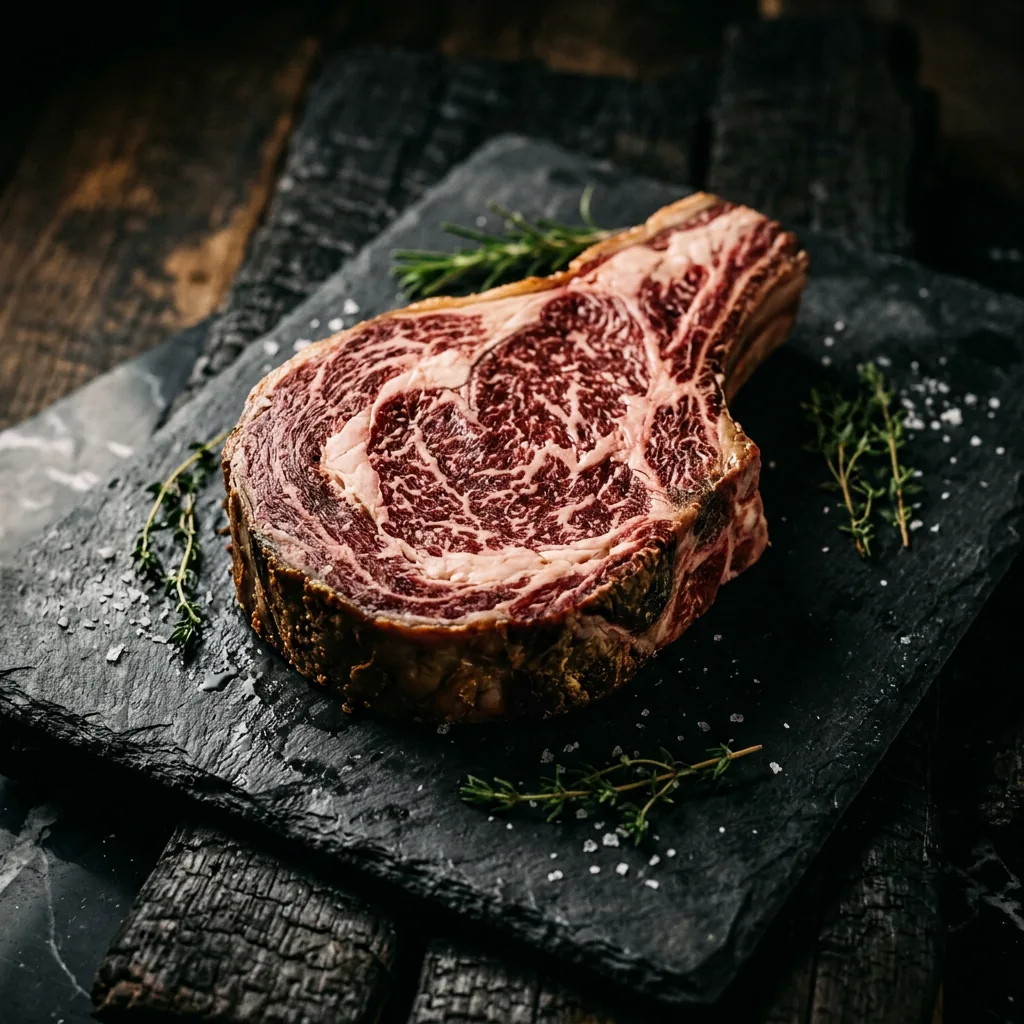
Intramuscular fat (marbling) — deposited within the muscle fibers themselves during the animal's growth phase. This fat cannot be trimmed off; it is integrated into the lean tissue at a microscopic level. During cooking, it melts and self-bastes the surrounding muscle from within, contributing richness, tenderness, and the extended finish that distinguishes high-grade Ribeye from leaner cuts. The marbling in Wagyu A5 Ribeye — where intramuscular fat can constitute 30–40% of the cut weight — represents the extreme expression of this phenomenon.
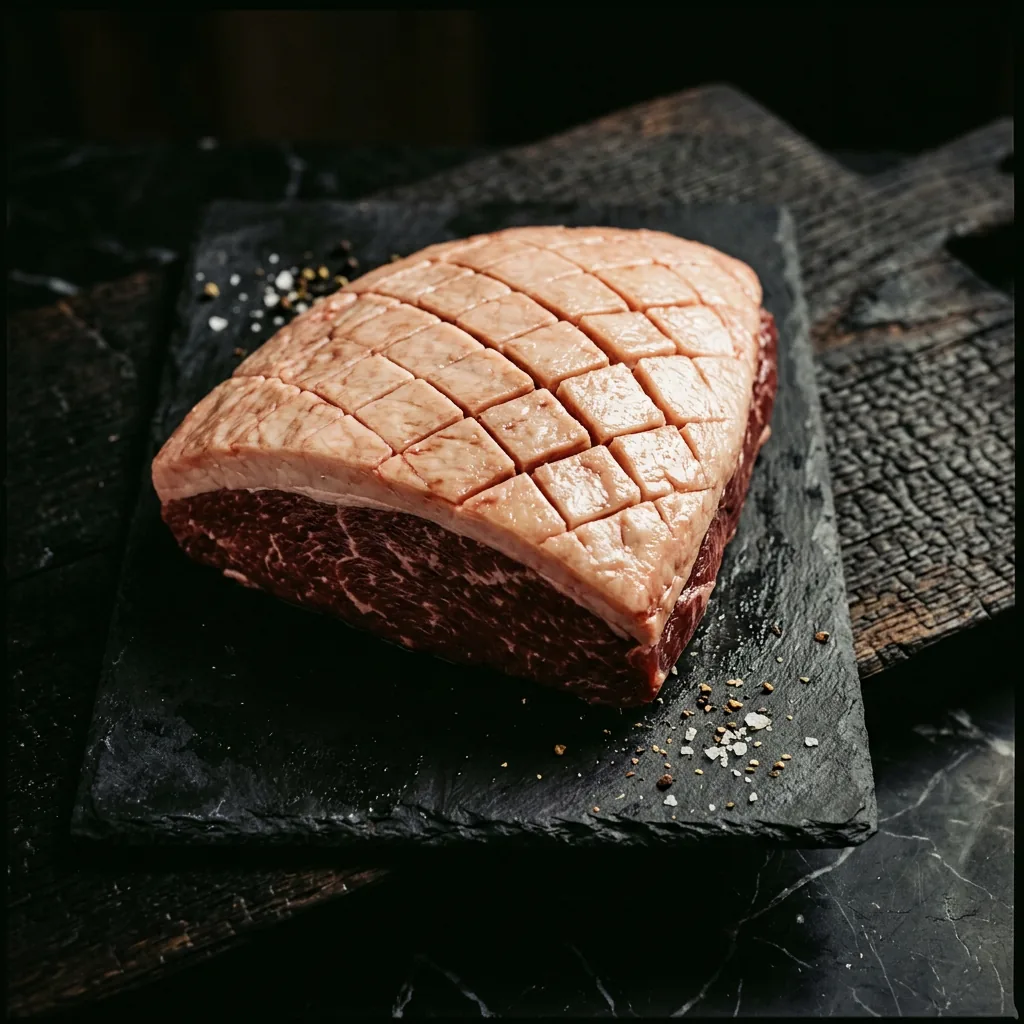
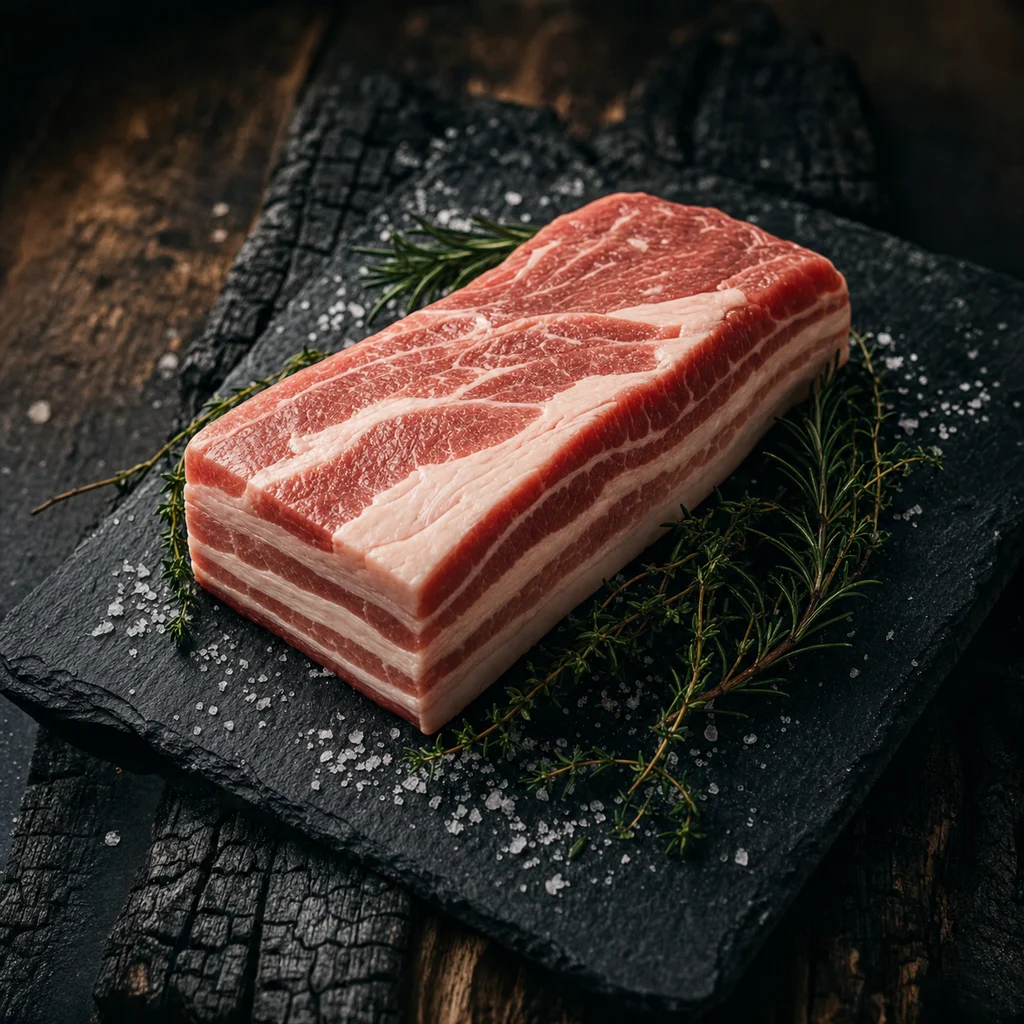
Subcutaneous fat (fat cap) — the layer of fat between the hide and the muscle, covering the exterior. It renders during cooking to baste the exterior surface. The fat cap on a Picanha or a Pork Belly is the defining structural element of those cuts — it determines the basting, crisping, and protective properties during the cook. Remove it and you've fundamentally changed the dish.
Visceral/organ fat — surrounds the internal organs. The highest-quality visceral fats are leaf lard (kidney region of the pig: the most neutral, cleanest-flavored pork fat, prized for pastry) and beef suet (kidney fat of cattle: firm, waxy, high melting point, excellent for frying and traditional British preparations).
Intermuscular fat — lies between muscle groups in seam-separated cuts. During slow cooking, it renders gradually into the surrounding liquid, enriching braising stocks and contributing to the unctuous, self-saucing quality of long-braised dishes.
Understanding Fat Composition: Saturation and Smoke Point
| Fat | Primary Fatty Acid | Smoke Point | Flavor Profile |
|---|---|---|---|
| Beef tallow | Stearic + oleic | 200–215°C | Rich, savory, beefy |
| Lard (pork) | Oleic + palmitic | 188–196°C | Mild, clean, slightly sweet |
| Duck/goose fat | Oleic (monounsaturated) | 190°C | Rich, complex, Gascon |
| Schmaltz (chicken/goose) | Oleic + palmitic | 190°C | Mild, savory, deeply umami |
| Bone marrow fat | Oleic (predominantly) | 160°C | Intensely savory, mineral |
All animal fats carry fat-soluble flavor compounds — particularly in grass-fed and pasture-raised animals — that volatilize during cooking and deposit on the surface being seared. This is the fundamental reason a steak seared in tallow produces superior browning and flavor compared to the same steak seared in refined vegetable oil: the tallow is already carrying the flavor of the animal, and transfers it directly to the crust.
Rendering: From Raw Fat to Cooking Medium
Rendering transforms solid animal fat into a pure, shelf-stable cooking medium by melting out the water and protein solids from the fat tissue.
Slow rendering (oven at 120–135°C for 2–4 hours): produces the clearest, most neutral-flavored fat — preferred for leaf lard and high-quality tallow.
Wet rendering (fat simmered in water): the water prevents browning and produces a very pure, white fat. Produces the mildest-flavored result; preferred when neutrality matters.
Dry rendering (fat melted directly in a pan at moderate heat): some browning of the protein solids occurs, contributing toasted, meaty notes. Preferred for duck fat and schmaltz where a richer flavor is desirable.
The cracklings produced during rendering — the browned protein solids — are themselves a culinary product: pork cracklings (chicharrónes), beef cracklings, chicken skin cracklings, all of which are the Maillard-reaction-concentrated residue of the rendering process.
Pro tip: Keep a jar of rendered beef tallow by the stove. A thin film of tallow in a ripping-hot cast iron pan before a steak produces a crust and flavor that no refined vegetable oil can match. Source grass-fed tallow for the most pronounced flavor — the volatile aromatics in grass-fed fat translate directly into the cooking medium.
Basting: The Controlled Application of Hot Fat
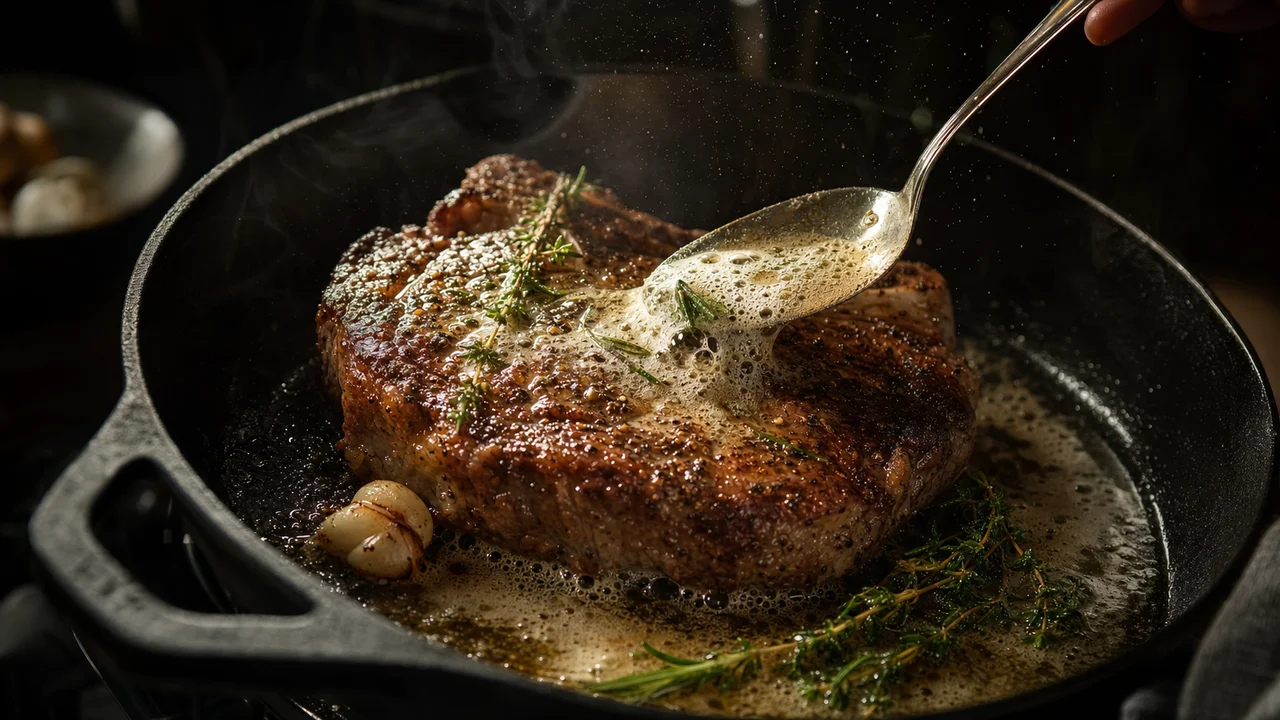
Basting — spooning hot fat, butter, or pan drippings continuously over cooking meat — achieves effects that pan contact alone cannot: even browning on the upper surface, and the systematic deposition of fat-soluble aromatics across the entire steak surface.
The mechanism: hot fat at 140°C+ physically cooks the portion of the steak not in contact with the pan, extending the Maillard reaction beyond the contact zone. Aromatic compounds from garlic, thyme, and rosemary dissolve in the fat phase and adhere chemically to the browning surface, building a flavor shell that encloses the meat from every direction.
The critical temperature point: basting must use genuinely hot fat. Below 130°C, butter introduced to a cooking steak merely slows the Maillard reaction by introducing water from the butter's milk solids. The classic French arroser technique uses whole butter (not clarified) because the milk solids themselves brown at high temperature and contribute their own Maillard compounds to the crust.
For Ribeye and Tomahawk steaks: sear the first side undisturbed for 2–3 minutes; add butter, a crushed garlic clove, and thyme sprigs; tilt the pan and baste continuously for the remainder of the cook.
Confit: Fat as Preservation, Technique, and Tradition
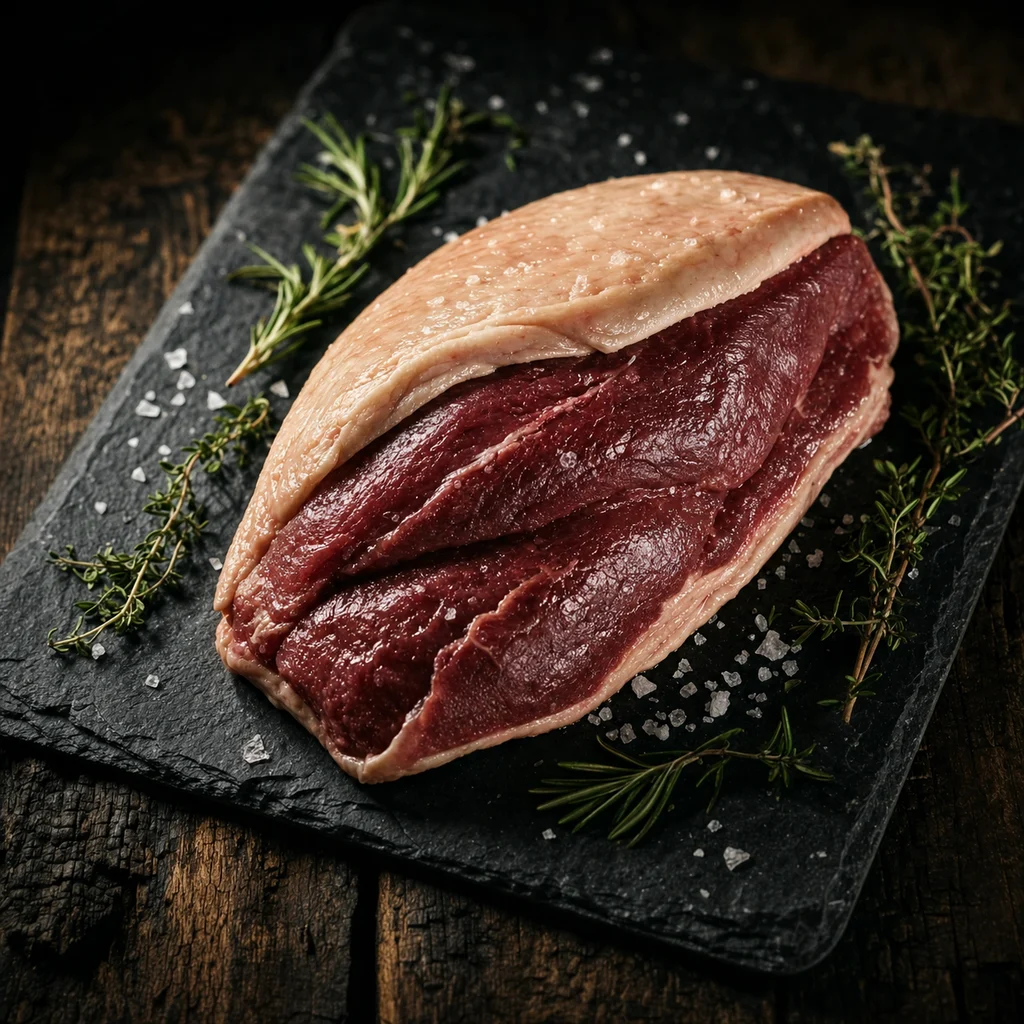
Confit (from the French confire, "to preserve") is the ancient practice of slow-cooking meat fully submerged in its own rendered fat at low temperature (80–90°C) for 3–4 hours. The technique predates refrigeration by centuries; preserved duck confit sealed under fat could be held for months in a cool cellar.
The fat serves dual purposes: it conducts gentle, perfectly even heat to the meat and creates an oxygen-free environment that inhibits the aerobic bacteria and molds responsible for spoilage.
The result is texturally extraordinary: slow heat breaks down collagen without the violent moisture expulsion of high-temperature cooking. Duck Breast cooked at 82°C for 3 hours in its own rendered fat emerges silky and structured, deeply flavored, with succulence impossible to achieve by roasting.
Classic confits: duck leg confit (the Périgord standard), goose confit, rabbit confit, [Pork Belly](/atlas/pork_belly) confit at 85°C for 4 hours. The finish — skin-side down in a screaming hot pan until mahogany and crackling — is the textural counterpoint that completes the technique.
Pro tip: Confit fat can be reused multiple times. After each use, filter the cooled fat through a fine-mesh strainer to remove meat solids, then refrigerate. Fat used for the fourth or fifth time carries a complexity that fresh fat cannot approach.
The Fat Cap: Technical Strategy for Rendering
Cuts with significant fat caps — Picanha, Pork Belly, côte de boeuf — demand specific rendering strategy. Underrendered fat is rubbery and unpleasant; overrendered fat is dry and flavorless.
| Step | Temperature | Purpose |
|---|---|---|
| Score the fat cap | — | Increase surface area; allow fat to escape |
| Fat-side toward heat, moderate temp | 160–175°C | Allow fat to melt from outside in |
| Main cook | 180–200°C | Bring lean muscle to target temperature |
| Final fat-side blast | 220–250°C | Crisp and caramelize the rendered surface |
Fat renders at 40–60°C — well below the protein-cooking temperatures of 55–65°C — so starting at moderate heat allows significant fat melting before the underlying lean tissue reaches its critical temperature zone. This sequence produces a fat cap that is rendered through, crisped on the surface, and still attached to perfectly cooked lean meat.
Bone Marrow: The Elemental Fat
Bone marrow is the soft, fatty tissue filling the medullary cavities of long bones — femur and tibia are the standard service cuts, sold as Beef Marrow Bones. Chemically, marrow is approximately 97% fat, primarily oleic acid (the same monounsaturated fatty acid that defines extra-virgin olive oil and Wagyu A5 Ribeye fat), along with collagen, minerals, and deeply savory flavor compounds.
When heated to 60–65°C, marrow liquefies — the interior of a roasted marrow bone becomes liquid gold, scooped out with a narrow spoon and spread on sourdough toast with fleur de sel and a parsley salad.
Roasting technique: Split bones cut-side-up at 220–230°C for 15–20 minutes. The marrow should tremble and just begin to pull from the bone's edge. Beyond 22–25 minutes it fully liquefies and drains — timing is critical.
Beyond toast service: whipped bone marrow compound butter melted over resting steak; dissolved into pan jus for extraordinary savory depth; chilled and sliced thin as a garnish on steak tartare; or stirred into risotto alla Milanese at the finish — the classical preparation that gives the dish its characteristic depth.
Summary
Animal fat is not a single ingredient but a family of substances with distinct chemistry, anatomy, and culinary purpose. Intramuscular fat provides the self-basting luxury of marbled cuts; subcutaneous fat defines the basting and crisping of Pork Belly and Picanha; rendered fats provide cooking mediums that outperform plant oils for flavor transfer; basting distributes fat-soluble aromatics across the entire surface; confit uses fat as both heat medium and preservation environment; bone marrow delivers the concentrated essence of the animal in a single extraordinary preparation. Mastering the art of fat is not about excess — it is about precision: understanding which type of fat does what, and applying it at the right temperature for the right duration to produce results that no other technique can replicate.