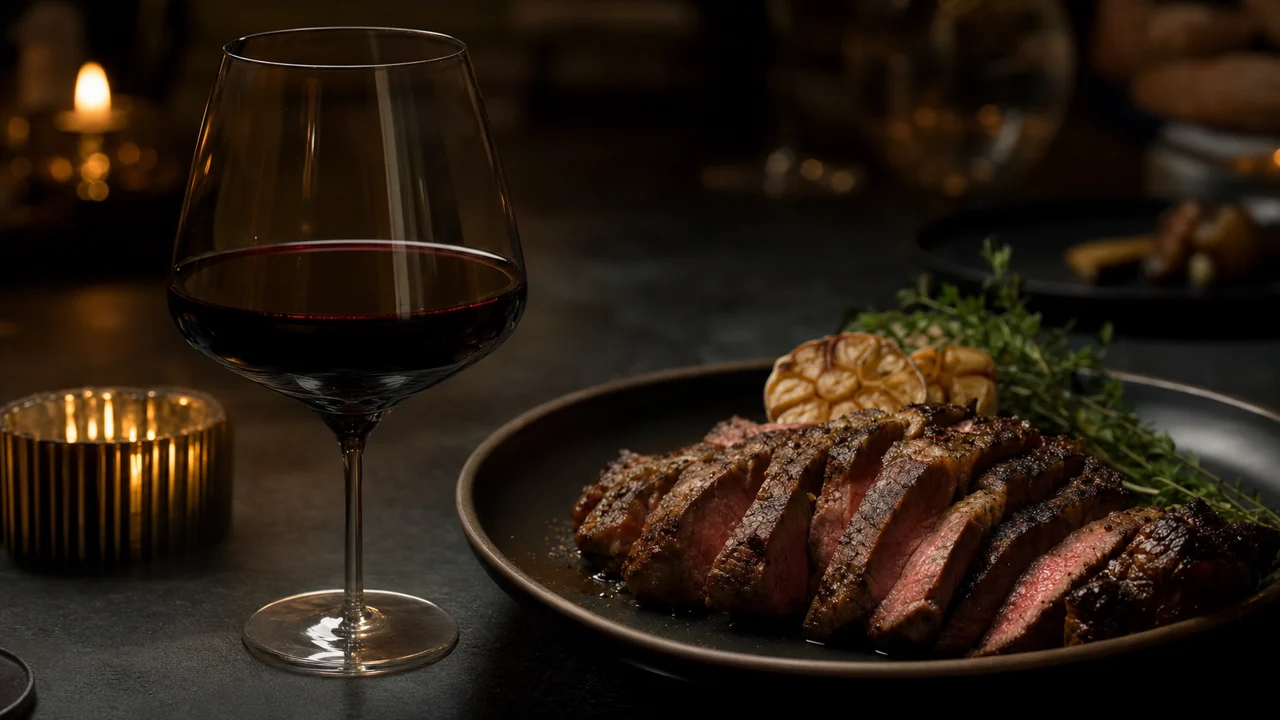
Pairing wine with meat is not a mystical art reserved for sommeliers. It is the systematic application of four structural levers — tannin, acidity, weight, and structure — to the protein content, fat level, and preparation method of the dish in front of you. Internalize how each lever functions and you can pair any wine with any meat by reasoning rather than memorization. The classic rules exist because they reflect real biochemical mechanisms, but understanding why they work gives you the analytical confidence to break them intelligently when the dish demands it.
The Four Levers Explained
Tannin is the bitter, drying polyphenol compound in red wine, extracted from grape skins, seeds, stems, and oak barrels. Tannin binds to fat molecules and salivary proteins on the palate, forming complexes that are swallowed rather than perceived, effectively stripping excess richness and restoring the palate's sensitivity. On their own — with no fat to bind — heavy tannins register as harsh and astringent. Against a protein-rich, well-marbled cut, those same tannins find abundant binding sites and instead read as structured and clean. This is why a high-tannin Cabernet Sauvignon alongside a well-marbled ribeye is not merely a cliché — it is a biochemically functional solution that reinforces itself with every bite and sip.
Acidity works through a different mechanism: it stimulates salivation directly, physically refreshing the palate between bites by washing away fat residue. High-acid wines — Sangiovese, Pinot Noir, aged Riesling, Champagne — are effective across a broad range of proteins because their refreshing action is almost universally welcome alongside fat and richness. Without sufficient acidity, a meal built around fatty protein becomes progressively heavier as it continues.
Weight is the perceived body of the wine — viscosity and density driven primarily by alcohol. Match weight to weight. A light Pinot Noir at 12.5% alcohol alongside a 400g marbled ribeye disappears into the richness. A heavy Amarone at 16% alongside a delicate filet mignon overwhelms the subtle flavor entirely. The protein and the wine must occupy the same sensory register.
Structure is the integrated architecture of the wine — the balance and interplay of tannin, acidity, alcohol, and fruit expression. A structured wine has palpable presence on the palate and stands alongside a powerful dish without being absorbed. A flabby, low-acid wine dissolves beside a rich steak.
Pro tip: Apply the four levers in order of priority: match weight first, then use tannin to cut fat, acidity to refresh the palate, and structure to define the personality of the pairing. This sequence never produces an unworkable combination.
Cut-by-Cut Pairings: The Technical Logic
| Cut | Fat Level | Ideal Wine Style | Specific Examples |
|---|---|---|---|
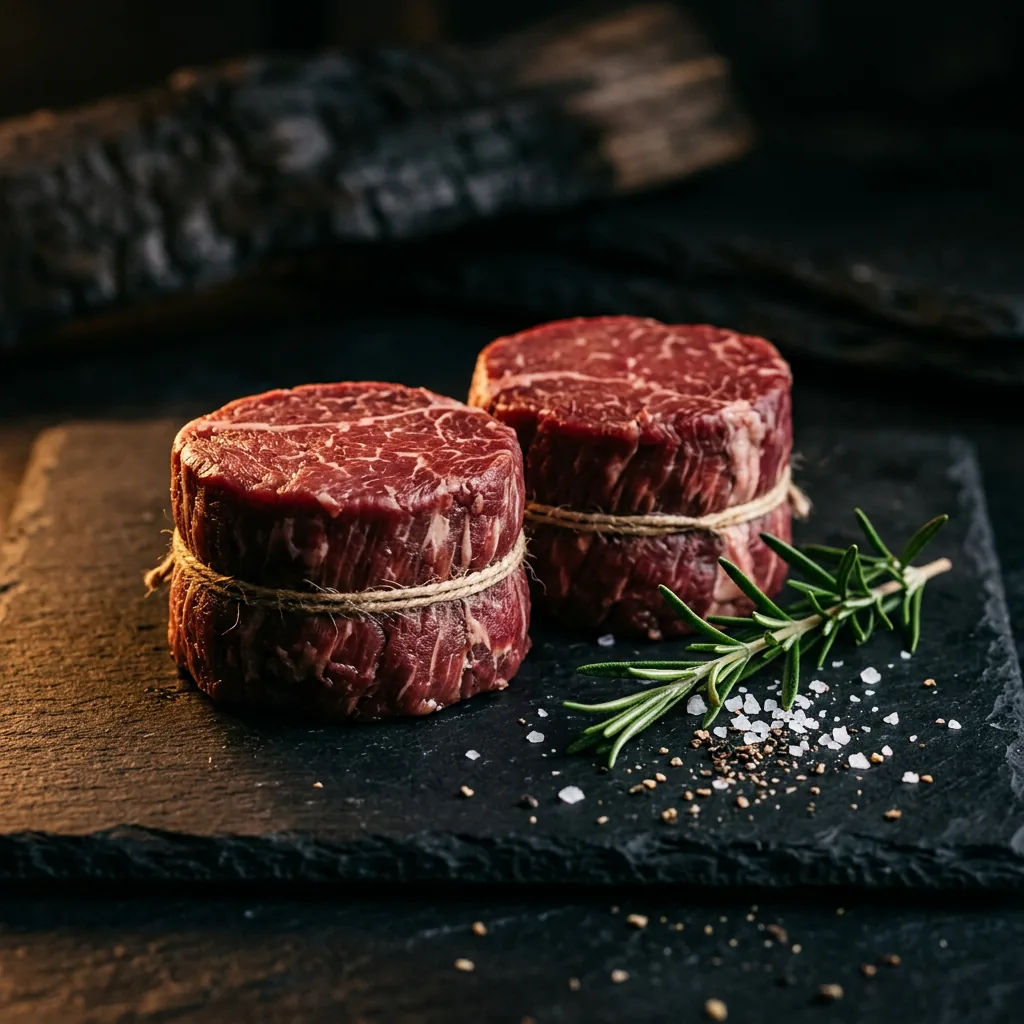
| Filet mignon | Low | Elegant, medium-bodied, aged tannins | Côte de Nuits Pinot Noir, Pomerol |
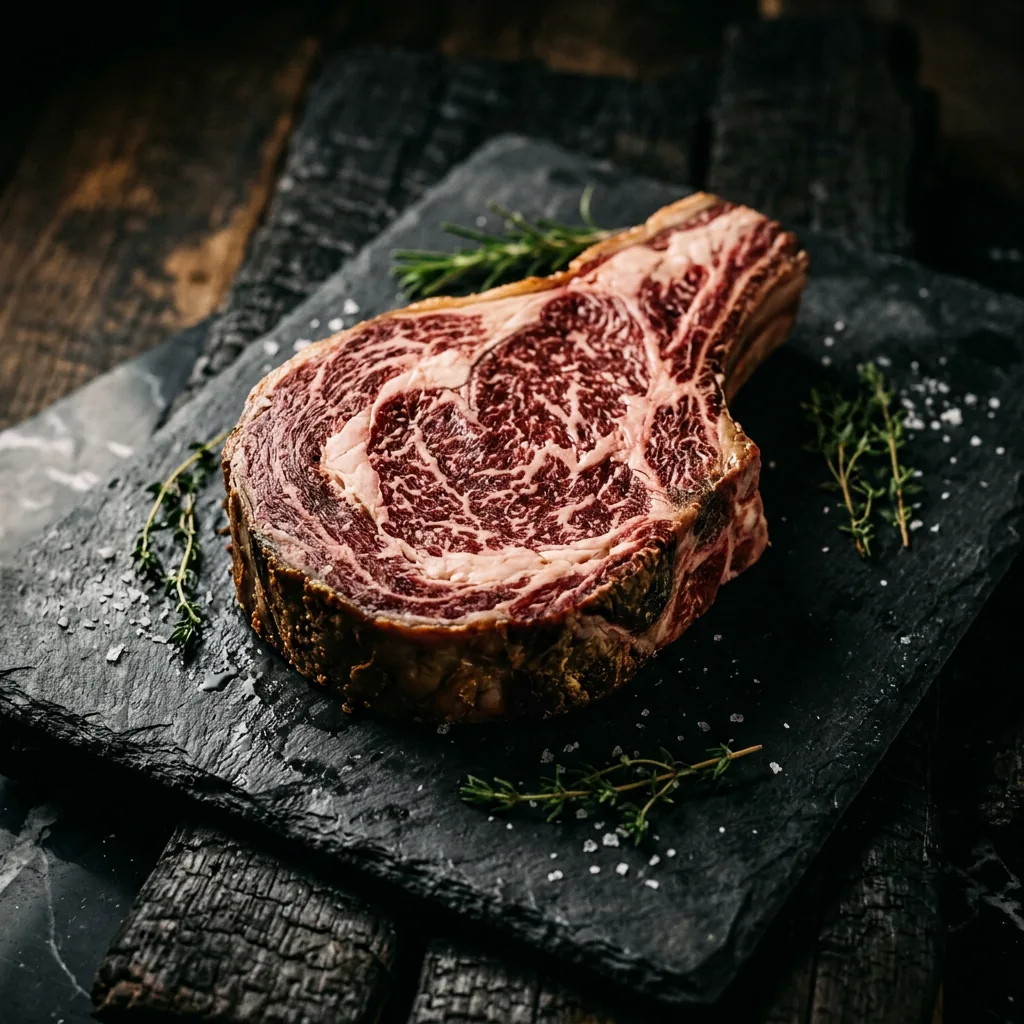
| Ribeye | High | Full-bodied, high tannin, structured | Napa Cabernet, Médoc, Barolo |
| New York strip | Medium | Medium-full, structured | Rioja Reserva, Saint-Émilion |
| Wagyu A5 | Extreme | Light-structured or high-acid | Aged Médoc, Blanc de Blancs Champagne |
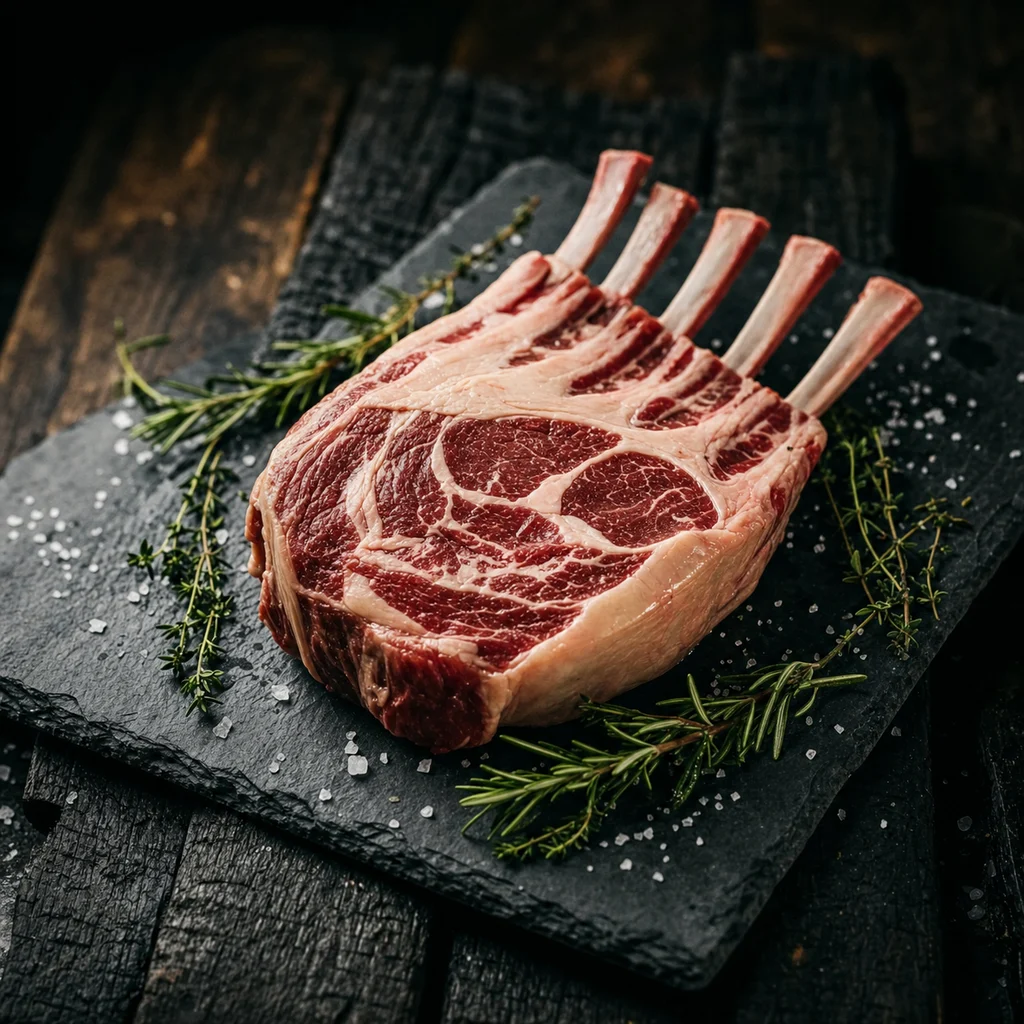
| Lamb rack | Moderate | Earthy, medium tannin | Rioja, Châteauneuf-du-Pape |
| Brisket (braised) | High-collagen | Ripe, full-bodied | Zinfandel, GSM blend, Shiraz |
Filet mignon: The filet mignon is the leanest of the premium cuts — delicate, texturally soft, with subtle flavor that a dominant wine erases. Aged Burgundy from the Côte de Nuits provides silky, mature tannins with bright acidity and tertiary complexity. Pomerol and Saint-Émilion work in the same register. Avoid young, full-extraction Cabernet from warm climates: the tannin has no fat to bind and registers as aggressively unpleasant.
Ribeye: The ribeye is the classic steak pairing canvas precisely because its high fat content accommodates and softens the most assertive red wines. Cabernet Sauvignon from Napa or the Médoc — particularly Pauillac, Saint-Estèphe, Saint-Julien — is the benchmark. Northern Rhône Syrah (Hermitage, Cornas) brings peppery complexity that amplifies the Maillard crust. Brunello di Montalcino at 8–10 years and Barossa Shiraz are structurally appropriate alternatives.
Wagyu A5: The wagyu a5 ribeye demands a wine with structural presence that adds nothing to an already extreme richness. Young, fruit-bomb reds compete with the fat and are counterproductive. Aged Bordeaux Médoc at 10–15 years, Barolo at 8+ years, or — counterintuitively brilliant — Blanc de Blancs Champagne, whose fine mousse provides physical palate scrubbing between bites of extreme fat. This is not a stunt pairing; it is arguably the most technically correct option for A5.
Lamb rack: The distinctive savory-herbal character of a lamb rack served pink at 58–60°C pairs most naturally with wines that echo its earthy, mineral register. Aged Rioja Reserva (Tempranillo-Garnacha) provides dried red fruit and leather notes with a mineral finish aligned precisely with the lamb's flavor profile. Châteauneuf-du-Pape and left-bank Bordeaux blends are the classical alternatives.
Lamb, Pork, Game, and the Braised Cuts
Pork: More subtle in fat character than its reputation suggests, pork rewards lighter reds with genuine acidity — Pinot Noir from Burgundy or Alsace, Beaujolais cru (Moulin-à-Vent for structure, Morgon for earthiness), German Spätburgunder. A lighter Chianti Classico works well with richer pork preparations where Sangiovese's natural acidity and moderate tannin complement the fat without overwhelming it. Avoid heavy-tannic reds: they override pork's gentle fat character and leave the pairing tasting of wine rather than food.
Game and venison: The lean, iron-forward, minerally character of wild game calls for wines with structural complexity through acidity rather than raw tannic weight — since minimal intramuscular fat in venison cannot buffer aggressive tannin. Northern Rhône Syrah, Barolo and Barbaresco, and cold-climate Pinot Noir from Burgundy or Oregon are the consistent performers. Avoid high-alcohol, fruit-dominant New World reds for delicate game cuts.
Braised cuts: Rich, collagen-converted braises — short ribs, beef cheeks, oxtail — match best with ripe, full-bodied New World reds: Zinfandel at full ripeness, southern Rhône GSM blends, Australian Shiraz. The weight must match the long-cooked richness and the sweetness produced by hours of Maillard reactions in the braising liquid.
Pro tip: Always pair to the dominant character on the plate, not the protein in isolation. A green-peppercorn sauce transforms the appropriate wine. A red-wine reduction gravitates toward the wine used in cooking. A char-grilled surface amplifies the role of smoke-echoing Syrah or Zinfandel in a way that pan-roasting does not demand.
White Wine With Red Meat: The Structural Exceptions
The general preference against white wine with red meat is not arbitrary — white wine lacks the tannin to bind fat from richly marbled cuts. But the exceptions are real and technically defensible. Blanc de Blancs Champagne alongside Wagyu A5 works because the fat content is so extreme that the wine's acidity and carbonation substitute for tannin as palate refreshers. White Burgundy — a mature Meursault or Puligny-Montrachet — alongside veal is a legitimate classical pairing: veal's delicate, low-fat character is overwhelmed by red wine, and the weight-match with an oak-aged white Burgundy is entirely appropriate. These work because of specific cut context and fat level, not because the general preference for red wine with red meat is mistaken.
Common Mistakes and Their Structural Causes
Pairing a high-tannin Cabernet with a lean, under-fatted cut — top round, lean flank — produces aggressive, sandpapery tannin because there is insufficient fat to bind it. Ignoring the sauce consistently produces contextually wrong pairings. Serving wine at an inappropriate temperature suppresses the aromatic complexity that makes the pairing work — too cold for a structured red kills the tannin integration; too warm for a full-bodied wine accelerates the alcohol sensation past the tannin structure. Temperature is not a minor detail; it is the precondition for everything else the pairing delivers.
Summary
The four levers of wine pairing — tannin, acidity, weight, and structure — provide a complete analytical framework for any meat-and-wine combination. Match weight first, apply tannin as a fat-cutter, acidity as a palate refresher, and structure as the personality anchor. Apply these principles to the actual protein, fat level, and preparation on the plate — not an abstract idea of the dish — and the result will be correct, repeatable, and independent of memorized rules.