Pork
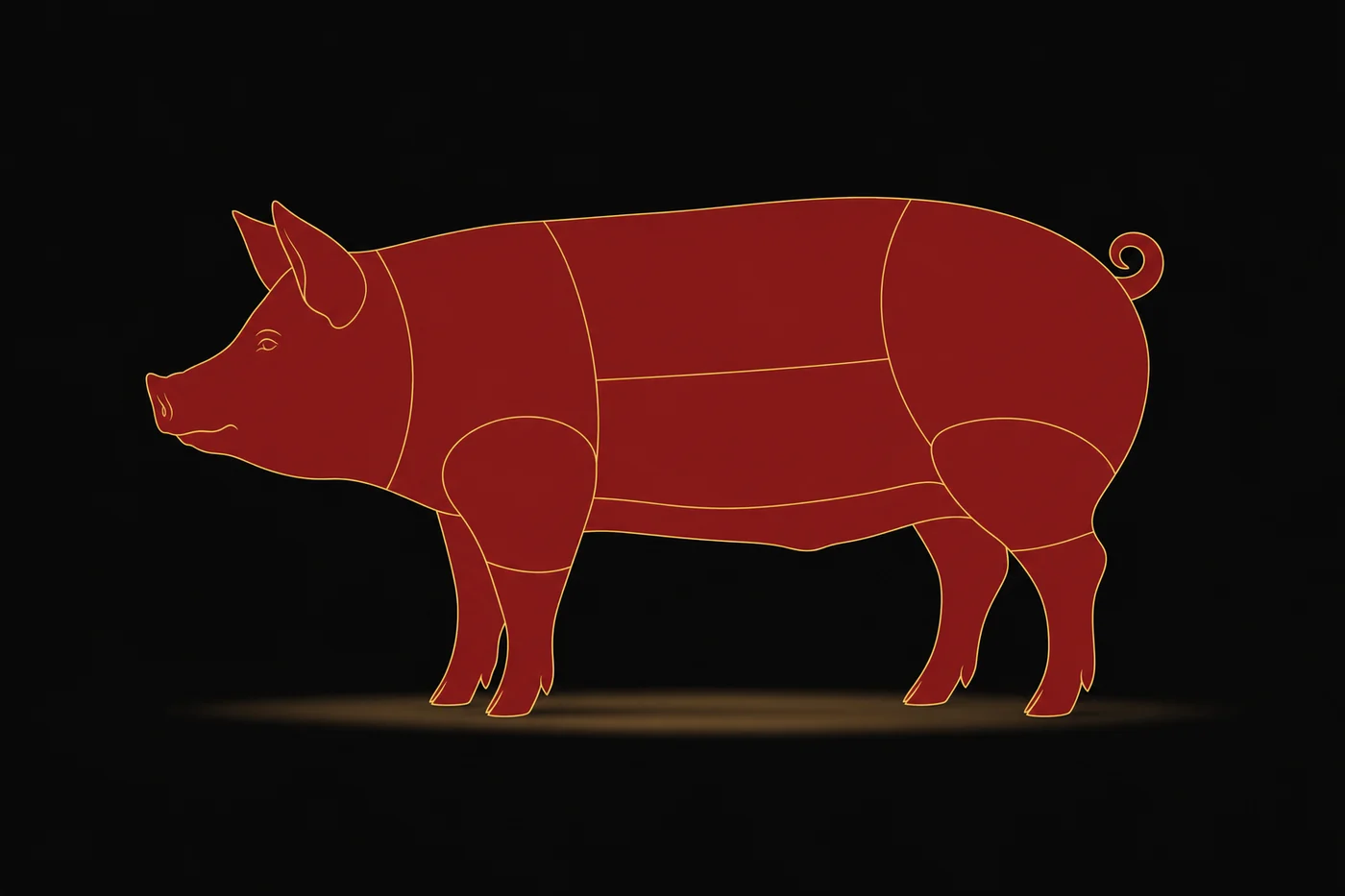
Pork rewards the cook who respects fat. The shoulder (Boston butt and picnic) is the great braising and pulled-pork primal, rich in collagen and forgiving of long cooks; the loin runs lean and quick-cooking and dries out in a heartbeat; and the belly — layered fat and meat — is the most generous cut on the animal, equally at home as crisp roast pork, slow bacon or melting braise. Modern pork is bred lean, so a touch of pink at the centre is both safe and desirable.
Muscles that move the animal constantly — neck, shoulder, leg — are dense with connective tissue and collagen. They reward low, slow, moist heat that melts collagen into gelatin. Muscles that mostly support weight rather than move it — the loin and rib along the spine — stay tender and suit fast, dry, high heat. Location on the chart is the single best predictor of how a cut wants to be cooked.
Select a primal to reveal its muscles, character and the cuts it yields.