Veal
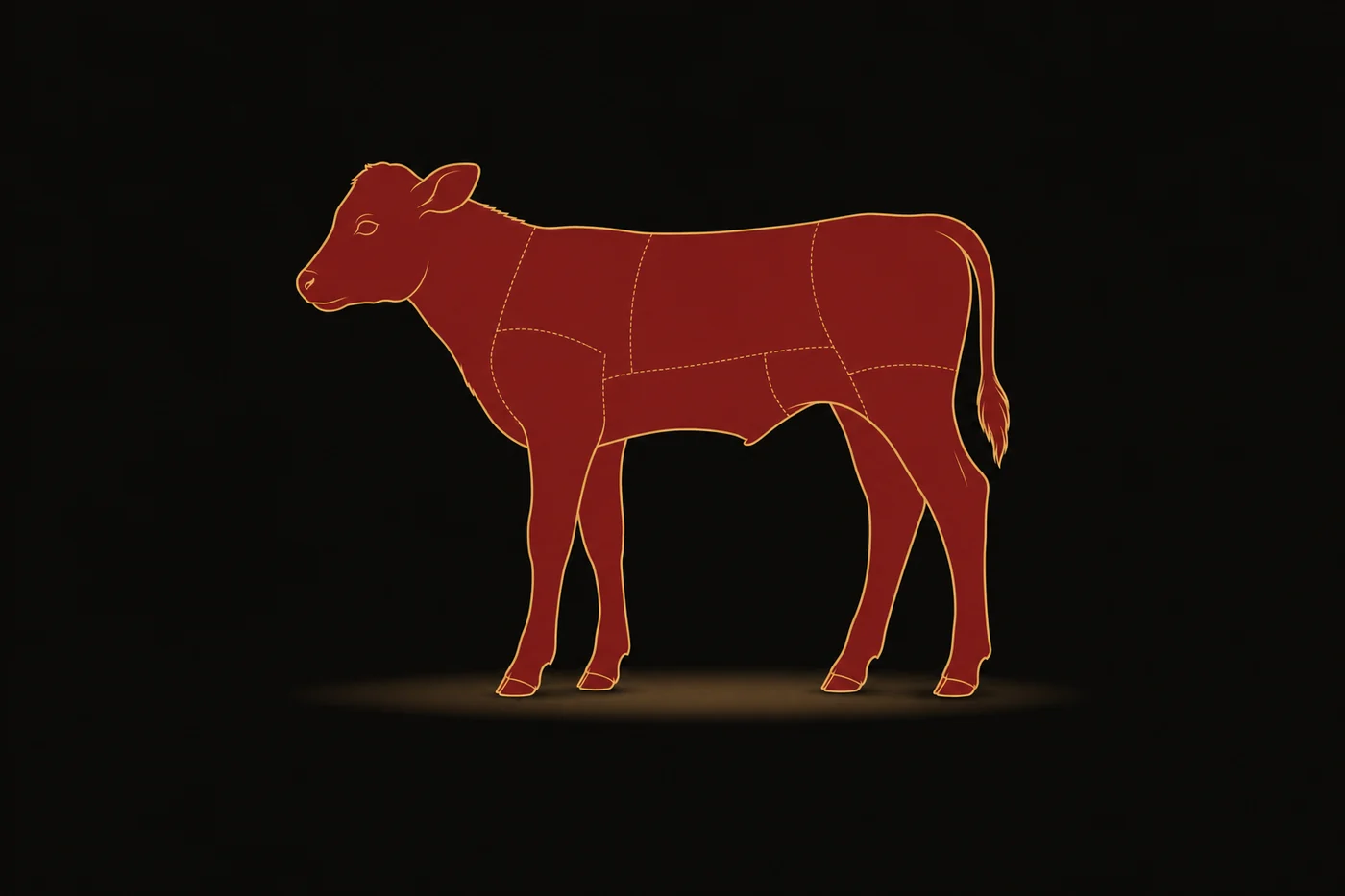
Veal is beef’s gentler cousin: pale, fine-grained and mild, from animals slaughtered young before muscles toughen or fat develops deep colour. Because the connective tissue is young and yielding, even the leg and shoulder stay relatively tender, and the classic preparations — osso buco, Wiener Schnitzel, vitello tonnato — lean on delicate flavour and silky texture rather than aggressive searing. Treat veal with restraint; it bruises easily under heat.
Muscles that move the animal constantly — neck, shoulder, leg — are dense with connective tissue and collagen. They reward low, slow, moist heat that melts collagen into gelatin. Muscles that mostly support weight rather than move it — the loin and rib along the spine — stay tender and suit fast, dry, high heat. Location on the chart is the single best predictor of how a cut wants to be cooked.
Select a primal to reveal its muscles, character and the cuts it yields.