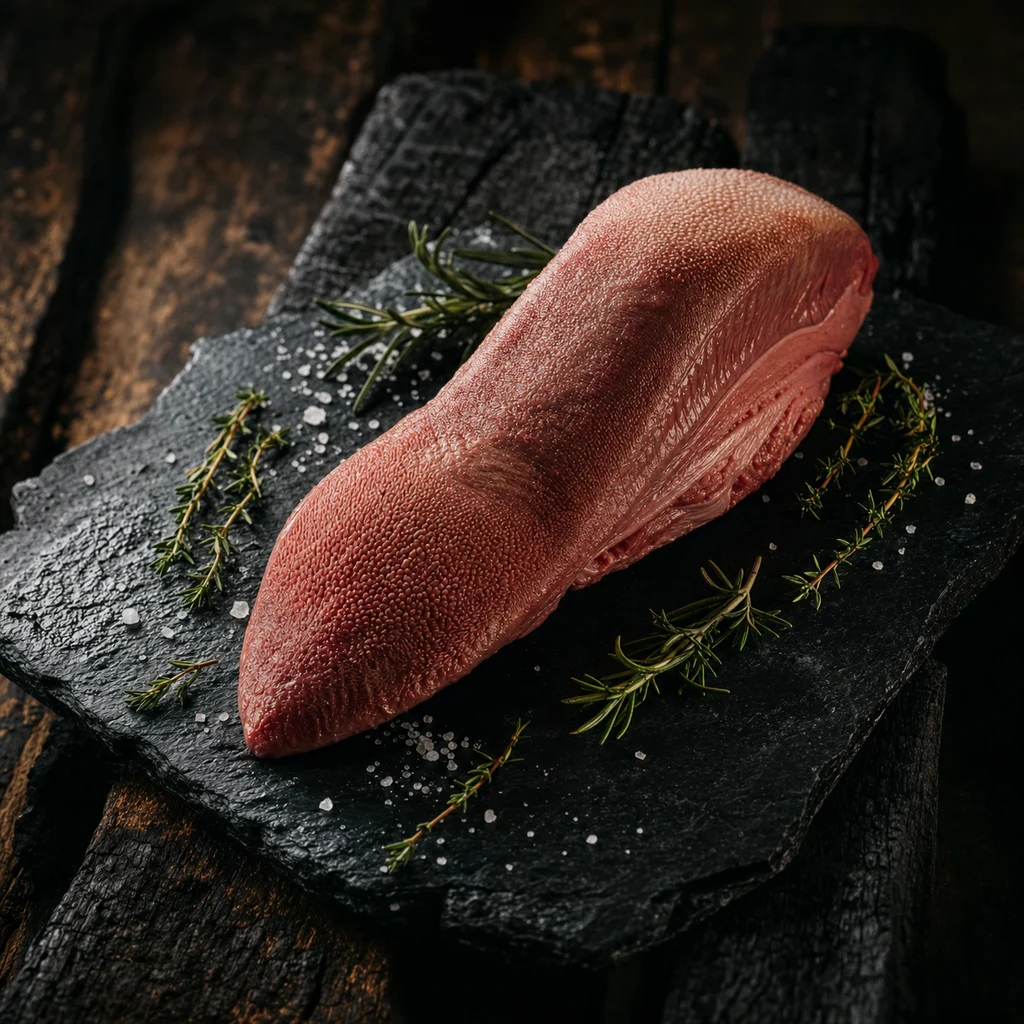
About this cut
Beef tongue is a highly prized delicacy among connoisseurs, celebrated for its incredibly dense, fine-grained texture and high fat content. When prepared with professional precision, it transforms from a tough working muscle into a melt-in-the-mouth centerpiece with a rich, velvety consistency. It lacks the stringy connective tissue of other cuts, offering a uniform tenderness that is both elegant and substantial. Its subtle yet deeply beefy flavor makes it one of the most versatile and luxurious pieces of offal in the nose-to-tail repertoire.
Taste-DNA
Consisting of the musculus linguae within the head, this is a highly active muscle group. Its constant use results in a complex structure that requires long, slow cooking to break down collagen into succulent gelatine.
Preparation
Cooking Guide
Simmer the tongue in a refined court-bouillon for 3 to 4 hours until the tip is tender to the touch; the outer skin must be peeled away immediately while the meat is still warm to avoid sticking. For a Michelin-standard finish, slice the peeled tongue and sear it briefly in foaming butter to develop a delicate Maillard crust. A common mistake is rushing the process, which leaves the muscle rubbery rather than tender. Always allow the meat to rest in its strained cooking liquor to ensure maximum moisture retention before final service.
Core Temperatures
Portions per Person
Cut through the rich, buttery mouthfeel with a vibrant, herb-forward Italian salsa verde and pair with a Dolcetto d'Alba, whose bright acidity and red fruit notes provide a classic Piedmontese balance.