About this cut
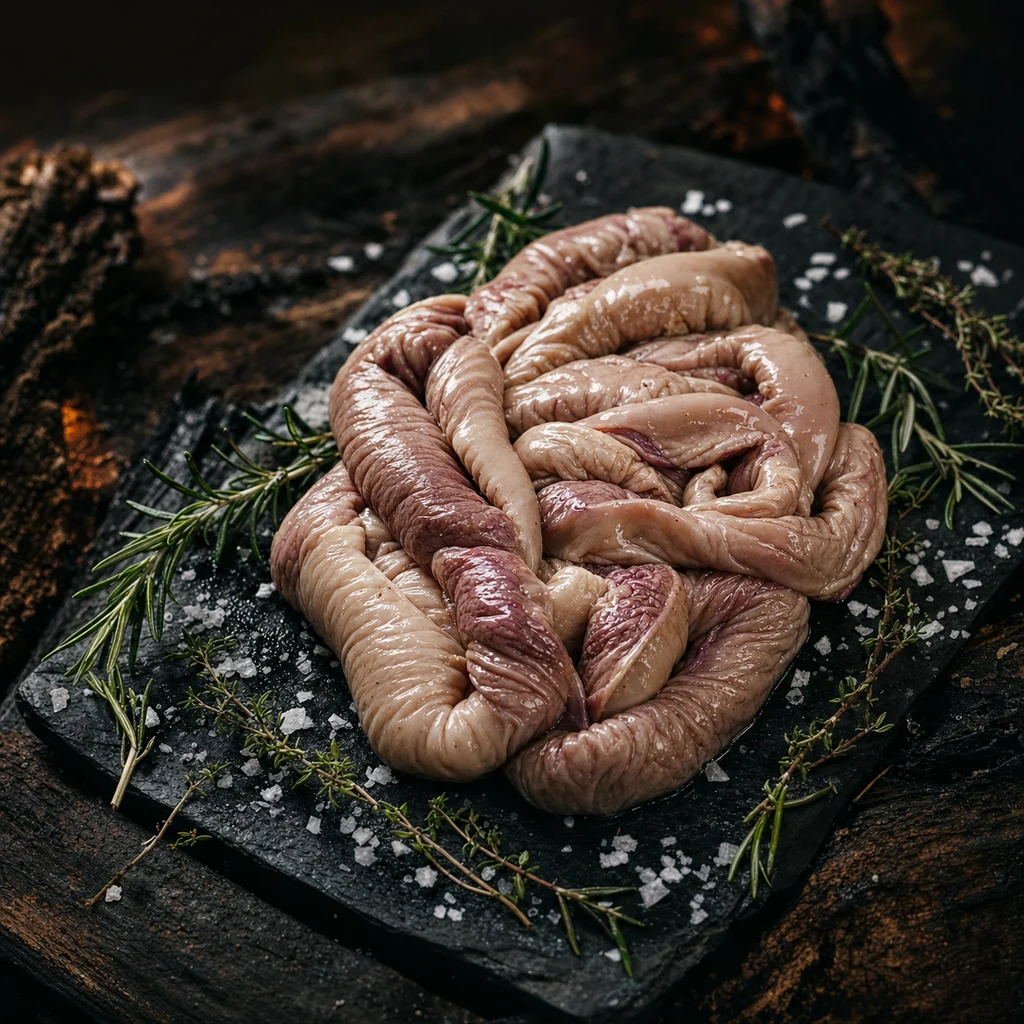
Beef Chitterlings, primarily the small intestine, are a celebrated delicacy across global soul food and offal traditions, prized for their unique textural contrast. Once meticulously cleaned and slow-cooked, they transform from a resilient structure into a tender, gelatinous morsel with a mild, buttery flavor profile. Their high collagen content provides a luxurious mouthfeel that absorbs aromatics beautifully during long braises. This cut represents the nose-to-tail philosophy at its most authentic, offering a sophisticated depth of flavor when handled with expert care.
Taste-DNA
Derived from the small intestine of the beef, this cut consists of a muscular wall rich in connective tissue. The density of the muscle fibers necessitates prolonged cooking to achieve a palatable, soft consistency.
Preparation
Cooking Guide
The most critical step is an exhaustive cleaning process, often involving multiple rinses and blanching to ensure a clean palate. Braise the chitterlings slowly in an aromatic liquid until they reach a fork-tender state, which typically takes several hours. For a Michelin-level finish, deep-fry or pan-sear the braised pieces to create a crispy Maillard crust that contrasts with the silken interior. Avoid rushing the process, as undercooked intestines remain rubbery and unappealing.
Core Temperatures
Portions per Person
The rich, gelatinous nature of chitterlings pairs exceptionally well with a robust, fruit-forward Zinfandel or a rustic Syrah that can stand up to the earthy notes. Alternatively, a high-acid sparkling wine can provide a refreshing counterpoint to the dish's inherent richness.