About this cut
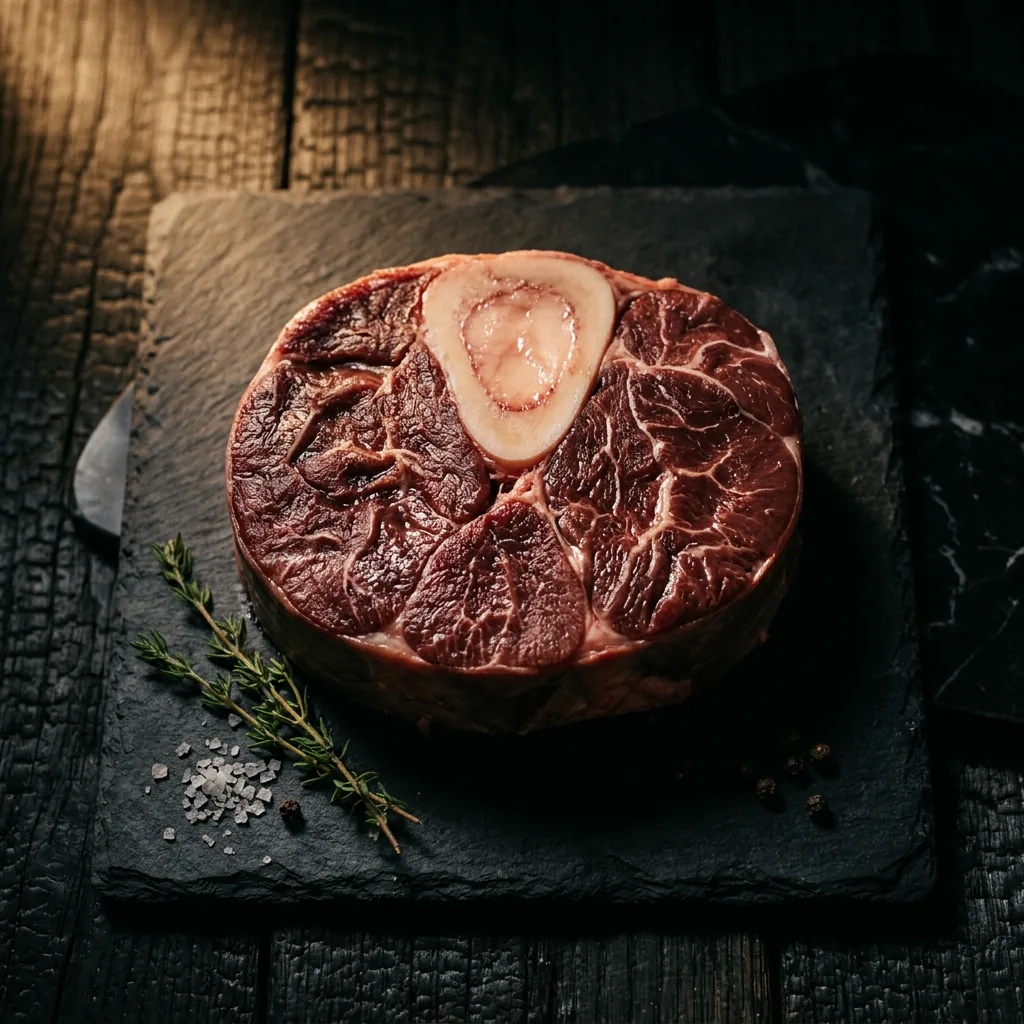
The beef shank is a powerhouse of flavor, characterized by its dense muscular structure and high concentration of connective tissue. When cross-cut, it reveals a marrow-filled bone that acts as a natural flavor enhancer during the long cooking process. Despite its initial toughness, slow-braising transforms the collagen into silky gelatin, resulting in a fork-tender texture with a deep, savory profile. This cut is the quintessential choice for those seeking the ultimate richness in stews and traditional slow-cooked dishes.
Taste-DNA
Derived from the lower legs of the steer, these muscles are heavily exercised and laden with connective tissue, specifically collagen. This anatomical reality necessitates moist-heat cooking to break down the tough fibers into a meltingly soft consistency.
Preparation
Cooking Guide
The secret to a perfect shank lies in patience and moisture; braising at low temperatures around 150°C is essential. Start with a hard sear to develop a Maillard crust, then submerge halfway in a rich stock and wine reduction for 3 to 4 hours. Aim for an internal temperature where the meat naturally pulls away from the bone, ensuring the marrow has softened completely. Avoid high heat after the initial sear, as it will tighten the proteins and prevent the collagen from rendering properly.
Core Temperatures
Portions per Person
For a classic Ossobuco, finish with a bright Gremolata and pair with a high-tannin red like Barolo or Brunello di Montalcino to cut through the rich, gelatinous mouthfeel.