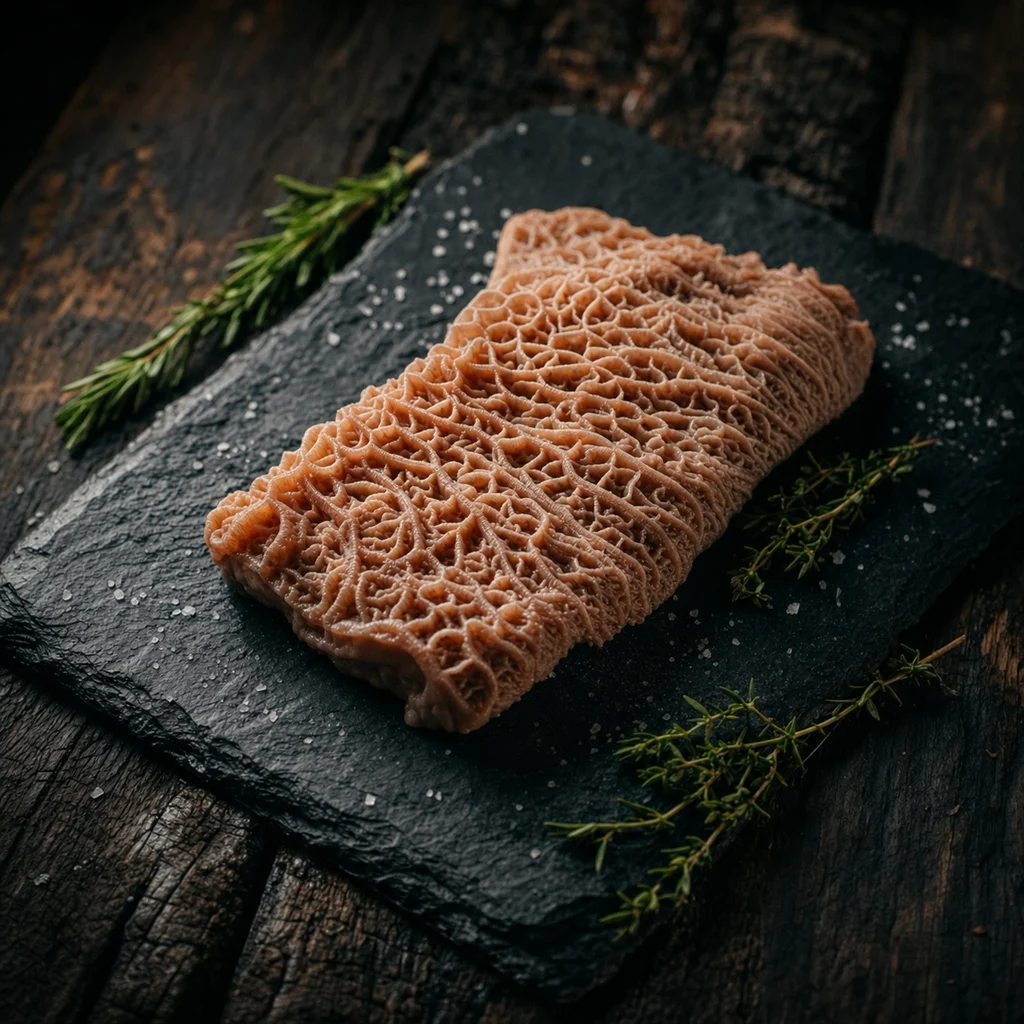
About this cut
Beef tripe is a prized offal cut sourced from the muscular stomach linings, celebrated for its intricate architecture and exceptional ability to carry complex flavors. Whether utilizing the honeycomb or the flat varieties, it offers a sophisticated, mild profile that acts as a canvas for aromatics and rich sauces. Once the tough connective tissue is properly broken down, it transforms into a melt-in-the-mouth, gelatinous delicacy with a luxurious mouthfeel. It represents the height of traditional nose-to-tail gastronomy, offering a textural experience unlike any muscle cut.
Taste-DNA
Tripe is derived from the first three chambers of the bovine stomach, primarily the rumen and the honeycomb-like reticulum. These muscles are composed of dense connective tissue that requires long-duration thermal processing to hydrolyze the collagen into gelatin.
Preparation
Cooking Guide
The process must begin with thorough cleaning and multiple blanching cycles to ensure a neutral, clean base. Slow-braise the tripe in an aromatic liquid for three to five hours at a gentle simmer, or utilize a pressure cooker to accelerate the breakdown of collagen. The objective is a supple, tender consistency that yields easily to the tooth; any rubberiness indicates undercooking. For a contemporary twist, tripe can be pressed, chilled, and then pan-seared to achieve a crispy exterior that contrasts with its soft, unctuous interior.
Core Temperatures
Portions per Person
The high collagen and gelatinous richness of tripe pair exquisitely with the earthy depths and structural acidity of a cool-climate Pinot Noir or an aged, mineral-driven Riesling.