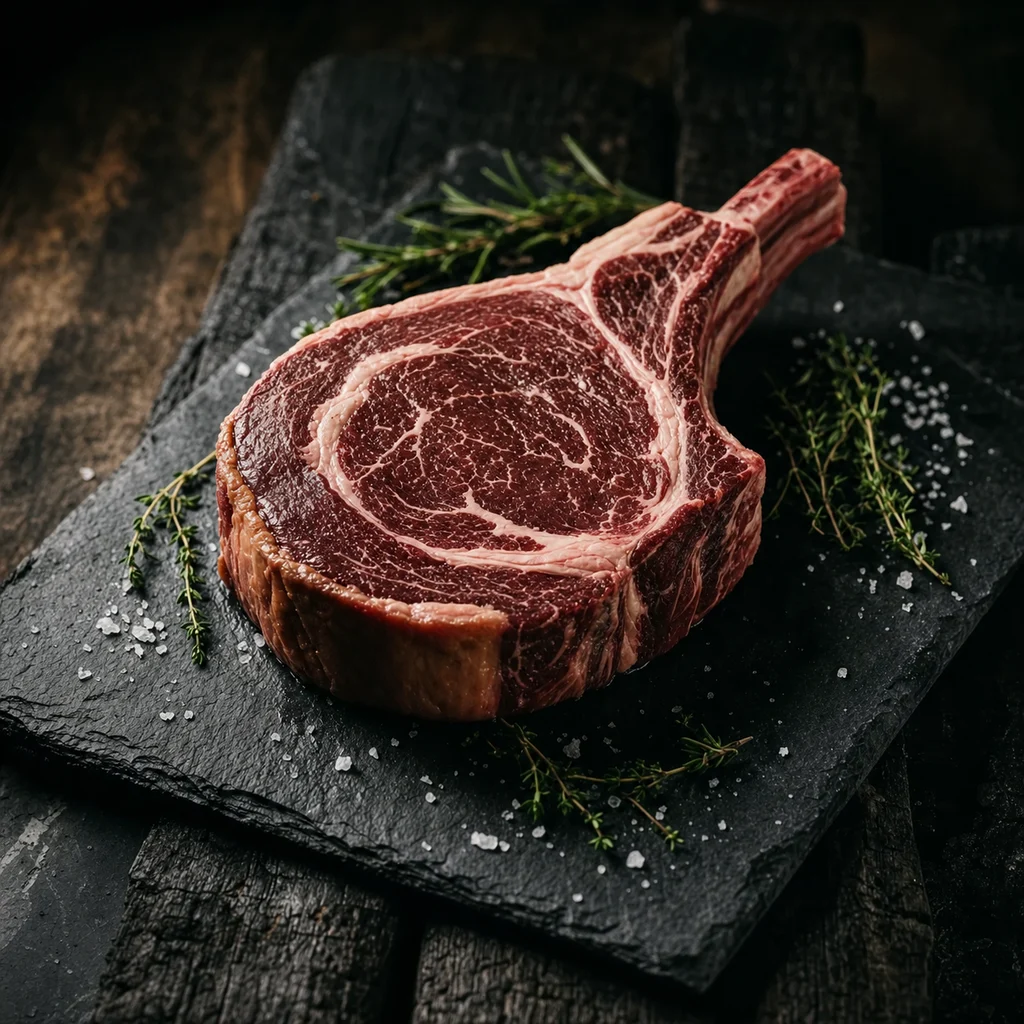
About this cut
The Bison Ribeye represents the pinnacle of lean, nutrient-dense luxury, carved from the longissimus dorsi muscle along the spine. While it mirrors the classic beef ribeye in shape, it possesses a significantly leaner profile and a deeper, ruby-red hue indicative of its higher iron content. Expect a sophisticated balance of clean, beefy sweetness and a nuanced, earthy finish that distinguishes wild-roaming bison from grain-finished cattle. It offers a firm yet tender bite, demanding precision to preserve its delicate moisture levels.
Taste-DNA
Located in the rib primal between the chuck and the loin, this cut consists primarily of the longissimus dorsi muscle. Because bison are far more active than domesticated cattle, this muscle is well-developed, resulting in intense flavor despite having less intramuscular fat.
Preparation
Cooking Guide
Due to its low fat content, bison cooks approximately 30% faster than beef; use a lower searing temperature to prevent the proteins from tightening too quickly. Aim for a perfect medium-rare (52°C/125°F) as the lack of marbling makes it prone to drying out if cooked beyond medium. Always allow for a generous resting period in a warm spot to let the juices redistribute properly. A swift sear followed by gentle indirect heat is the preferred method for this lean titan.
Core Temperatures
Portions per Person
The lean, mineral-rich profile of bison pairs exquisitely with a bold Cabernet Franc or a Montepulciano d'Abruzzo, which provide enough tannins to cut through the protein without overwhelming the subtle gamey notes.