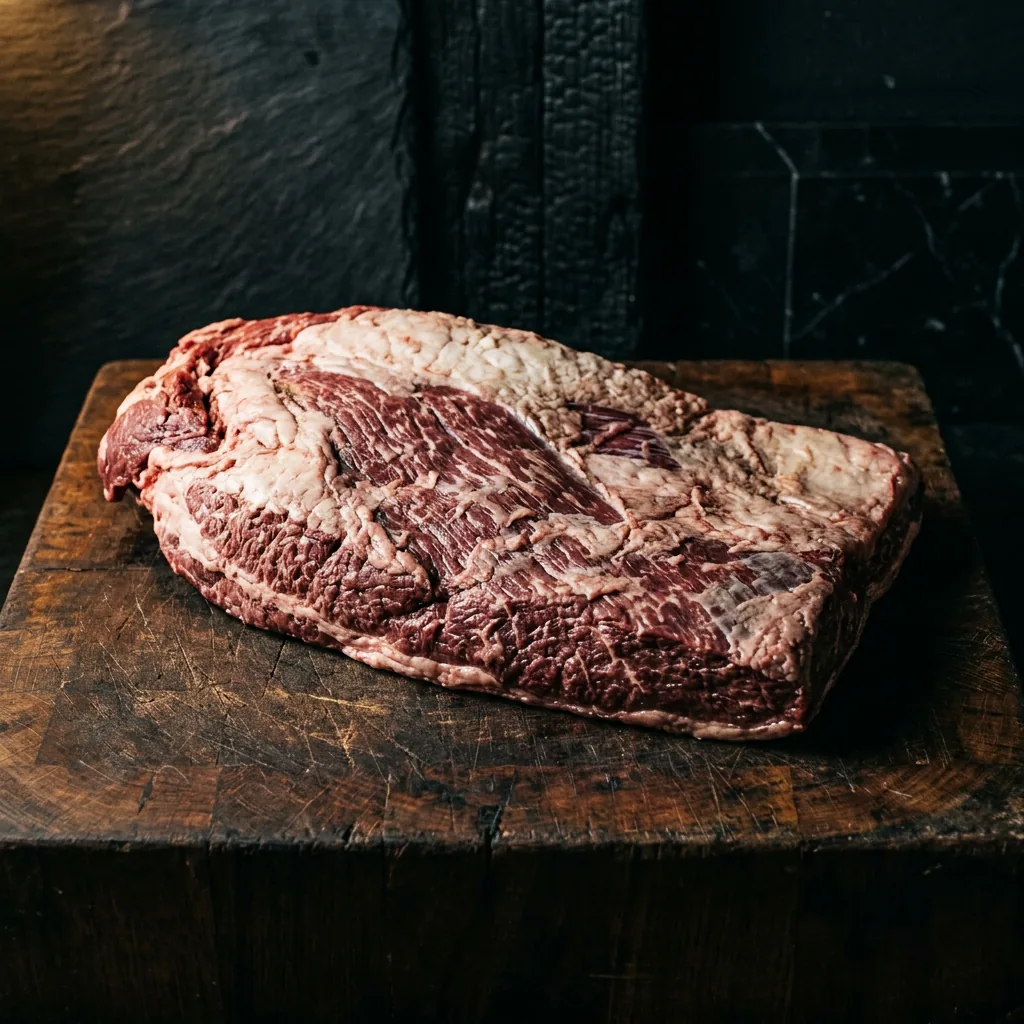
About this cut
The brisket is the ultimate test of a chef's patience and skill, consisting of the pectoral muscles that support a significant portion of the steer's weight. It features a unique composition of deep beefy flavor and heavy connective tissue that requires long, slow cooking to transform into buttery tenderness. With its distinct layers—the lean 'flat' and the highly marbled 'point'—it offers a complex textural experience defined by rendered fat and gelatinous richness.
Taste-DNA
Comprising the pectoralis profundus and superficialis muscles from the chest, this hard-working area is dense with collagen due to its role in weight-bearing and locomotion.
Preparation
Cooking Guide
Low and slow is the absolute mandate; whether smoking or braising, aim for a target internal temperature of 203°F (95°C) to fully denature the collagen. To preserve moisture, use the 'Texas crutch' technique by wrapping in butcher paper once the bark is set and the stall begins. Most importantly, allow for a minimum two-hour rest in an insulated environment to let the fibers reabsorb their rendered juices before slicing against the grain.
Core Temperatures
Portions per Person
Balance the heavy smoke and rendered fat with a high-tannin Syrah or a bold, oak-aged Bourbon; the structure and acidity are essential to cut through the gelatinous richness.