About this cut
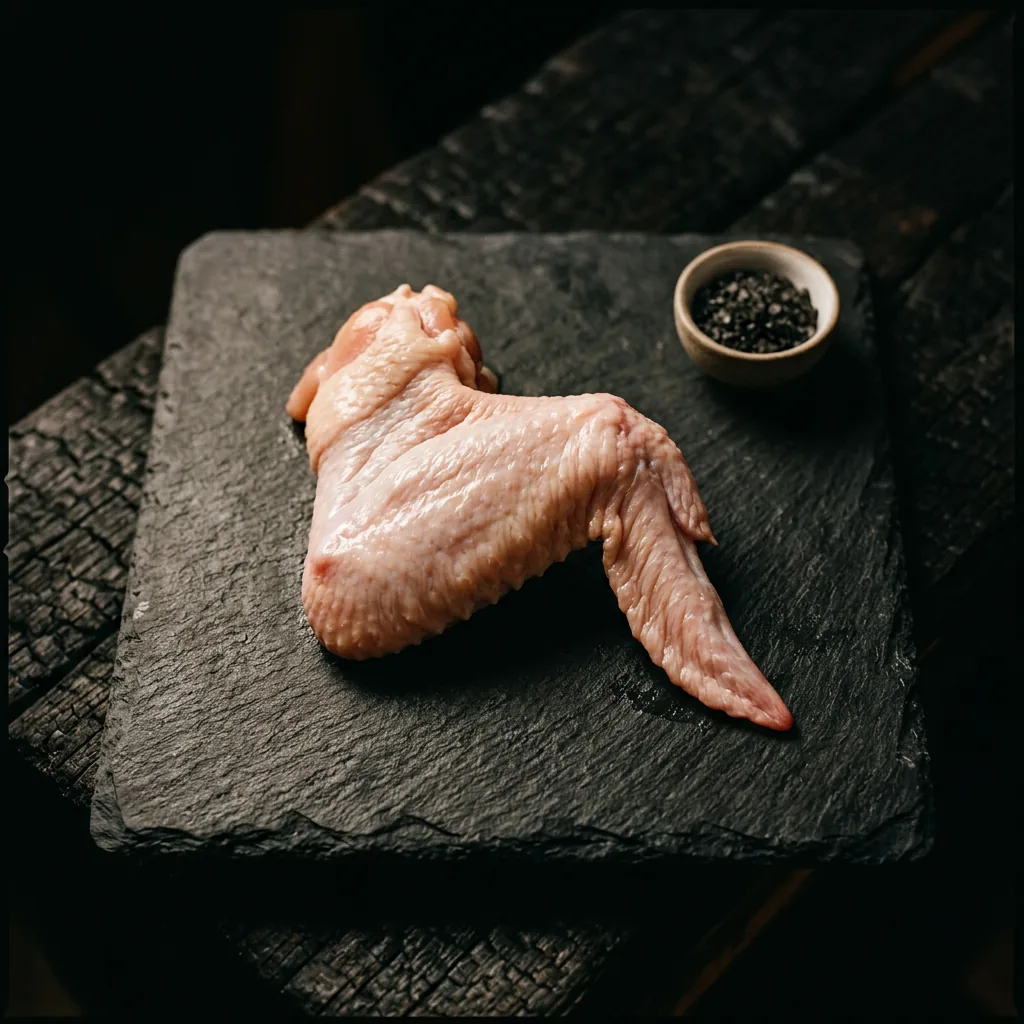
The chicken wing is a culinary marvel of texture, prized by chefs for its exceptional skin-to-meat ratio and collagen-rich structure. Comprising succulent dark meat, it offers a deeper, more savory flavor profile than the breast, remaining intensely juicy even under high-heat applications. Whether served as a refined gastropub appetizer or a centerpiece of open-fire cooking, its interplay of rendered fat and crispy integument makes it a versatile favorite. The presence of the bone throughout the cooking process ensures a moist interior and a profound depth of umami.
Taste-DNA
The wing consists of three sections: the drumette (humerus), the flat or wingette (radius and ulna), and the tip. The high concentration of connective tissue and skin around these active locomotor bones requires heat to render fat and convert collagen into silky gelatin.
Preparation
Cooking Guide
Achieving the perfect wing requires a two-stage thermal approach: initially rendering the subcutaneous fat followed by high-heat exposure to trigger the Maillard reaction for a shattering crispness. For deep-frying, maintain an oil temperature of 190°C (375°F); for roasting, use indirect convection heat to ensure the internal temperature reaches 80°C (176°F), which allows the collagen to fully break down. Avoid overcrowding the pan or grill, as steam will prevent the skin from dehydrating and crisping. Always rest for two minutes to allow the juices to redistribute without softening the exterior.
Core Temperatures
Portions per Person
The high fat content and potential for spicy or umami-heavy glazes demand a beverage with high acidity or carbonation, such as a citrus-forward West Coast IPA or a dry, sparkling Crémant to cleanse the palate.