About this cut
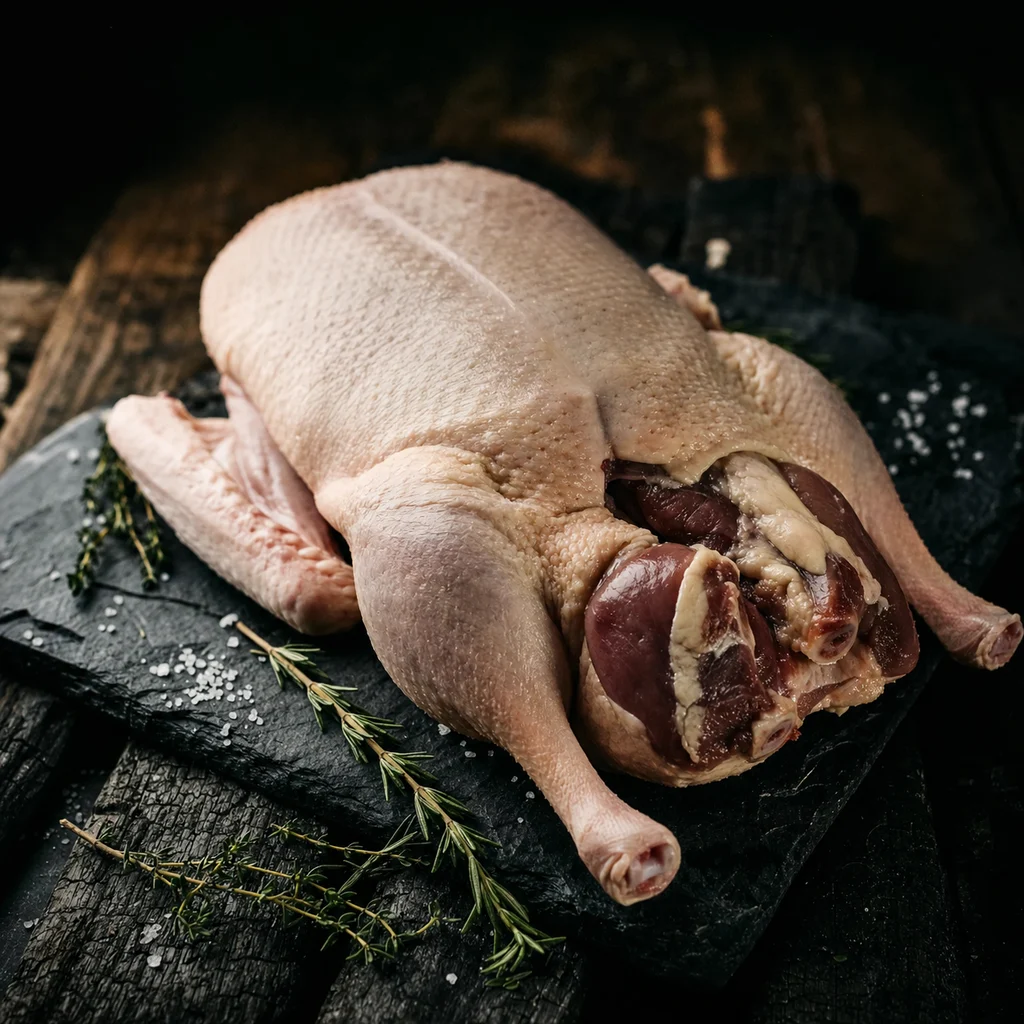
The whole duck is a centerpiece of culinary decadence, prized for its succulent dark meat and a significant layer of subcutaneous fat that bastes the bird from within. Unlike leaner poultry, the duck offers a deep, savory profile with a luxurious mouthfeel and a skin that, when properly rendered, becomes exceptionally crisp and flavorful. It represents the pinnacle of waterfowl gastronomy, balancing gamey intensity with a tender, moist texture. This cut is equally at home in a traditional European rotisserie or a sophisticated Asian lacquer-roasting preparation.
Taste-DNA
A complete carcass featuring the heavily worked pectoralis (breast) and iliofibularis (leg) muscles, encased in a thick fat layer designed for buoyancy and insulation. This unique fat distribution is key to its moisture retention and characteristic richness during dry-heat cooking.
Preparation
Cooking Guide
To achieve a perfect result, score the skin in a crosshatch pattern or prick it all over to facilitate fat rendering without piercing the meat. Start with a slow roast at 150°C (300°F) to melt the fat layer, then increase the temperature to 220°C (425°F) for the final 20 minutes to achieve a shattered-glass skin texture. Target a core temperature of 57°C (135°F) for the breast while allowing the legs to reach a higher temperature for tenderness. Always rest the bird for 20 minutes before carving to ensure the internal juices settle.
Core Temperatures
Portions per Person
The duck's inherent fattiness demands a wine with high acidity or structural tannins; a classic Pinot Noir or a cool-climate Syrah provides the perfect counterpoint. Enhance the dish with a fruit-based reduction like a cherry gastrique to bridge the gap between the savory meat and the wine's acidity.