About this cut
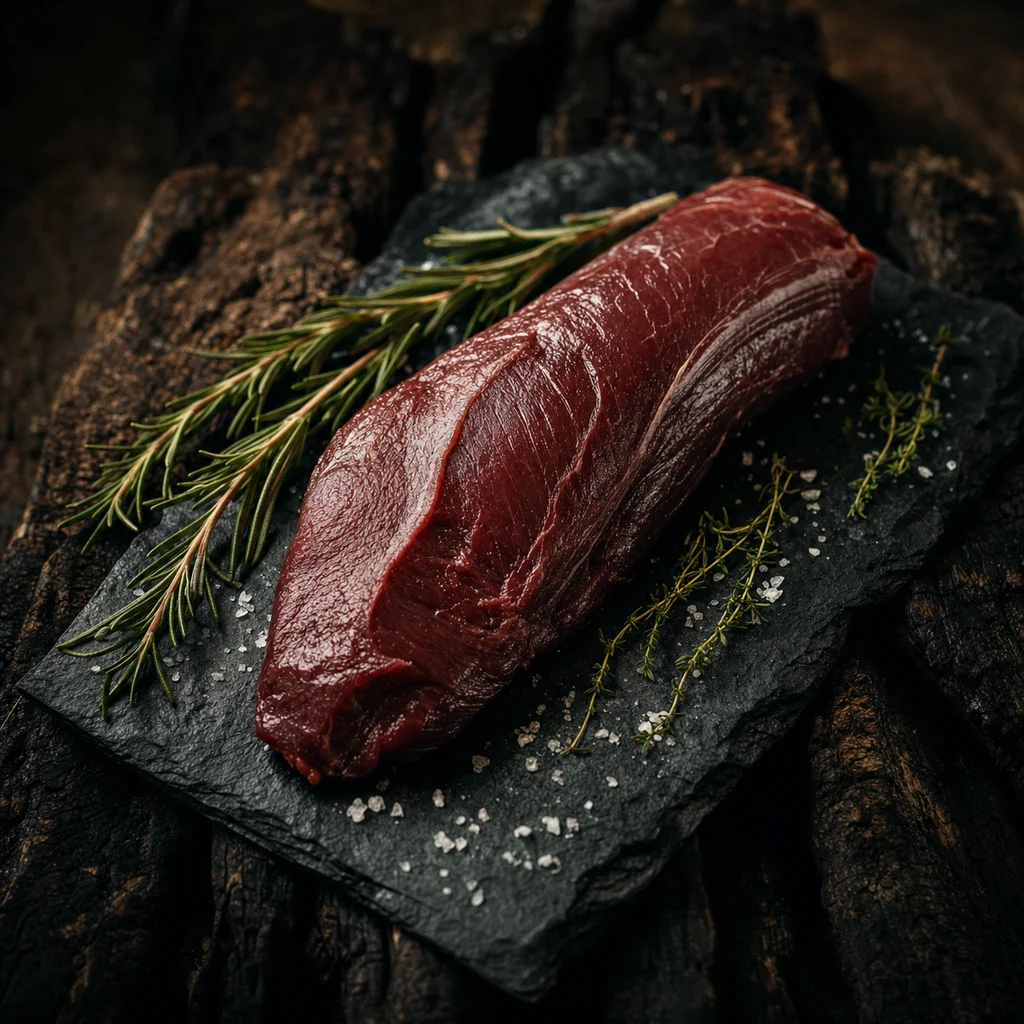
The elk backstrap represents the pinnacle of wild game, offering an incredibly lean yet buttery texture that surpasses traditional venison in approachability. Spanning the length of the spine, this muscle experiences minimal exertion, resulting in a grain so fine it provides a melt-in-the-mouth experience when prepared correctly. Its flavor profile is remarkably clean and slightly sweet, lacking the aggressive musky notes often associated with older wild cervids. For the culinary enthusiast, it is a versatile canvas that balances the ruggedness of the wilderness with the elegance of a premium beef tenderloin.
Taste-DNA
Sourced from the longissimus dorsi muscle along the elk's spine, this cut is prized for its lack of connective tissue and uniform shape. Because this muscle provides stability rather than locomotion, it remains exceptionally tender and lean throughout.
Preparation
Cooking Guide
To preserve the delicate structure and prevent the meat from becoming dry, it must be cooked to no more than medium-rare, targeting a core temperature of 52-54°C. Start with a high-heat sear to develop a Maillard crust, then finish with a gentle indirect heat or butter-basting with thyme and garlic. Avoid overcooking at all costs, as the lack of intramuscular fat offers no protection against toughening; a mandatory 10-minute rest is essential for juice redistribution.
Core Temperatures
Portions per Person
Due to its leaner profile and subtle sweetness, avoid heavy, high-tannin wines; instead, opt for a cool-climate Oregon Pinot Noir or a refined Syrah to complement the forest-floor nuances.