About this cut
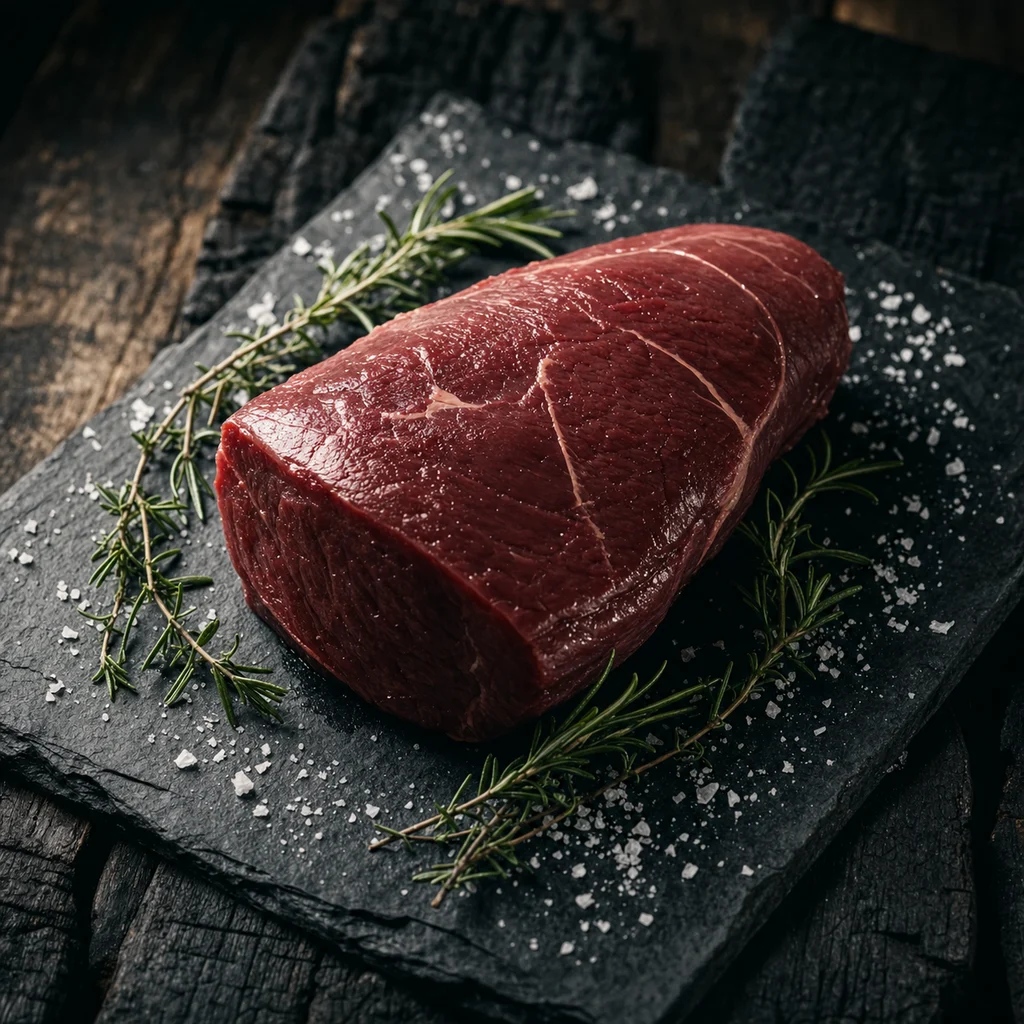
The elk loin is the crown jewel of big-game cuts, celebrated for its exceptionally lean profile and fine-grained tenderness. It offers a deep, ruby-red color and a sophisticated flavor profile that is more pronounced than beef but cleaner and more elegant than traditional venison. This cut provides a melt-in-the-mouth texture with minimal connective tissue, making it the primary choice for high-end steaks and medallions. Its rarity and lean, nutrient-dense composition place it firmly in the ultra-premium category of wild proteins.
Taste-DNA
The loin consists of the Longissimus dorsi muscle running along the spine, a region that performs very little mechanical work, resulting in superior tenderness and a lack of tough fibers.
Preparation
Cooking Guide
Due to its extremely low intramuscular fat content, elk loin must be handled with precision to avoid drying out; aim for a core temperature of 52-54°C (rare to medium-rare). Sear quickly over high heat to develop a Maillard crust, then finish with gentle indirect heat or butter-basting with thyme and garlic. Crucially, allow the meat to rest for at least 10 minutes to redistribute juices. Avoid cooking past medium, as the lack of marbling will cause the protein fibers to tighten and toughen rapidly.
Core Temperatures
Portions per Person
The iron-rich, lean character of elk demands a structured red wine like a cool-climate Syrah or a bold Cabernet Sauvignon, ideally finished with a reduction of juniper berries and mountain currants.