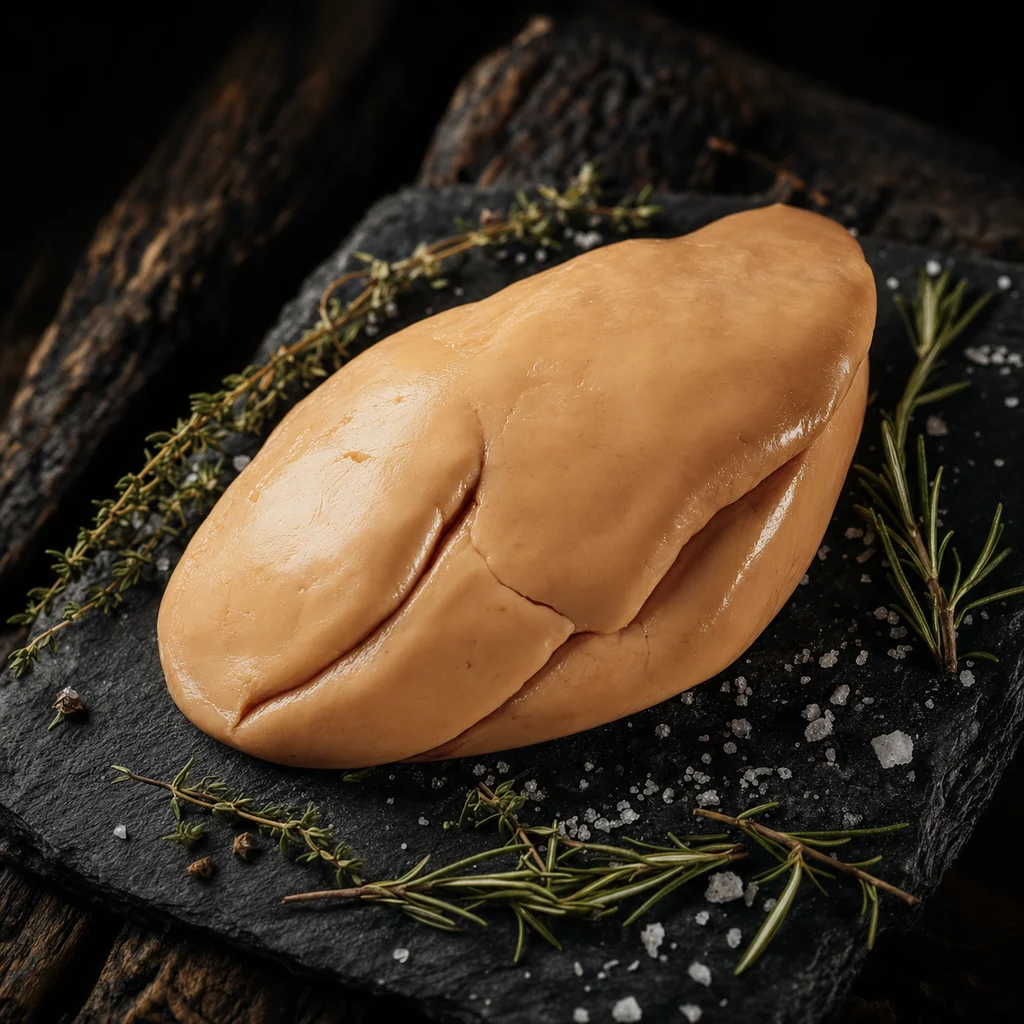
About this cut
Foie gras represents the pinnacle of culinary luxury, a velvet-textured delicacy derived from the enlarged livers of specially fattened ducks. Its exceptionally high lipid content results in a melt-in-the-mouth consistency that is both intensely buttery and subtly sweet, with a complex mineral depth. Unlike standard poultry liver, it lacks any grainy texture, instead offering a homogenous, silk-like structure that is highly prized in haute cuisine for its unctuous mouthfeel.
Taste-DNA
This is the hypertrophied liver of the Moulard duck, where controlled feeding creates a high concentration of fats within the hepatic cells. This physiological state transforms the organ into a dense, creamy fat-storing powerhouse that behaves more like a solid fat than a traditional protein when exposed to heat.
Preparation
Cooking Guide
For fresh slices, quick pan-searing is essential; use a dry, ripping-hot skillet to achieve a deep caramelized crust while keeping the interior just barely warm at approximately 45°C (113°F). Overcooking is the primary risk, as the liver will quickly liquefy into yellow oil if left on the heat for more than 60-90 seconds per side. When preparing terrines, gentle poaching at low temperatures between 50-60°C is required to preserve the emulsified structure and delicate aromatics without rendering out the fat.
Core Temperatures
Portions per Person
The definitive pairing is a botrytized Sauternes, where the wine's residual sweetness and high acidity cut through the intense fat, though a dry, spicy Gewürztraminer provides a sophisticated and fragrant alternative.