 The Atlas
Paleron (French Chuck Flap / Featherblade)
rich · collagen-rich · gelatinous · deeply savory
About this cut
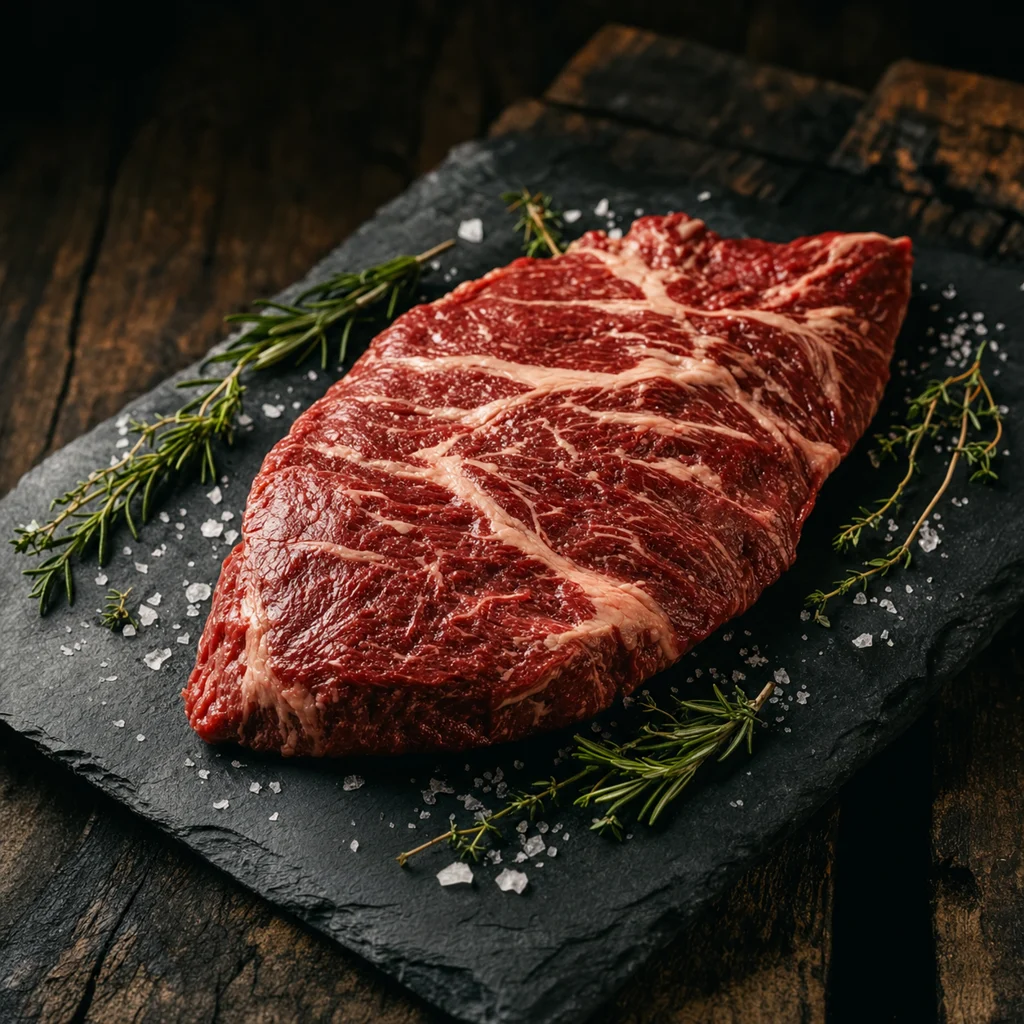
The Paleron is a quintessential French braising cut from the beef shoulder, characterized by its distinctive central seam of connective tissue. When prepared correctly, this collagen-rich line transforms into succulent gelatin, providing an unctuous mouthfeel and extraordinary depth of flavor. It offers a dense, meaty texture that absorbs aromatics beautifully, making it the soul of traditional slow-cooked dishes. Its heavy marbling and deep crimson hue signal a robust, savory profile prized by chefs for its reliability in long-simmered preparations.
Taste-DNA
Originating from the infraspinatus muscle located on the shoulder blade, this cut is a hard-working muscle heavily laden with connective tissue. This specific anatomy dictates a slow-cooking approach to break down the tough fibers and the prominent central tendon.
Preparation
Cooking Guide
To achieve peak tenderness, braise the Paleron whole at a low, consistent temperature—ideally around 140°C in the oven—within a rich liquid like red wine or beef stock. Aim for an internal core temperature of 88-92°C to ensure the internal collagen has fully gelatinized into a melting texture. Avoid high-heat roasting, which will cause the muscle fibers to seize and the central seam to remain rubbery. Always allow the meat to rest in its own cooking juices to reabsorb moisture before slicing.
Core Temperatures
Portions per Person
A classic staple of Pot-au-feu, the Paleron's rich, gelatinous coating pairs exquisitely with the structured tannins of a Malbec from Cahors or the earthy elegance of a southern Burgundy Pinot Noir.