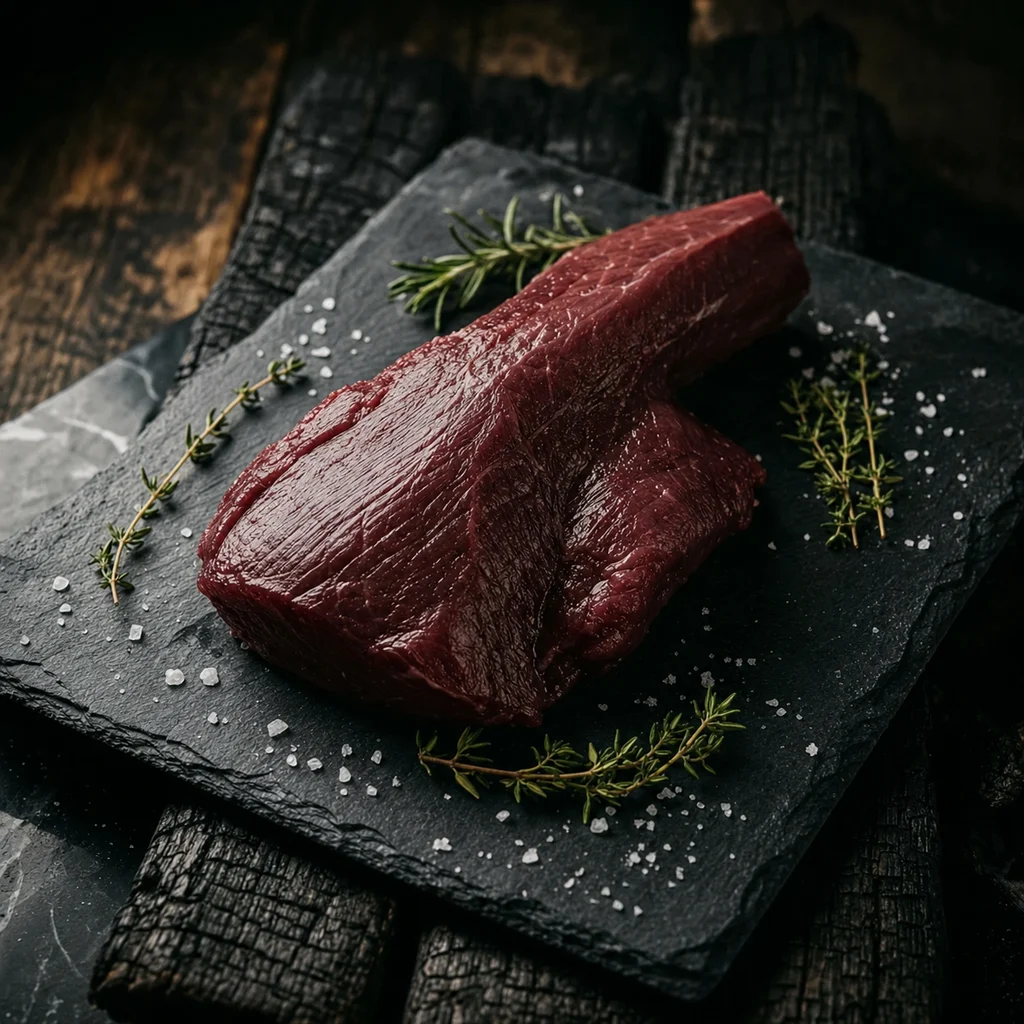
About this cut
The hare saddle is the most prized cut of wild game, celebrated for its lean, dark, and exceptionally fine-grained muscle structure. Unlike farmed rabbit, it possesses a deep mahogany color and a concentrated flavor profile defined by wild herbs and mineral-rich iron notes. Its lack of intramuscular fat makes it a delicacy of precision, requiring a chef's touch to preserve its succulent, velvety texture. It represents the pinnacle of seasonal forest-to-table dining, offering an intensity that is unmatched by domesticated proteins.
Taste-DNA
Comprising the longissimus dorsi along the spine, this muscle remains tender as it performs stability rather than heavy locomotive work. Its dark pigmentation is a result of high myoglobin levels, reflecting the hare's active lifestyle and wild diet.
Preparation
Cooking Guide
Precision is paramount; for young leveret, sear quickly at high heat to achieve a Maillard crust and finish to a core temperature of 48-52°C (rare). Older hare benefits from traditional larding or wrapping in caul fat to provide the moisture that the lean meat lacks. Avoid cooking beyond medium-rare, as the lean fibers will quickly become dry and develop an unpleasant liver-like metallic taste. Always rest the meat in a warm place for at least 8 minutes to ensure the juices are retained within the fibers.
Core Temperatures
Portions per Person
A classic pairing requires a wine with enough structure and earthiness to match the gamey intensity, such as an aged Gevrey-Chambertin or a robust Northern Rhône Syrah.