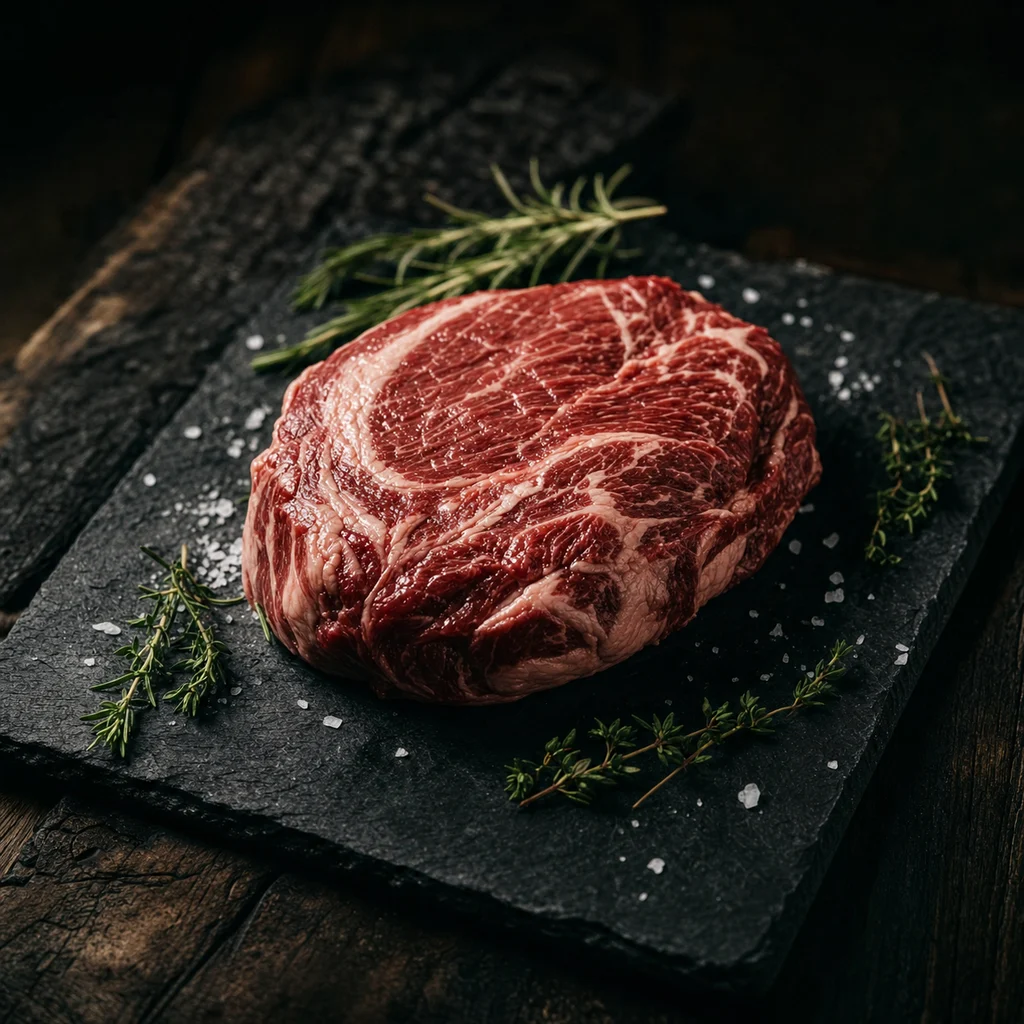
 The Atlas
Guancia di Manzo (Beef Cheek)
deeply savory · gelatinous · rich · wine-braised complexity
About this cut
Beef cheeks, known in Italy as Guancia di Manzo, are the ultimate connoisseur's choice for slow-cooking. This heavily exercised muscle is characterized by an extraordinary concentration of connective tissue and intramuscular collagen, which transforms into a rich, silky gelatin during the cooking process. The result is a cut that possesses an unparalleled depth of flavor and a unique, meltingly tender texture that no prime steak can replicate. It is the gold standard for luxurious, fork-tender braises that yield a naturally thickened, glossy sauce.
Taste-DNA
The Masseter muscle, located in the cheek area of the cow, is a primary muscle of mastication that works constantly throughout the animal's life. This relentless activity results in high levels of collagen and a dense grain, necessitating long, moist-heat cooking to break down the fibers.
Preparation
Cooking Guide
The secret to a perfect Guancia is patience and low, moist heat; braising is the non-negotiable technique here. Aim for a long simmer in a rich liquid until the internal temperature reaches approximately 90-95°C (195-203°F), the sweet spot where collagen fully gelatinizes. Avoid aggressive boiling, which can toughen the fibers, and always allow the meat to rest in its own braising liquid to maximize succulence. For modern precision, a 24-to-48-hour sous-vide at 80°C delivers a structured yet impossibly tender result.
Core Temperatures
Portions per Person
The intense richness and gelatinous mouthfeel of braised cheeks require a wine with significant structure and acidity; a classic Barolo or a bold Aglianico provides the necessary tannins to cut through the fat and complement the deep umami profile.