About this cut
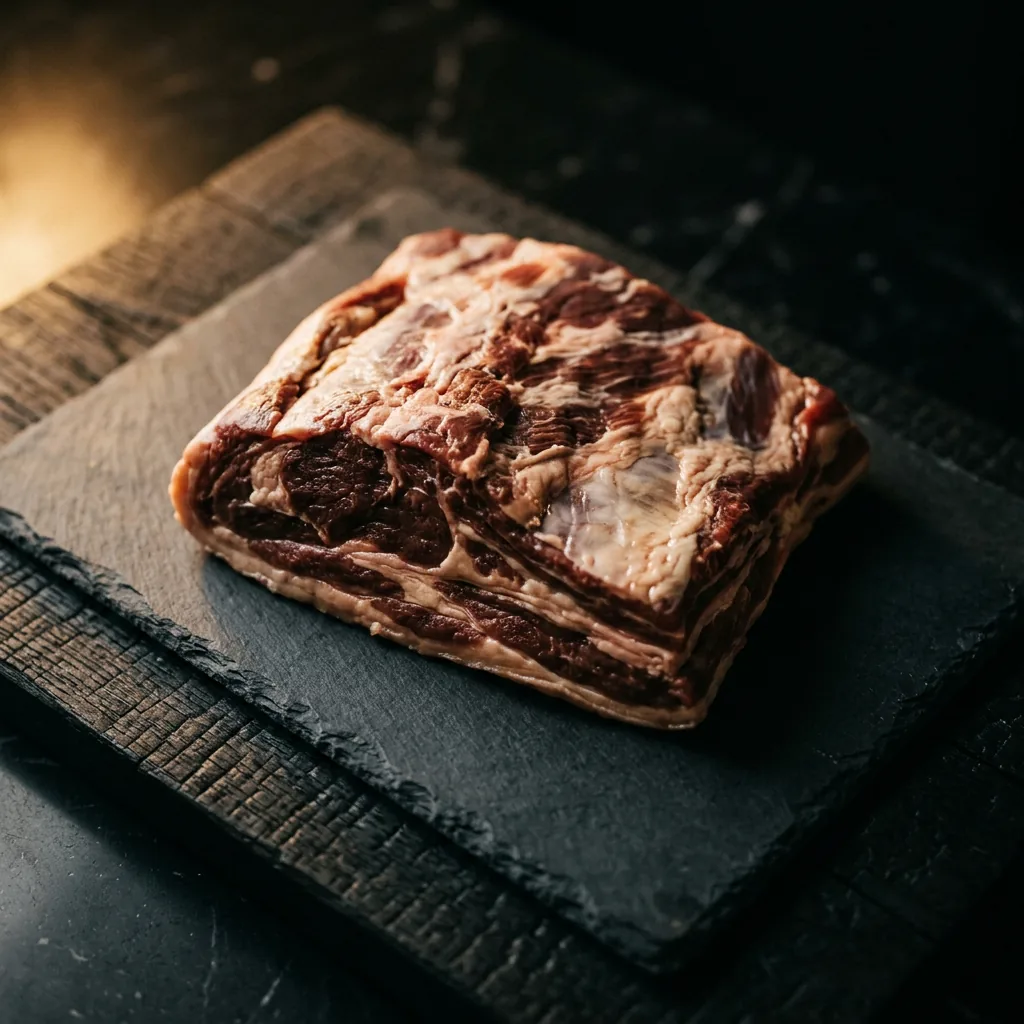
Lamb breast is a sophisticated choice for the connoisseur, prized for its alternating layers of succulent fat, lean muscle, and flavor-rich cartilage. Often considered the lamb equivalent of pork belly, it offers an incredible depth of flavor and a luxurious, melting texture when cooked slowly. Its high fat-to-meat ratio ensures the meat remains exceptionally moist, providing a rich mouthfeel that lean cuts cannot replicate. It is a quintessential cut for those who appreciate the 'nose-to-tail' philosophy and deep, umami-driven profiles.
Taste-DNA
Located in the ventral portion of the chest, this cut comprises the sternum and lower rib sections. Due to its proximity to the forequarter and its role in supporting the animal's weight, it is dense with connective tissue and collagen that requires prolonged thermal breakdown.
Preparation
Cooking Guide
The key to a perfect lamb breast is patience through slow-roasting or braising to effectively render the significant fat layers. Score the fat cap in a diamond pattern to encourage drainage and seasoning penetration, then cook at a low temperature (140°C) until the internal temperature reaches 85-90°C for fork-tender results. Finish under a high grill or in a hot pan to crisp the skin into a glass-like crackling. Avoid rushing the process, as the collagen needs time to transform into gelatin.
Core Temperatures
Portions per Person
The intense richness of lamb breast demands a high-acid, tannin-heavy accompaniment like a Northern Rhône Syrah or a bright gremolata to cut through the lipid profile.