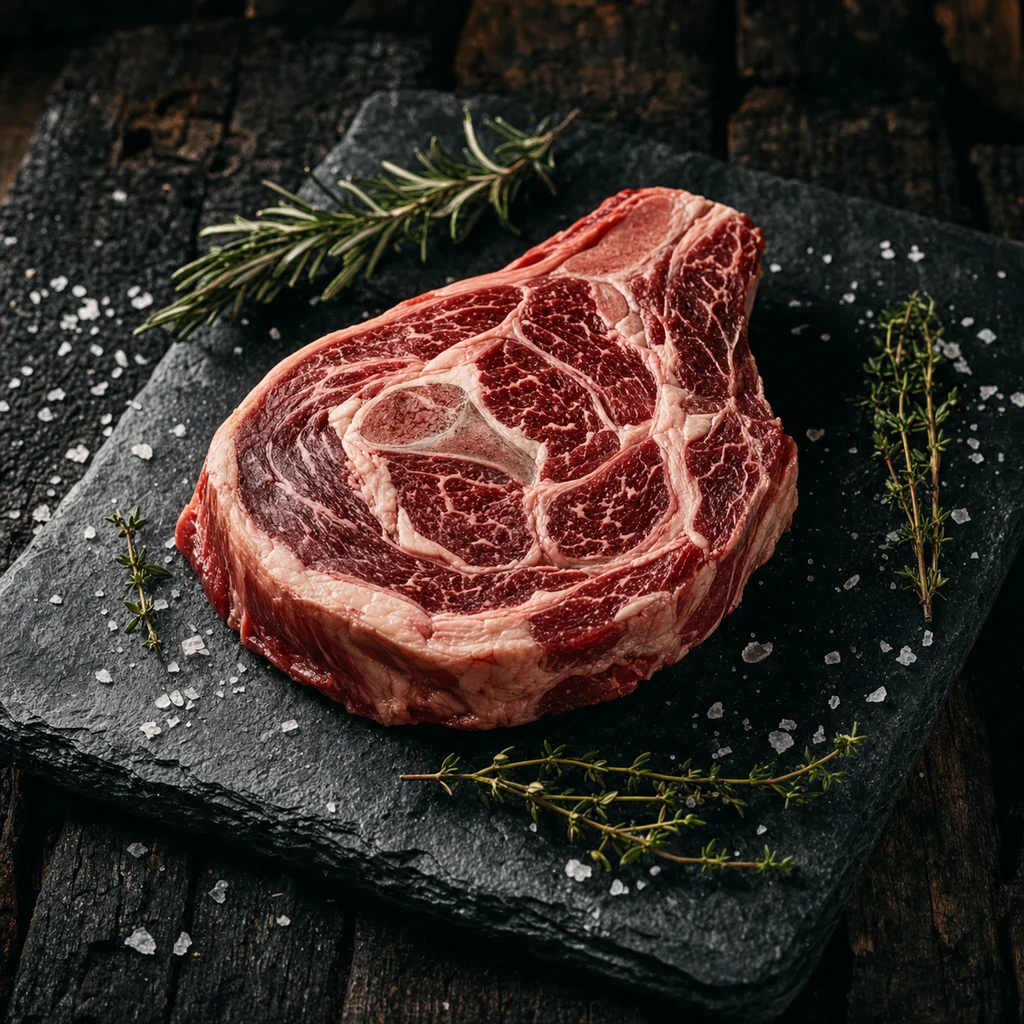
About this cut
Lamb neck is an unsung hero of the carcass, prized by chefs for its incredible depth of flavor and high collagen content. Often sold as thick-cut bone-in rings or deboned fillets, it offers a distinctively rich, meaty texture that transforms into succulent tenderness when braised. The intricate marbling and heavy connective tissue create a silky mouthfeel as they melt during long cooking processes. It is far more flavorful than leaner cuts, making it the premier choice for traditional stews and aromatic curries.
Taste-DNA
Located in the cervical region, these hard-working muscles support the head, resulting in dense muscle fibers and a significant amount of connective tissue. This anatomy demands low-and-slow cooking to effectively break down the tough collagen into rich, flavorful gelatin.
Preparation
Cooking Guide
To unlock its potential, lamb neck should be slowly braised in liquid for at least two to three hours until it reaches fork-tenderness. Begin by searing the meat aggressively to develop a Maillard crust, then submerge it halfway in an aromatic stock or red wine. Avoid boiling; a gentle simmer at a low oven temperature ensures the fibers remain moist while the fat renders completely. If cooking bone-in, the marrow will further enrich the sauce with a velvet-like consistency.
Core Temperatures
Portions per Person
The high gelatin and fat content demand a wine with significant structure and acidity, such as a peppery Northern Rhône Syrah or a robust Cabernet Sauvignon.