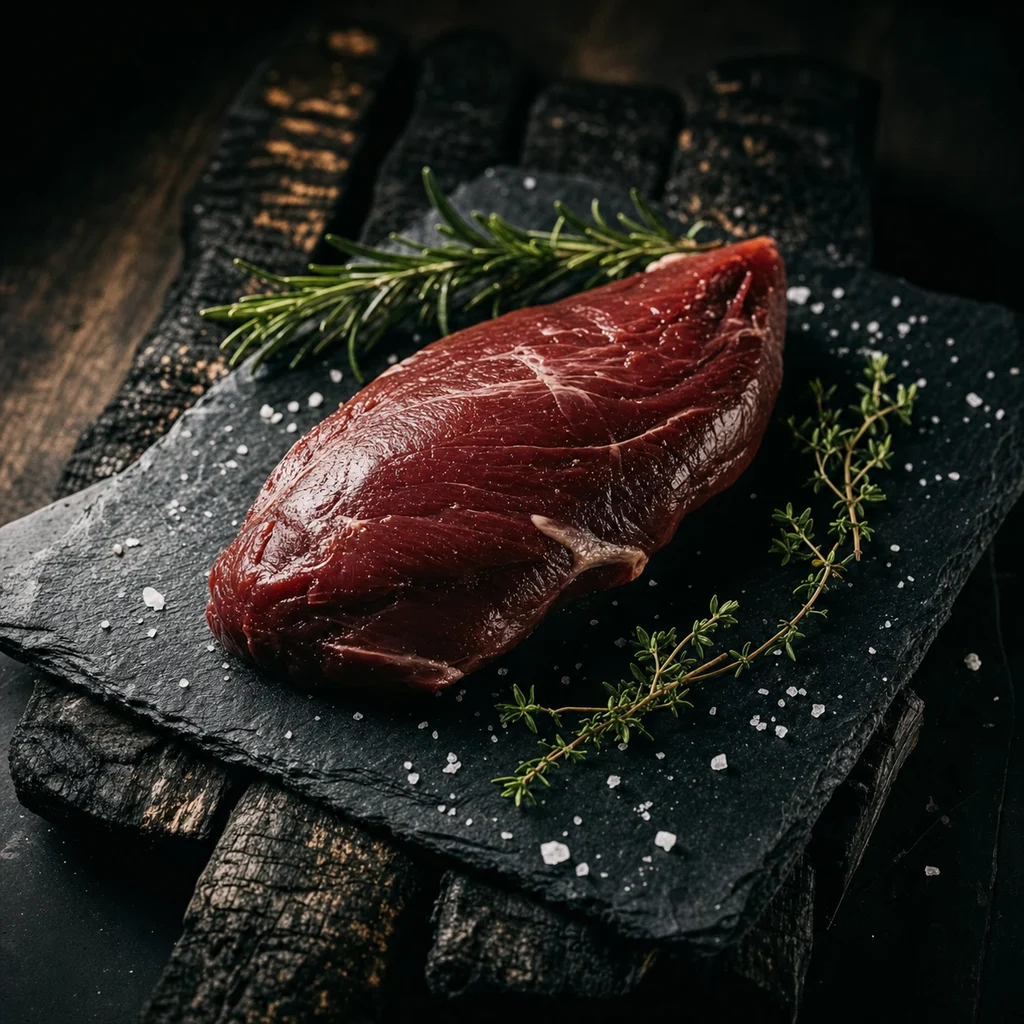
About this cut
A hallmark of classic European game cuisine, the pheasant breast is prized for its elegant, mild gaminess and lean, refined texture. Unlike darker wildfowl, the meat is pale and delicate, offering a subtle nuttiness that reflects its woodland diet. Due to its extremely low fat content and lack of intramuscular marbling, this cut requires expert handling to maintain its juiciness and highlight its sophisticated flavor profile.
Taste-DNA
Comprising primarily the Pectoralis major, these muscles are designed for short bursts of powerful flight, resulting in a fine-grained, lean structure. Its placement on the sternum ensures a consistent shape, though its lack of connective tissue means it can dry out rapidly if subjected to prolonged heat.
Preparation
Cooking Guide
To prevent the lean protein from drying out, utilize quick, high-heat pan-searing followed by a gentle resting period, or wrap in lardo for barding. Aim for a medium-rare finish with a core temperature of 58-62°C to preserve moisture; the Maillard reaction should be achieved quickly to avoid overcooking the interior. Always allow the meat to rest for at least five minutes to ensure the juices redistribute within the delicate fibers.
Core Temperatures
Portions per Person
Enhance the lean breast with a rich, buttery pan-sauce or a wild mushroom reduction, and pair with an oaked Chardonnay or a vintage Pinot Meunier-led Champagne to balance the subtle game notes.