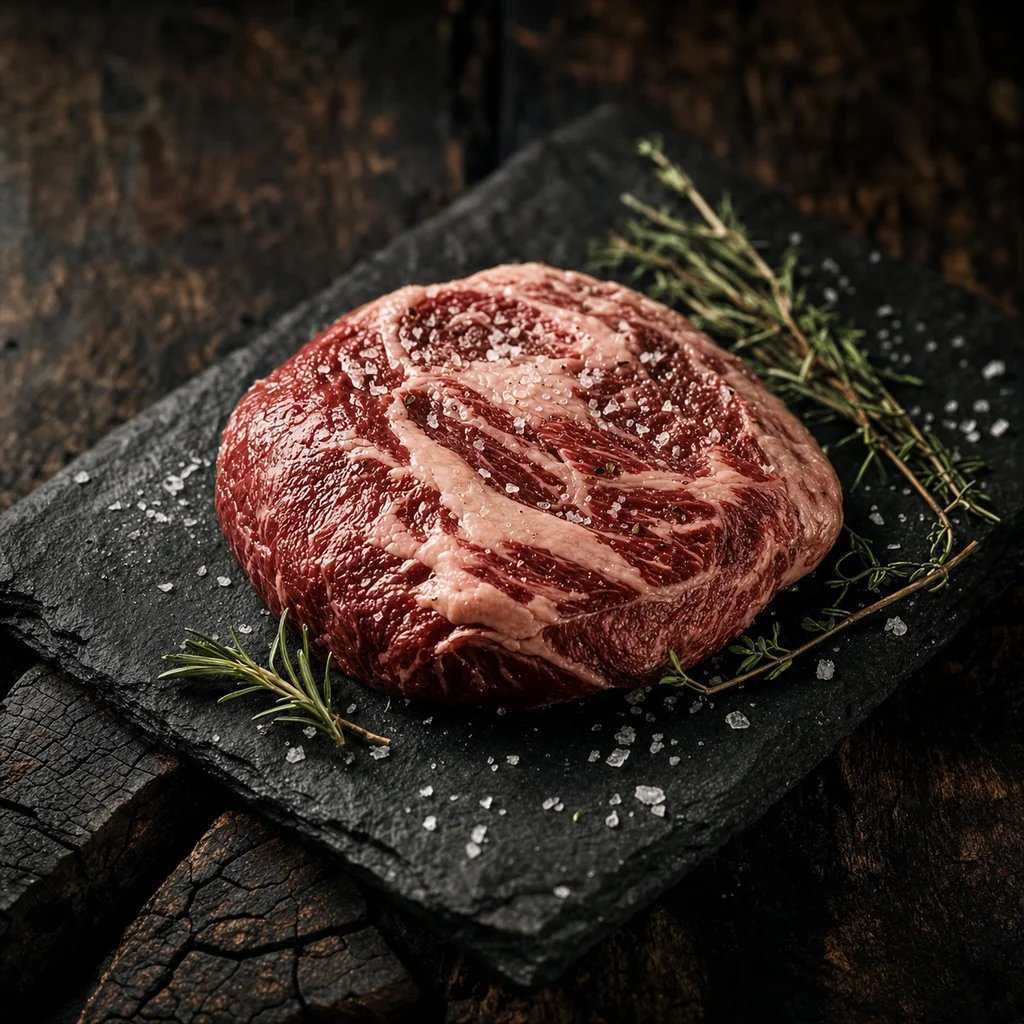
About this cut
Often overlooked but prized by chefs, pork cheeks are the hardworking masseter muscles of the pig, characterized by an abundance of connective tissue and deep, dark meat. When braised, this collagen transforms into a luxuriously silky gelatin, creating a fork-tender texture that is both incredibly rich and intensely savory. They offer a unique mouthfeel that combines the succulence of fat with the structure of lean muscle, making them a staple of high-end bistro cuisine.
Taste-DNA
These are the facial muscles used for mastication; the high concentration of collagen is a direct result of constant activity, requiring long, slow heat to break down into gelatin.
Preparation
Cooking Guide
Low and slow is non-negotiable; sear the cheeks deeply first to develop a rich Maillard crust before submerging them in a flavorful braising liquid. Aim for a cooking time of 3 to 4 hours at a gentle simmer until the internal structure collapses into a melt-in-the-mouth consistency. Avoid boiling rapidly, as this can toughen the muscle fibers; instead, allow the meat to rest in its own liquor for at least 20 minutes before serving.
Core Temperatures
Portions per Person
The intense richness and gelatinous mouthfeel demand a wine with sufficient acidity and soft tannins to cut through the fat, such as a cool-climate Merlot or a refined Barbera.