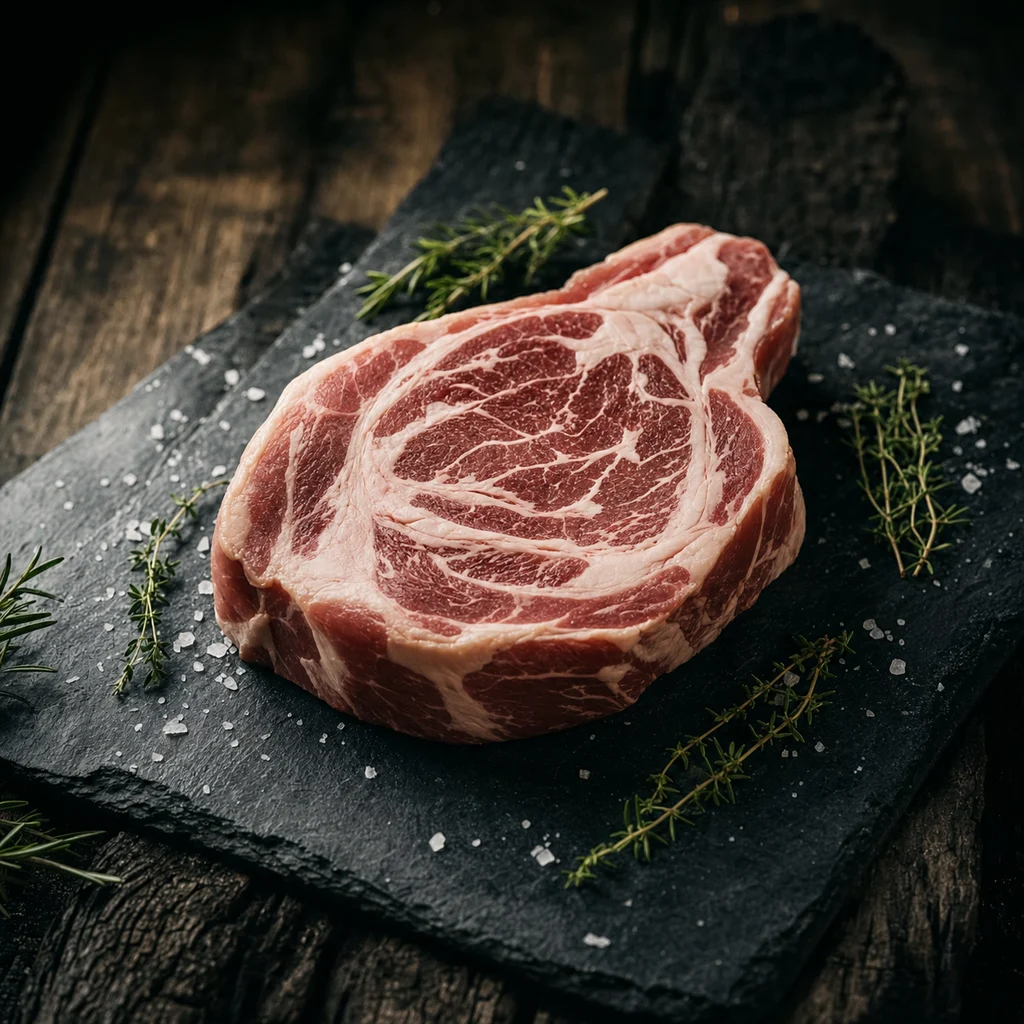
About this cut
The pork ham, derived from the hind leg, is a quintessential primal known for its impressive size and versatile muscle structure. It offers a lean, refined texture with a clean, meaty profile that lacks the heavy fat of the shoulder but retains a satisfying juiciness when prepared correctly. Whether served as a majestic holiday roast or processed into world-class charcuterie, its fine grain and subtle marbling make it a centerpiece of culinary tradition.
Taste-DNA
The ham encompasses the entire pelvic limb from the hip to the hock, consisting of major muscle groups like the semimembranosus and biceps femoris. These muscles are primary movers, resulting in a lean composition with substantial connective tissue that benefits from controlled heat.
Preparation
Cooking Guide
For fresh ham, low and slow roasting is paramount to prevent the lean fibers from seizing; aim for a core temperature of 65°C to 68°C for optimal moisture. If roasting with the skin on, score the fat cap to encourage rendering and achieve a crisp crackling through a final high-heat blast. Avoid overcooking, as the low intramuscular fat can lead to a dry, mealy texture. Always allow for a long resting period to ensure juice redistribution throughout the large muscle mass.
Core Temperatures
Portions per Person
A classic honey or maple glaze provides a sweet-savory crust that pairs beautifully with the high acidity and petrol notes of a dry aged Riesling or a sparkling dry cider.