About this cut
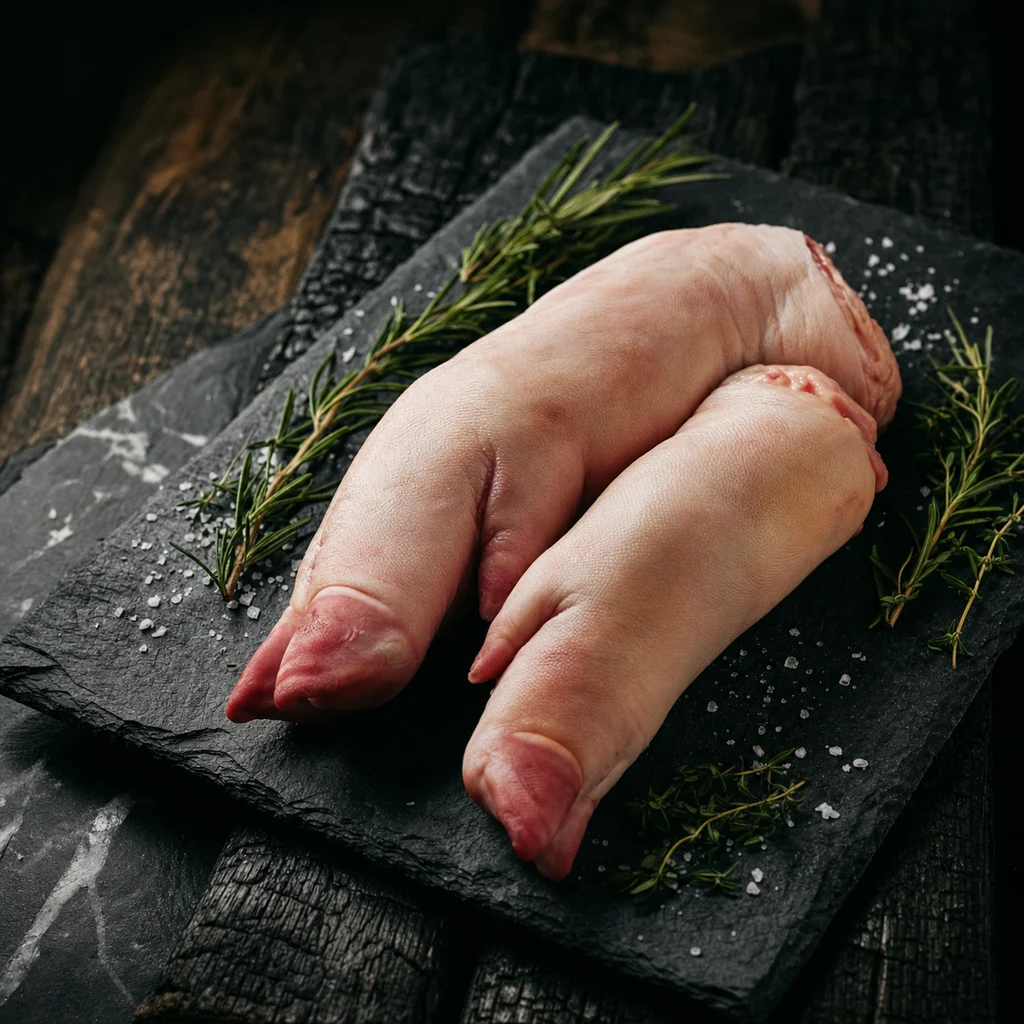
Pork trotters, the distal parts of the pig's limbs, are a culinary powerhouse prized for their extraordinary collagen content rather than lean muscle. Once slow-cooked, the tough connective tissues transform into a rich, velvety gelatin that provides unparalleled body to sauces and stews. They offer a unique, unctuous mouthfeel and a deep, porky essence that is both rustic and sophisticated. This cut is the secret weapon of the professional kitchen for achieving perfect viscosity and a lip-smacking finish.
Taste-DNA
Comprising the feet of the pig from the carpal or tarsal joints down, these consist primarily of skin, tendons, and small bones with minimal muscle tissue. This high ratio of connective tissue to meat necessitates extended cooking times to achieve tenderness.
Preparation
Cooking Guide
Low and slow is the absolute rule; trotters require at least 3 to 4 hours of gentle braising to fully hydrolyze collagen into gelatin. Start by blanching to ensure a clean flavor, then simmer in a rich aromatics-infused liquid until the meat literally slips from the bone. For a modern gastropub finish, de-bone the tender feet, press them, and then pan-fry or roast at high heat to achieve a glass-like, crispy skin. Avoid high-heat boiling, which can toughen the proteins before the gelatin has a chance to melt.
Core Temperatures
Portions per Person
The intense gelatinous richness demands a wine with high acidity or firm tannins to cleanse the palate, such as a structured Nebbiolo or a sharp, traditional-method dry cider.