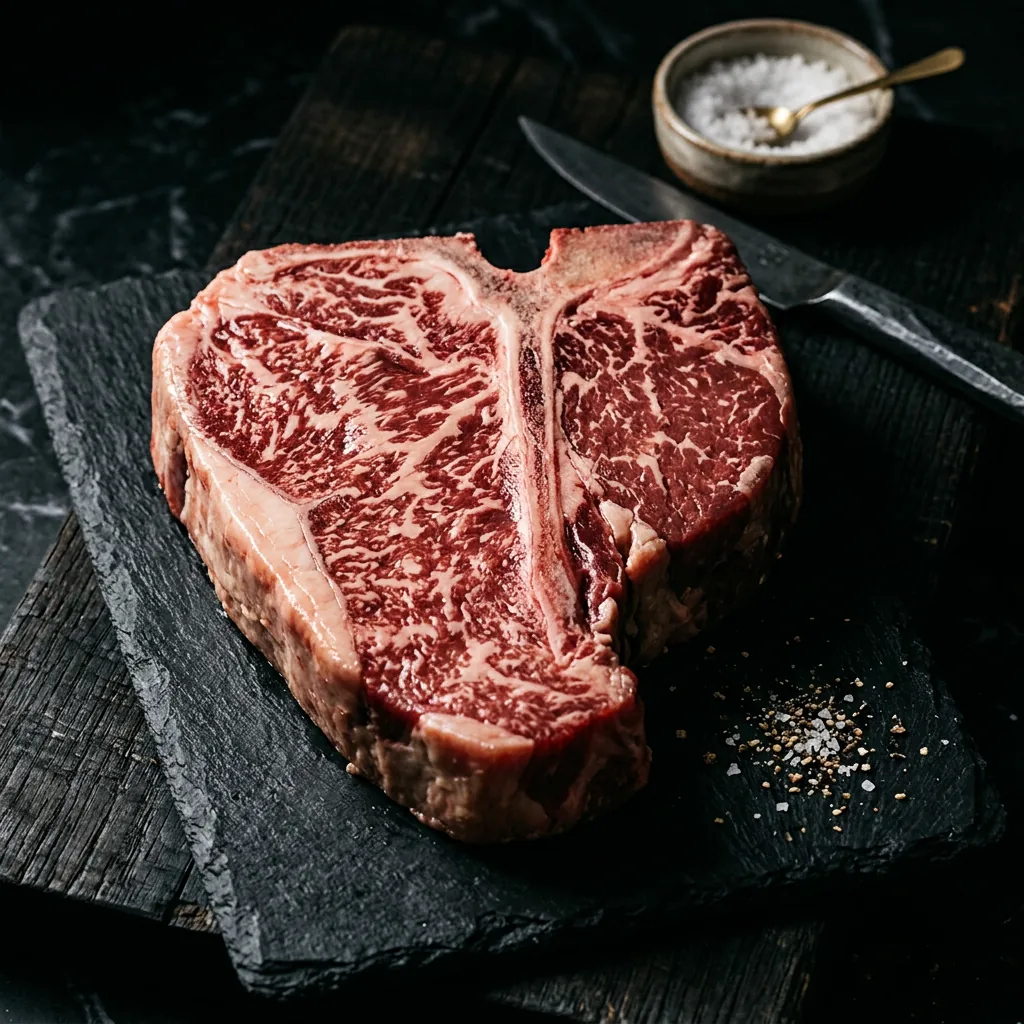
About this cut
The Porterhouse steak is the ultimate expression of the beef loin, offering a masterclass in contrasting textures by uniting the buttery tenderness of the tenderloin with the bold, mineral intensity of the striploin. Cut from the rear of the short loin, its signature T-shaped bone conducts heat during cooking, enhancing the depth of flavor while preserving moisture. This is a heavy-duty cut, characterized by significant marbling in the strip and a substantial filet portion that demands center-stage attention. It represents the pinnacle of steakhouse culture, designed for those who refuse to choose between refinement and power.
Taste-DNA
Harvested from the posterior end of the short loin, this cut features the M. longissimus dorsi and a significantly larger section of the M. psoas major than a standard T-bone. Because these muscles perform minimal weight-bearing work, they possess a fine grain and exceptional tenderness that define premium beef.
Preparation
Cooking Guide
To master this cut, the reverse sear method is superior: slowly bring the meat to an internal temperature of 46°C in a low oven before finishing with a high-heat crust in a cast-iron skillet or over charcoal. The presence of the bone creates a temperature gradient, so ensure the tenderloin side is slightly further from the hottest heat source to avoid overcooking the leaner muscle. Target a final core temperature of 52-54°C for a perfect medium-rare. Allow the steak to rest for at least 10 minutes to redistribute juices before carving against the grain.
Core Temperatures
Portions per Person
A steak of this magnitude requires a wine with structural backbone and firm tannins, such as a mature Napa Valley Cabernet Sauvignon or a bold Left Bank Bordeaux.