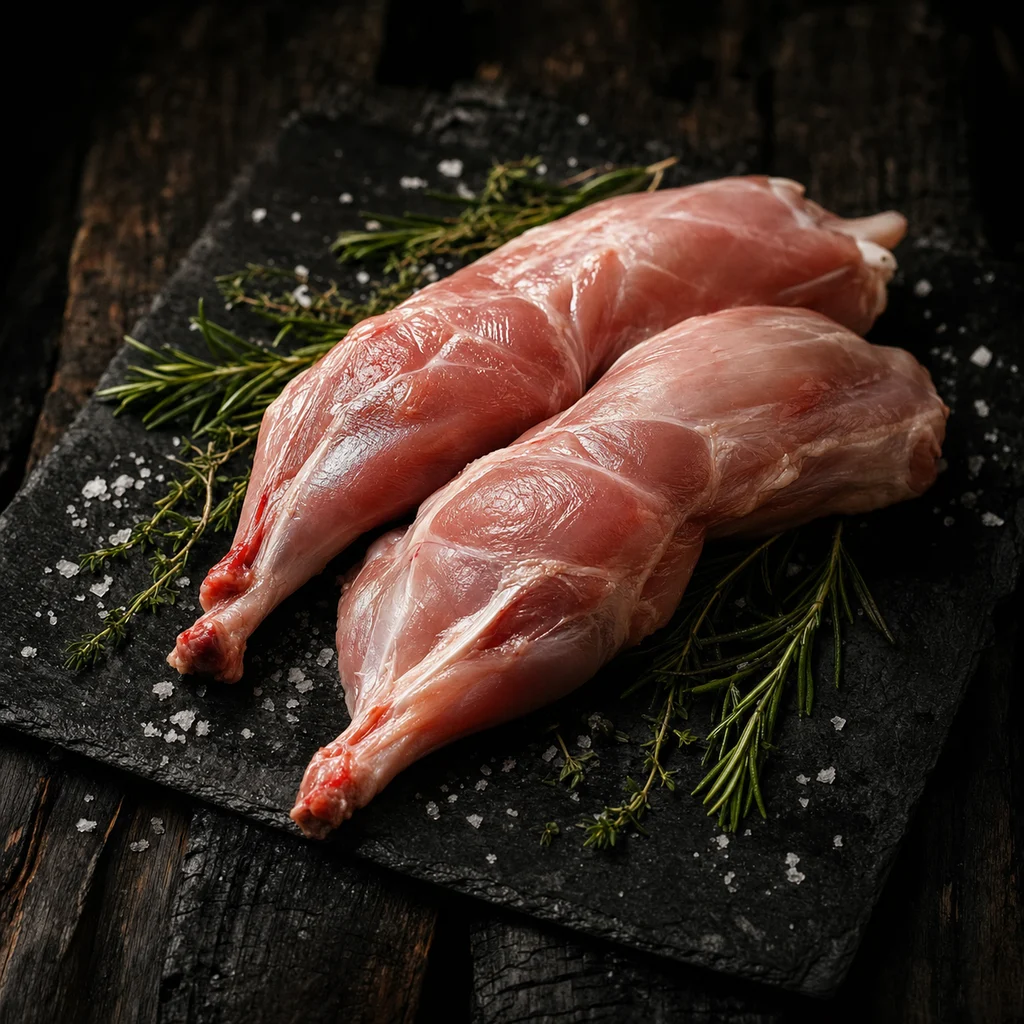
About this cut
Rabbit legs, specifically the hindquarters, represent the most substantial and flavorful cut of the animal. Unlike the leaner saddle, the legs contain a higher concentration of connective tissue, which yields a succulent, silky texture when prepared correctly. The meat is pale, fine-grained, and offers a sophisticated, mildly gamey sweetness that distinguishes it from poultry. It is a prized choice for chefs seeking a lean yet deeply savory protein with a refined mouthfeel.
Taste-DNA
The hindquarters comprise the pelvic and femoral muscle groups, which are the primary engines of locomotion, resulting in a more complex flavor profile and higher collagen content than the forequarters.
Preparation
Cooking Guide
Low and slow is the hallmark of expert rabbit preparation; braising in a flavorful liquid like dry cider or white wine ensures the collagen transforms into gelatin. Begin by searing the legs in clarified butter to initiate the Maillard reaction for depth of flavor, then submerge halfway and simmer until the meat begins to pull away from the bone. If grilling or roasting, use a protective marinade or lard with pancetta to prevent the lean fibers from seizing. Aim for a core temperature of 71°C (160°F) and allow a five-minute rest to redistribute the juices.
Core Temperatures
Portions per Person
The delicate, earthy nuances of rabbit are beautifully elevated by a medium-bodied white Burgundy or a textured Chardonnay with subtle oak integration.