 The Atlas
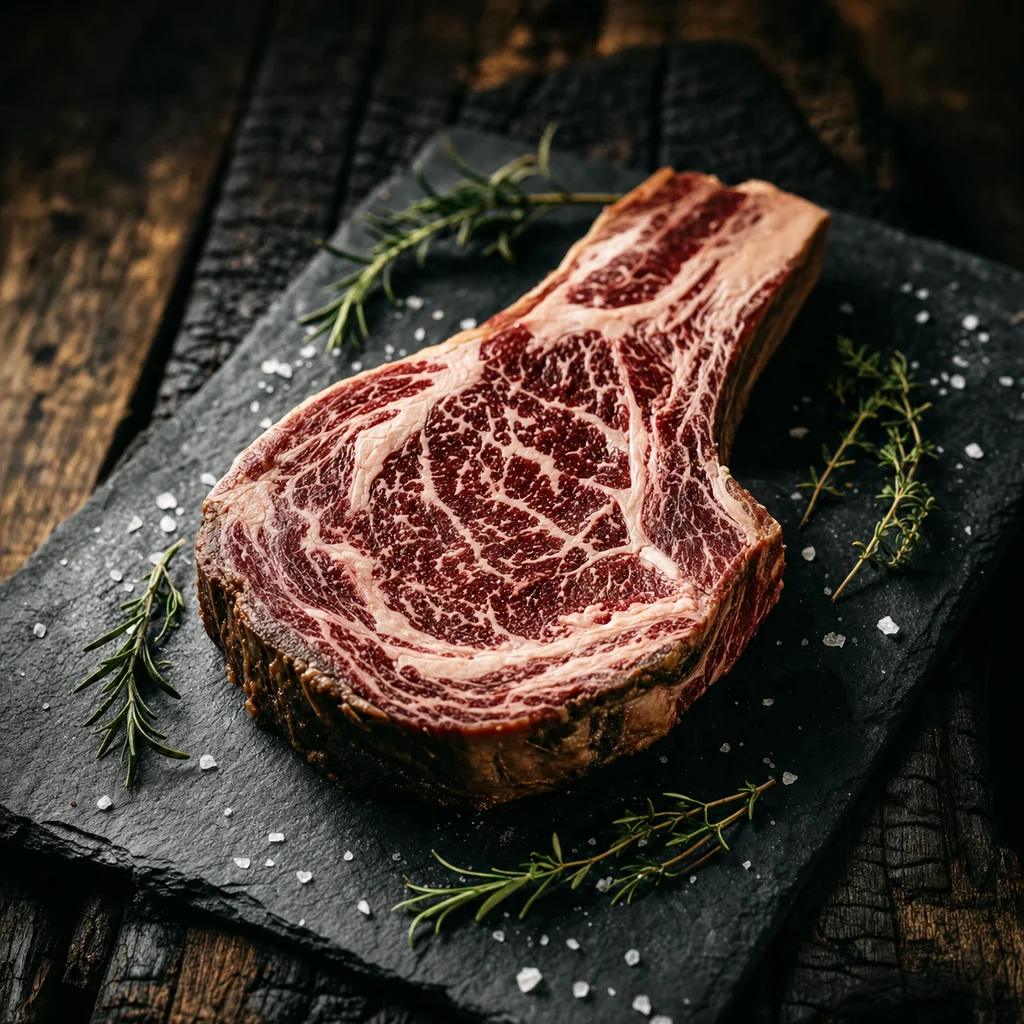
Rib Cap / Spinalis Dorsi Steak
most marbled muscle · pure fat-wrapped richness · explosive umami · buttery
About this cut
The Rib Cap, or Spinalis Dorsi, is widely considered the single most prized muscle on the entire steer, offering a culinary experience that surpasses even the tenderloin. It possesses the extreme tenderness of a filet mignon combined with the complex, heavy marbling typically reserved for a prime ribeye. Its loose grain structure allows for incredible fat infiltration, resulting in a buttery, melt-in-the-mouth texture that defines luxury beef. For many chefs, this is the holy grail of steak due to its unparalleled balance of flavor and tenderness.
Taste-DNA
The Spinalis dorsi is the crescent-shaped muscle that wraps around the eye of the ribeye (Longissimus dorsi) between the 6th and 12th ribs. Because it is a support muscle rather than a weight-bearing one, it develops very little connective tissue while accumulating massive amounts of intramuscular fat.
Preparation
Cooking Guide
To honor this cut, use high-heat methods like pan-searing in a cast-iron skillet to trigger a deep Maillard reaction and quickly render the high fat content. Aim for a precise medium-rare finish with a core temperature of 52-54°C (125-130°F) to ensure the internal marbling softens without liquefying completely. A resting period of at least 5 to 10 minutes is critical to allow the intense juices to redistribute within the loose fibers. Avoid overcooking, as the delicate structure can become overly soft if the fat is fully rendered out.
Core Temperatures
Portions per Person
As the 'king of cuts,' the Spinalis requires a pairing with enough acidity or tannin to cut through the intense richness; a vintage Champagne provides a brilliant acidic counterpoint, while an aged Grand Cru Burgundy offers the earthy depth to match the umami.