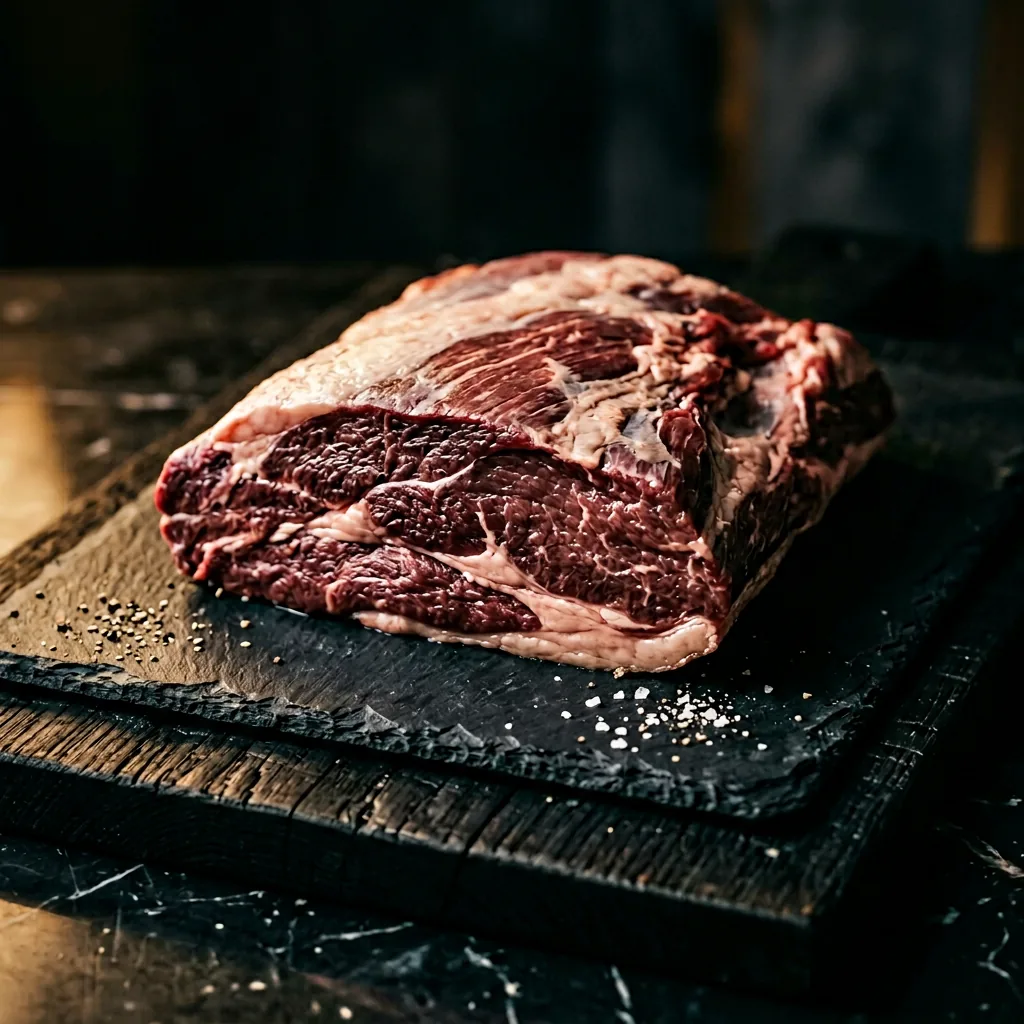
About this cut
Veal brisket is a prized cut for those who appreciate the interplay of collagen and delicate fat. Located in the lower chest, it offers a silky, melting texture and a milder, more refined flavor profile compared to its beef counterpart. The presence of connective tissue requires patience but rewards the chef with unparalleled succulence and a rich mouthfeel. It is a cornerstone of classic European butchery, often served stuffed or slowly braised to highlight its gelatinous properties.
Taste-DNA
The brisket is derived from the pectoral muscles of the veal's lower chest. Because these muscles support a significant portion of the animal's weight, they are dense with connective tissue and intramuscular fat, necessitating long, moist cooking methods.
Preparation
Cooking Guide
Braising is the ultimate technique for veal brisket; the low and slow heat transforms tough collagen into rich gelatin. Start by searing the meat to initiate the Maillard reaction, then submerge it halfway in a flavorful aromatic liquid. Aim for 'fork-tender' rather than a specific internal temperature, typically after 3 to 4 hours of gentle simmering. Always allow the meat to rest in its own braising liquid to ensure maximum moisture retention before slicing against the grain.
Core Temperatures
Portions per Person
The high fat content and gelatinous texture of braised veal brisket pair beautifully with a structured Cabernet Sauvignon or a full-bodied Chardonnay that can cut through the richness.