 The Atlas
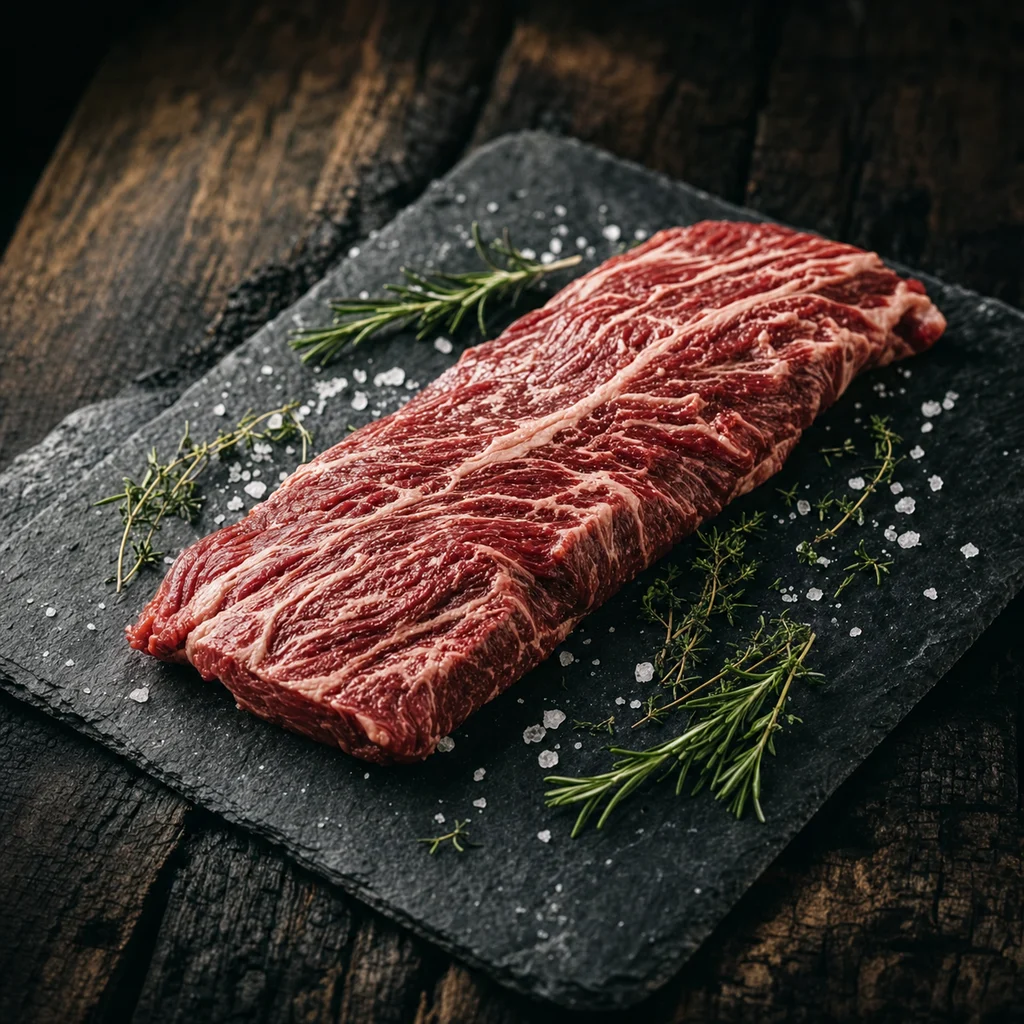
Harami (Outside Skirt / Diaphragm)
very tender · high fat content · deep beefy flavor · slight chew
About this cut
Harami, the Japanese designation for the outside skirt or diaphragm, is a connoisseur’s cut prized for its deep marbling and unparalleled beefy intensity. In Wagyu, this muscle achieves a sublime equilibrium between its naturally coarse, fibrous grain and an abundance of intramuscular fat that renders into a buttery glaze upon cooking. It offers a distinctive mouthfeel that is simultaneously succulent and substantial, making it a cornerstone of high-end Japanese butchery. This cut is celebrated for bridging the gap between the clean taste of skeletal muscle and the mineral complexity of offal.
Taste-DNA
The diaphragm muscle (outside skirt) serves as the primary separator between the chest and abdominal cavities, which results in a dense fiber structure and high myoglobin content. In Wagyu cattle, this hardworking muscle is heavily marbled, ensuring that its robust texture provides tenderness through fat-rendering rather than lack of use.
Preparation
Cooking Guide
Extreme heat is the imperative for Harami to initiate a rapid Maillard reaction without overcooking the thin muscle. For the ultimate Wagyu experience, aim for a medium-rare to medium finish—a core temperature of 52-54°C—which allows the internal fats to fully emulsify. Avoid low-and-slow methods as they can cause the connective tissue to toughen; instead, flash-sear over white-hot charcoal or a heavy cast-iron pan. Crucially, allow the meat to rest for five minutes and always slice against the grain at a sharp angle to shorten the fibers.
Core Temperatures
Portions per Person
Known as 'the butcher's secret' in Japan, its bold iron notes and rich fat profile demand a wine with structural backbone like an Argentine Malbec, or for a traditional pairing, a complex, earthy Junmai Ginjo sake.