About this cut
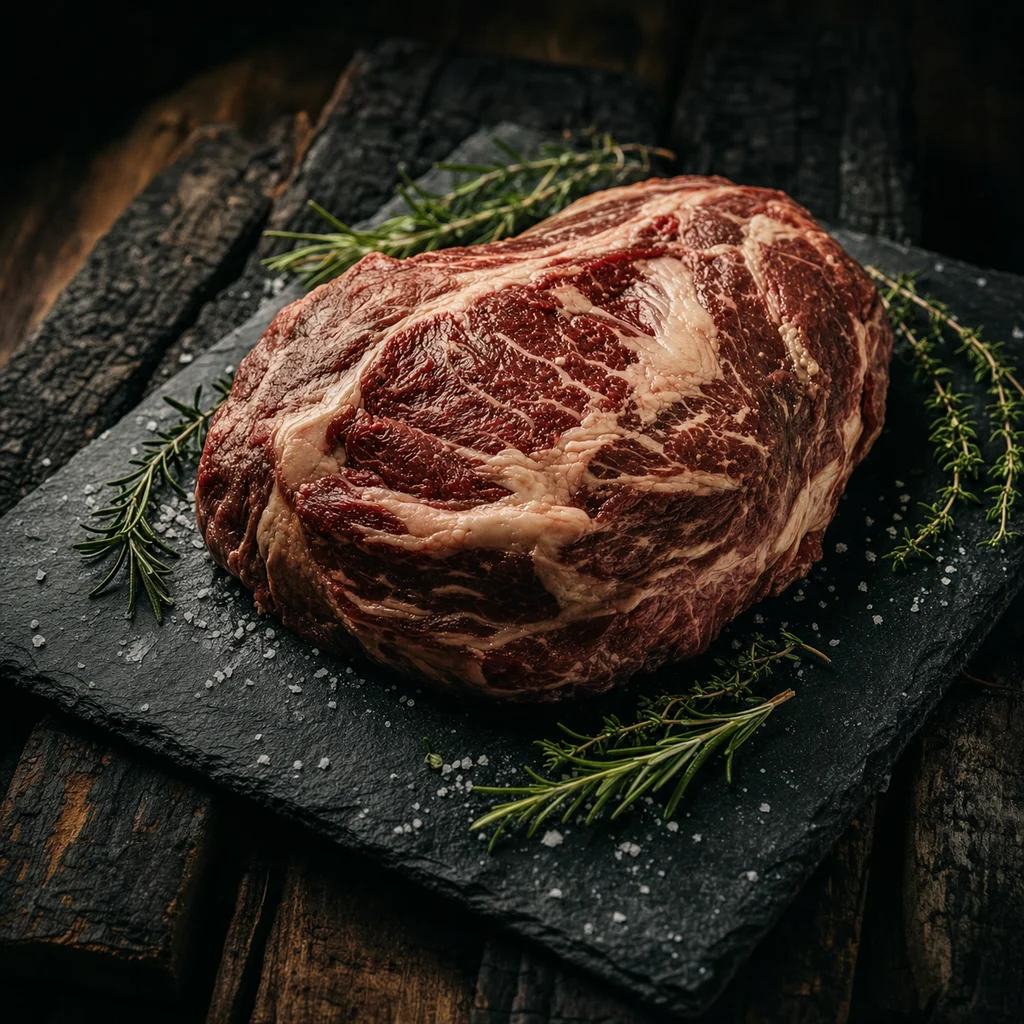
The wild boar shoulder is a chef's favorite for its incredible depth of flavor and high connective tissue content. Harvested from free-roaming animals, it features a lean, dark grain interspersed with enough intramuscular fat to survive long cooking times. Unlike domestic pork, it offers a distinctively wild, nutty profile and a robust texture that transforms into succulent perfection when slow-braised. It is the quintessential cut for those seeking the primal, unadulterated taste of the forest.
Taste-DNA
Comprising the well-exercised muscles of the chuck primal, this cut is rich in collagen and myofibrillar proteins due to the animal's constant foraging. This structural complexity requires low-and-slow heat to hydrolyze the connective tissue into gelatin for a melt-in-the-mouth finish.
Preparation
Cooking Guide
To unlock its potential, focus on long, moist-heat methods such as braising in a rich red wine or forest-mushroom stock. Sear the shoulder aggressively first to initiate the Maillard reaction, then transition to a gentle simmer at low oven temperatures until fork-tender. Common mistakes include rushing the process or under-seasoning; wild boar demands bold aromatics like juniper, rosemary, and bay leaf. Always allow the meat to rest so the gelatinized juices can stabilize within the fibers.
Core Temperatures
Portions per Person
The intense, iron-rich gaminess of the boar demands a wine with structural power and dark fruit notes, such as a barrel-aged Nero d'Avola or a structured Cabernet Sauvignon.