 Heritage Breeds
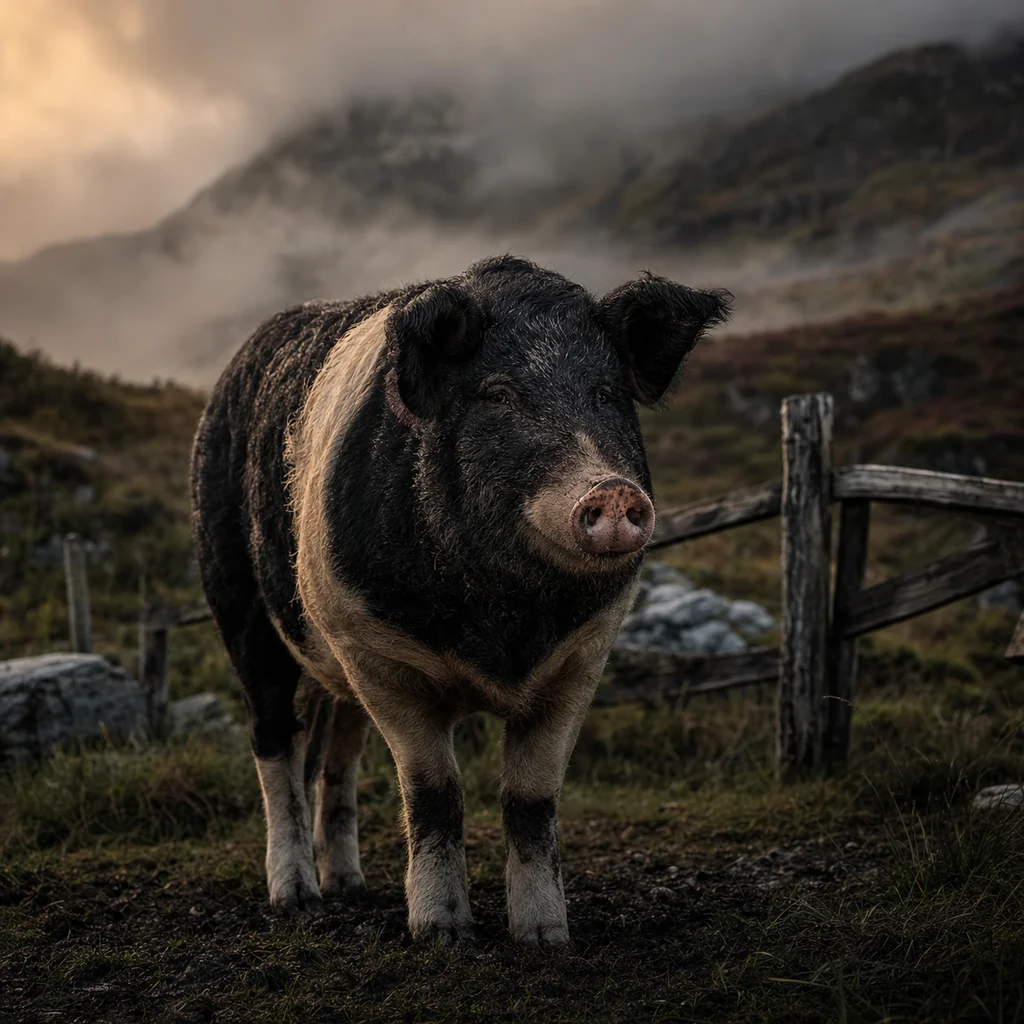
Bentheim Black Pied
About the breed
The Bentheim Black Pied, often called the 'Dalmatian pig,' is a jewel of German heritage livestock, renowned for its exceptional meat-to-fat ratio and culinary versatility. Among connoisseurs, it is celebrated for its juicy texture and deep, traditional pork flavor that industrial breeds simply cannot replicate. Its resurgence from near extinction has made it a symbol of the artisan meat movement and a staple in high-end European gastronomy.
Roots & Heritage
Hailing from the Grafschaft Bentheim region in Lower Saxony, this breed emerged in the mid-19th century from crosses of local landrace pigs with Berkshire and Tamworth stock. By the 1980s, the population plummeted to just a few dozen individuals before being rescued by dedicated breeders and the Slow Food 'Ark of Taste' program. Today, it remains a rare, protected treasure of German agricultural history, maintained through strict heritage breeding protocols.
Meat Profile
The meat is characterized by its high intramuscular fat content, resulting in a beautifully marbled appearance and a succulent mouthfeel. Its fat is firm, white, and exceptionally clean-tasting, while the muscle meat exhibits a darker, more robust hue than commercial pork. On the palate, it delivers a complex, slightly nutty flavor profile with a distinct sweetness and a long-lasting finish.
In the Kitchen
To honor its quality, the meat should be prepared with precision; the high fat content makes the neck and belly ideal for slow-roasting or low-temperature smoking to render the collagen. Steaks from the loin benefit from a quick, high-heat sear followed by a significant resting period to allow the internal juices to redistribute. Chefs are advised to avoid overcooking beyond medium-rare to medium, as the prize of this breed is the silky, melting texture of its fat.