About the breed
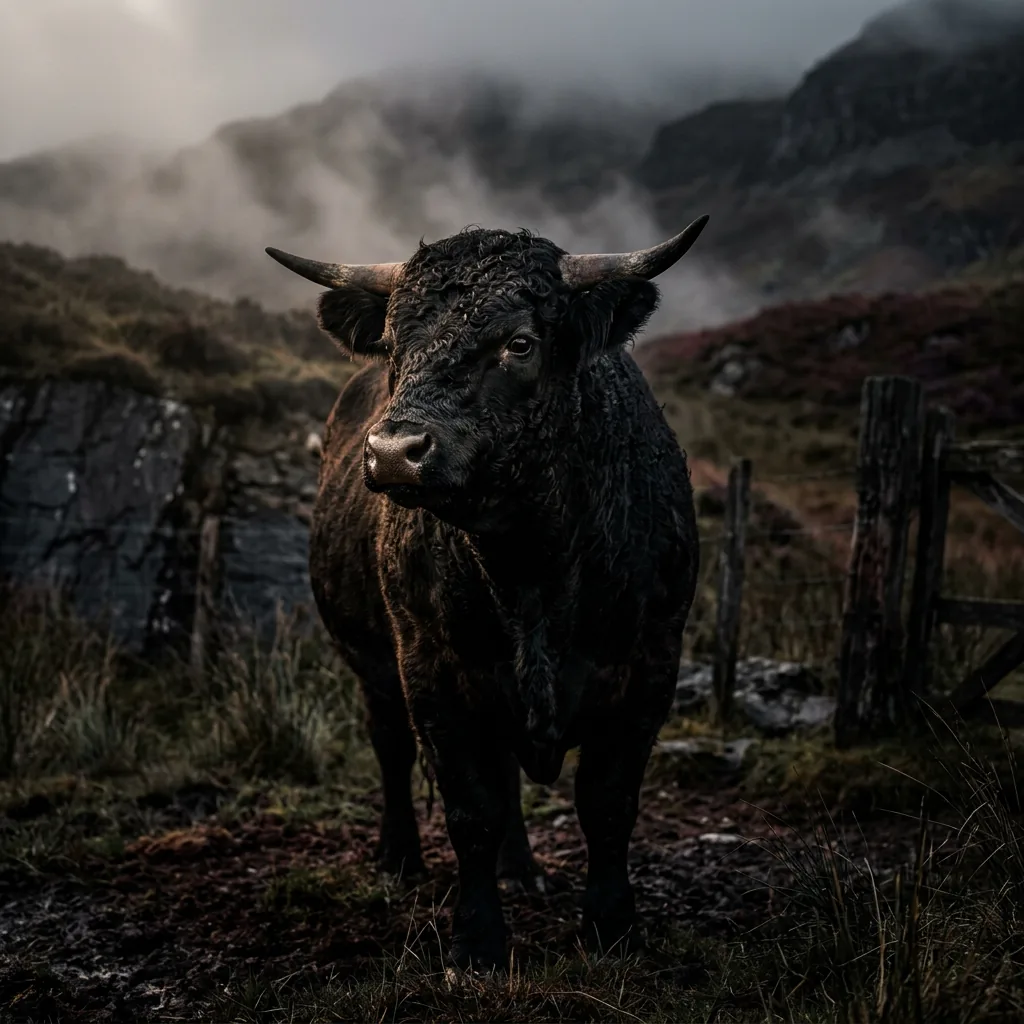
Black Angus is globally recognized as the gold standard for premium beef, revered by chefs and master butchers for its unparalleled consistency and eating quality. This heritage breed is distinguished by its deep black coat and naturally polled stature, symbolizing a legacy of excellence in specialized beef production. It offers a perfect equilibrium of lean muscle and rich intramuscular fat, making it the preferred choice for high-end steakhouses and discerning gourmets. Connoisseurs prize it for its reliable tenderness and a robust, savory flavor profile that defines the classic steakhouse experience.
Roots & Heritage
Originating in the 19th century from the native black cattle of Aberdeenshire and Angus in northeastern Scotland, the breed was refined by pioneers who selected for early maturity and superior carcass quality. Since its introduction to North America in 1873, it has become the dominant beef breed, often associated with rigorous certification programs like Certified Angus Beef (CAB). Its genetic legacy is built on hardiness and an exceptional ability to convert forage into high-grade marbled beef across diverse climates.
Meat Profile
The hallmark of Black Angus beef is its exceptional intramuscular marbling, which yields a buttery texture and intense richness when cooked. The meat typically exhibits a fine-grained muscle structure and a vibrant cherry-red color, contrasted by a clean, white fat cap with a low melting point. This fat ensures the meat remains succulent and flavorful, delivering a deep, beefy 'umami' with subtle sweet notes.
In the Kitchen
To honor the superior marbling of Black Angus, high-heat methods such as grilling over charcoal or searing in a heavy cast-iron skillet are ideal for prime cuts like ribeye and striploin. Aim for a medium-rare finish (52-54°C) to allow the intramuscular fat to fully render without drying out the fibers. Secondary cuts benefit immensely from low-and-slow smoking or braising, where the connective tissue transforms into silky gelatin, while overcooking should be avoided to preserve the delicate grain.