 Heritage Breeds
Cinta Senese
About the breed
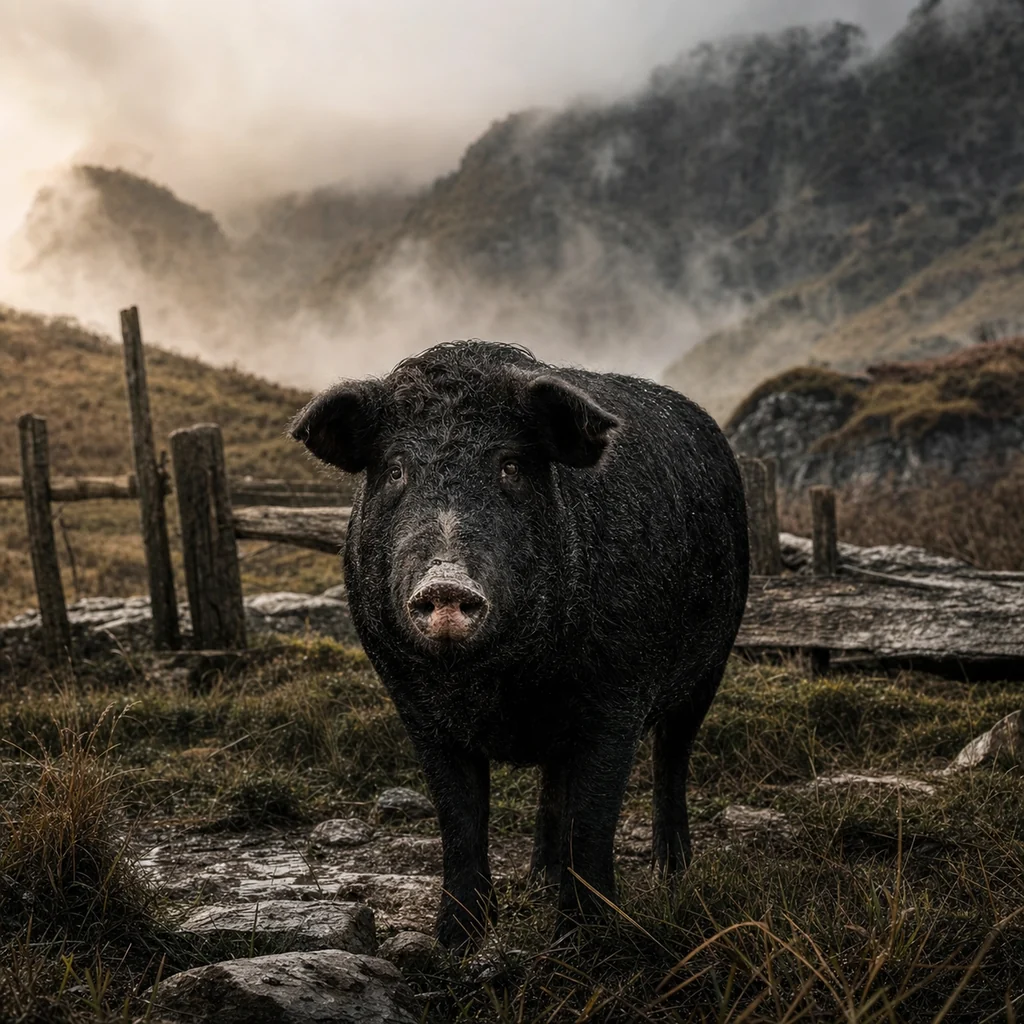
The Cinta Senese is a legendary heritage pig from Tuscany, distinguished by its iconic white belt and deep black coat. Revered by gourmets as the 'Ibérico of Italy', it represents the pinnacle of porcine excellence and an ancient link to the Sienese terroir. Its meat is celebrated for an extraordinary aromatic complexity and a fat quality that is virtually unmatched in the culinary world.
Roots & Heritage
Originating from the Montagnola Senese, this breed is famously depicted in 14th-century frescoes in Siena, proving a lineage spanning nearly 700 years. After facing near-extinction due to industrial farming, it was saved by passionate breeders and is now protected by a strict DOP status. This certification ensures the pigs are raised exclusively in Tuscany under traditional, free-roaming conditions.
Meat Profile
The meat is remarkably dark, resembling beef more than commercial pork, with an abundance of fine, intramuscular marbling. Because the pigs forage for acorns and chestnuts, the fat is high in oleic acid, giving it a low melting point and a silky, nutty flavor profile. On the plate, it offers a dense yet tender texture with long-lasting notes of the forest floor.
In the Kitchen
To honor the meat's integrity, one must avoid overcooking; a medium-rare to medium finish is ideal for retaining succulent moisture. Cuts like the 'Arista' or 'Capocollo' should be roasted or grilled with minimal seasoning to let the fat's natural sweetness shine. The meat is also the foundation for world-class salumi, where the lardo and guanciale provide a buttery, melt-in-the-mouth experience.