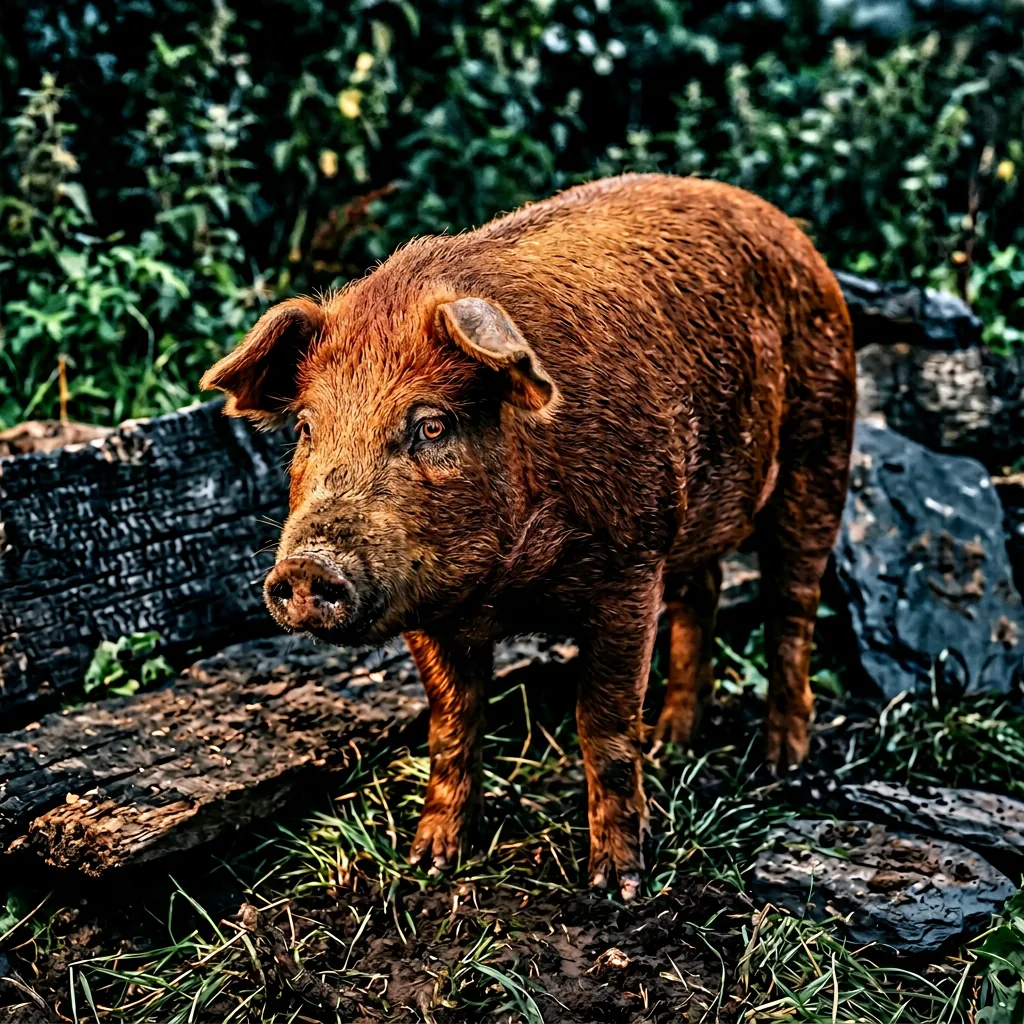
About the breed
The Duroc is widely celebrated by butchers and chefs as the "Angus of the pork world," distinguished by its striking reddish-brown coat and robust constitution. Its exceptional ability to store intramuscular fat sets it apart from lean commercial breeds, resulting in a product of superior tenderness and depth. Connoisseurs prize the Duroc for its consistent quality, making it the preferred choice for both high-end steakhouse chops and artisanal charcuterie. It represents the perfect balance between heritage flavor and modern production reliability.
Roots & Heritage
Originating in the northeastern United States during the early 19th century, the Duroc was developed by crossing the Red Jersey pig with the older Duroc strain from New York. Historically valued for its hardiness and rapid growth, it eventually became a global cornerstone for premium pork production. Today, it is famously utilized in Spain as the only non-Iberian breed allowed to be crossed with the Pata Negra for certain PDO hams, highlighting its prestigious genetic standing.
Meat Profile
The meat of the Duroc is characterized by its deep, dark rose color and significant intramuscular marbling, which provides a buttery texture and intense succulence. Unlike standard pork, which can be prone to dryness, Duroc pork retains its moisture exceptionally well during the cooking process. The fat is clean, white, and carries a subtle sweetness that enhances the overall savory profile without being overwhelming.
In the Kitchen
To fully appreciate Duroc pork, one should aim for a medium internal temperature to preserve its natural juices and allow the marbling to render effectively. Its high fat content makes it incredibly forgiving on the grill or in the pan, where the fat self-bastes the meat for a rich crust. While the loin and chops excel with a high-heat sear, secondary cuts like the shoulder are magnificent when slow-roasted, allowing the connective tissue to melt into a silky finish.