About the breed
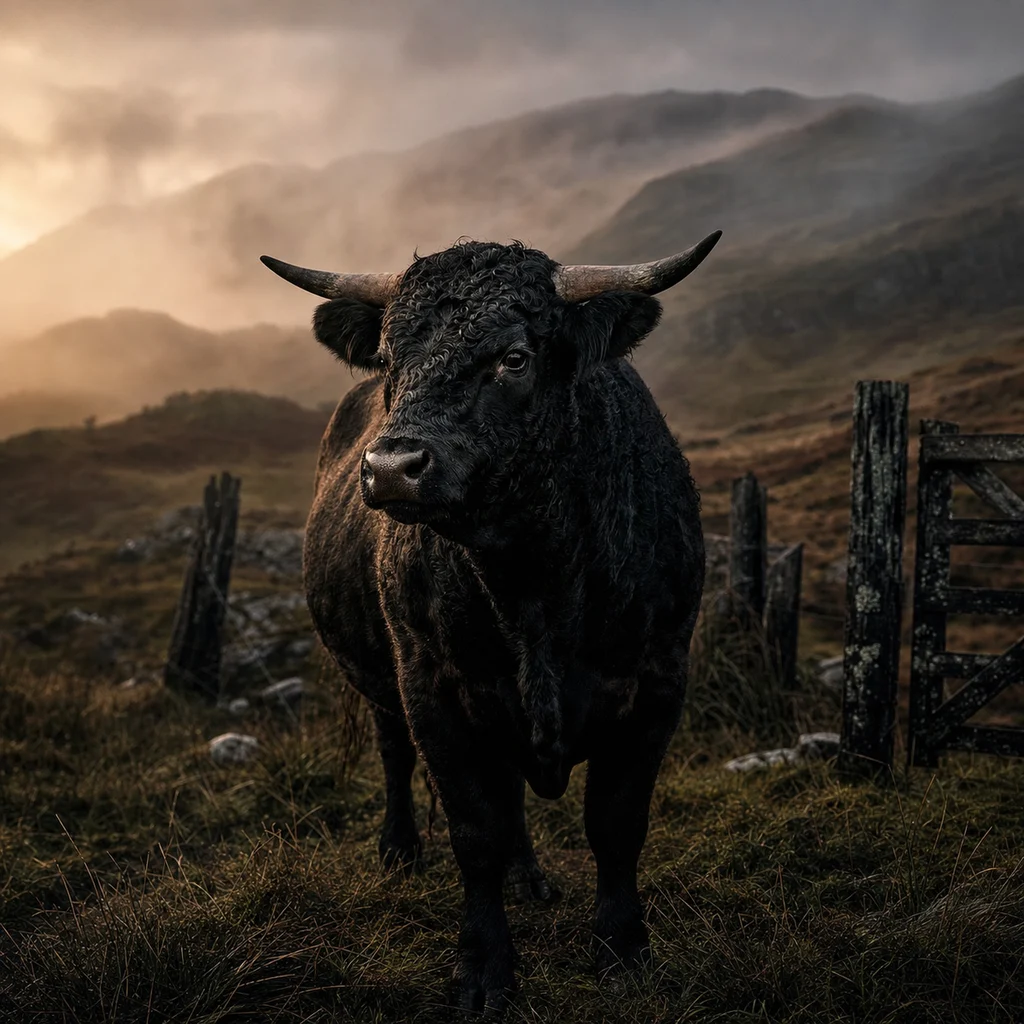
The Galloway is a paragon of extensive pastoral farming, delivering beef that reflects its rugged Scottish heritage and natural lifestyle. Renowned among connoisseurs for its hardiness, this naturally polled breed possesses a unique double coat that allows for year-round outdoor rearing even in extreme climates. It stands out in the culinary world for its deep, complex flavor profile that often carries subtle hints of the wild herbs and moorland flora it grazes upon.
Roots & Heritage
Originating from the harsh Galloway region of southwestern Scotland, this is one of the world's oldest and most pure beef breeds. Historically documented as early as the 17th century, the breed was refined to survive on marginal moorlands where other cattle would fail, leading to the establishment of the official herdbook in 1877. Today, it is globally recognized as a heritage breed that prioritizes ecological balance and traditional husbandry over industrial speed.
Meat Profile
Galloway beef is characterized by a fine-grained texture and a rich, dark pigment indicative of slow growth and meticulous grass-finishing. While generally leaner than grain-fed commercial breeds, it possesses a sophisticated intramuscular fat structure and a remarkably high concentration of beneficial Omega-3 and Omega-6 fatty acids. The taste is intensely savory and 'beefy', offering a clean finish that avoids the greasiness associated with modern feedlot cattle.
In the Kitchen
To honor the lean yet flavorful nature of the meat, a gentle hand is required; high-heat searing should be followed by a lower-temperature finish to prevent the muscle fibers from tightening. Steaks are best served rare to medium-rare to preserve the integrity of the healthy fats and the moisture within the fine fibers. Secondary cuts are exceptional for slow-braising, as the breed's robust collagen levels melt into a silky, gelatinous sauce that amplifies the meat's natural depth.