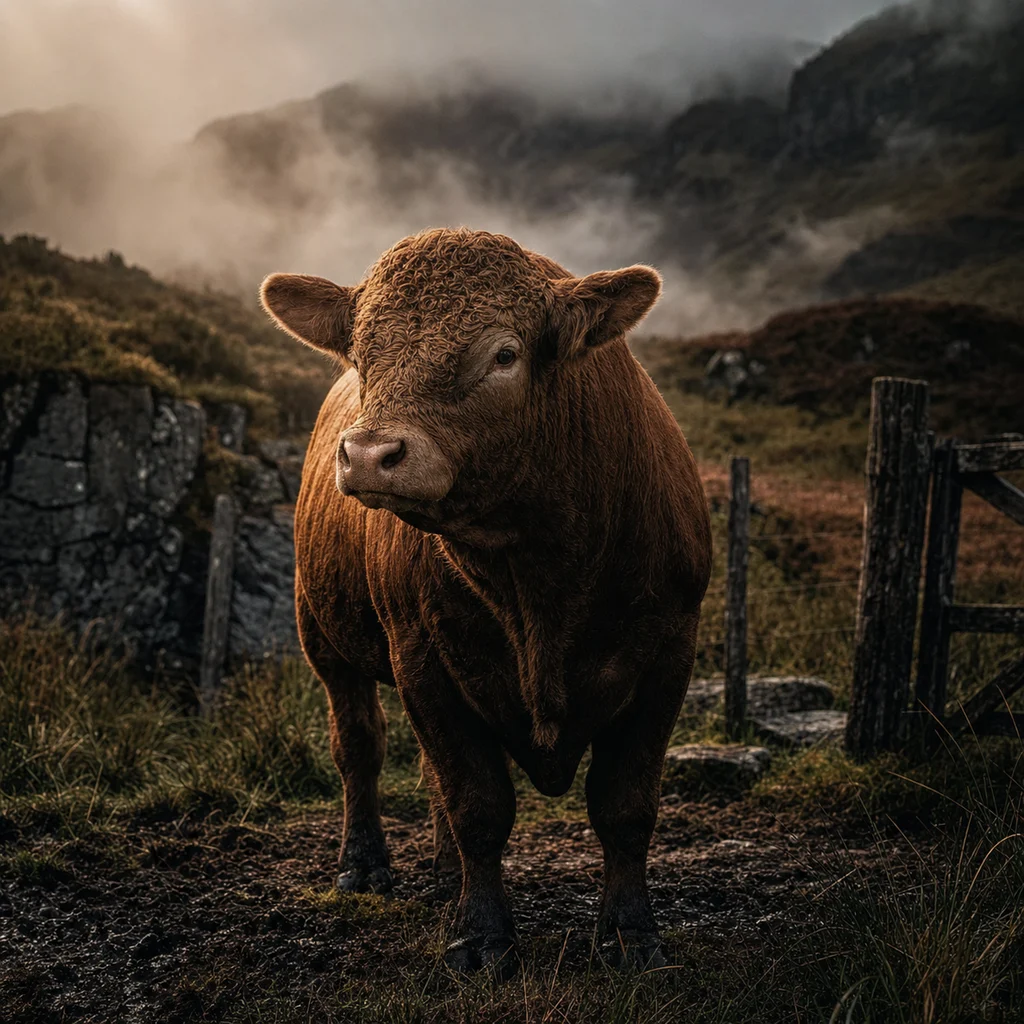
About the breed
The Gelbvieh is a dual-purpose masterpiece of Bavarian breeding, renowned for its exceptional muscularity and growth efficiency. Highly regarded by master butchers for its high carcass yield and significant ribeye area, it represents a perfect balance of lean protein and refined flavor. It is a connoisseur's choice for those who appreciate high-quality beef with a clean, robust profile and minimal external waste fat.
Roots & Heritage
Hailing from the Franconian region of Bavaria in the late 18th century, the Gelbvieh was developed by crossing various local Red-Yellow strains. Originally a triple-purpose animal used for milk, meat, and draft work, a systematic breeding program since 1958 refined it into a specialized performance beef breed. Its genetic heritage ensures not only rapid growth but also remarkable fertility and maternal qualities that define its sustainability.
Meat Profile
Gelbvieh beef is characterized by its exceptionally large ribeye area and high retail cutout value, making it a favorite for premium butchery. The meat features a vibrant cherry-red color with fine-textured muscle fibers and moderate, well-distributed marbling. It offers a traditional, deep beef flavor that is intense yet elegant, accompanied by a firm but tender bite that satisfies the traditional palate.
In the Kitchen
Due to its lean nature and large muscle structure, Gelbvieh cuts are best prepared using precision-based methods like reverse-searing to preserve internal moisture. High-heat searing is ideal for steaks to develop a deep Maillard crust, though chefs should avoid exceeding medium-rare to maintain its natural succulence. Secondary cuts from the shoulder or round benefit from long, slow braising, which transforms the collagen into a rich, silky texture.