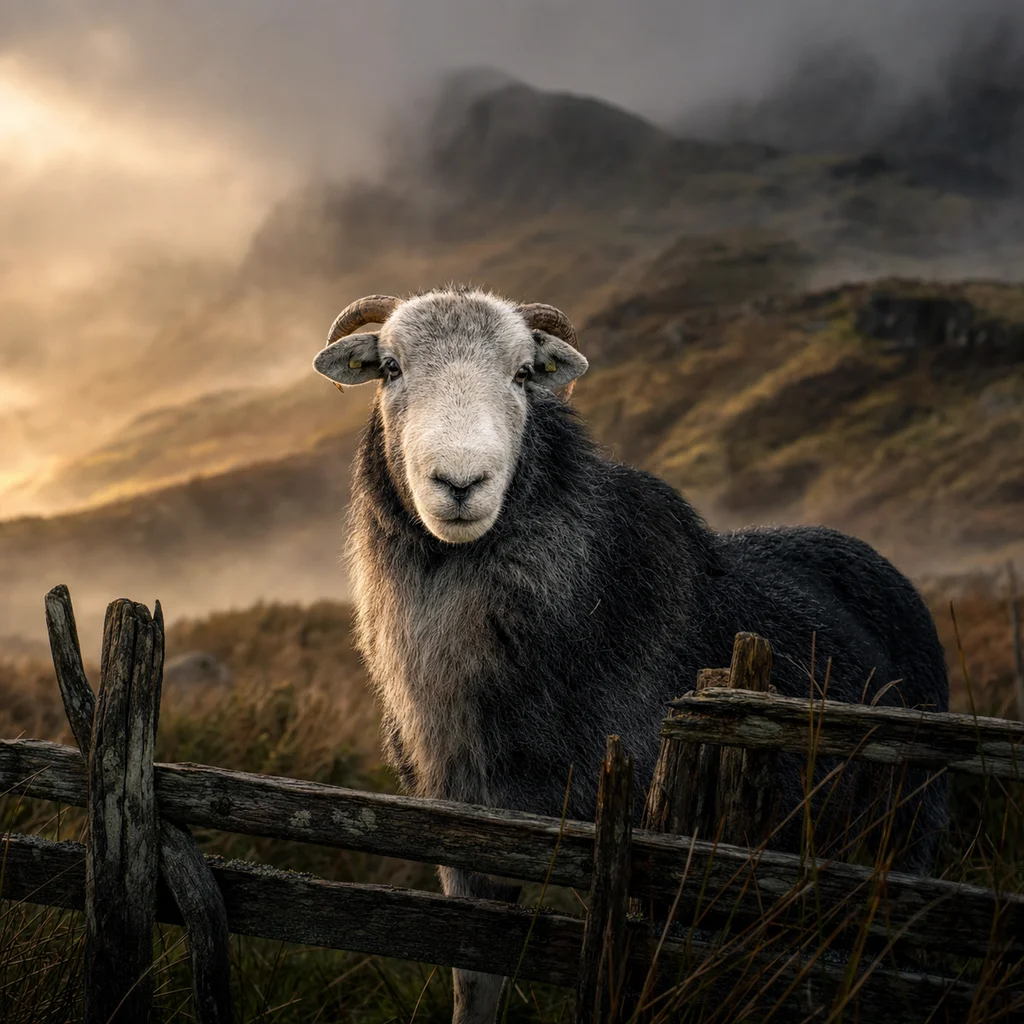
 Heritage Breeds
Herdwick
About the breed
The Herdwick is the quintessential mountain sheep of the English Lake District, revered by connoisseurs for its intense, game-like depth of flavor. These hardy animals are the architects of the Cumbrian landscape, thriving on rugged fells where other breeds would perish. To the culinary world, Herdwick represents the pinnacle of heritage lamb, offering a complexity that reflects its wild, high-altitude grazing. It is a slow-maturing breed that prioritizes depth of character and mineral richness over rapid industrial growth.
Roots & Heritage
Believed to have been introduced by Norse settlers over a millennium ago, the Herdwick is one of Britain’s oldest and most iconic native breeds. They are synonymous with the rugged mountains of Cumbria, where they have been bred for centuries to withstand the harshest climates in England. Their cultural significance was cemented by the author Beatrix Potter, a dedicated breeder who helped preserve the lineage from extinction. Today, 'Lakeland Herdwick' enjoys Protected Designation of Origin (PDO) status, ensuring its geographical and genetic authenticity.
Meat Profile
The meat is notably darker than commercial lamb, possessing a rich, ruby-red hue and a fine, dense grain. Due to their slow maturation and wild diet of heather, mosses, and mountain grasses, the fat is exceptionally flavorful with a high melting point and a herbal complexity. The flavor profile is uniquely 'gamey'—a savory intensity that lingers on the palate without the cloying greasiness often associated with younger, fat-heavy breeds.
In the Kitchen
Because the meat is leaner and more muscular than lowland lamb, it benefits from techniques that respect its structure, such as slow-roasting the shoulder or leg to gently melt the connective tissues. Prime cuts like the loin or rack should be cooked to a precise medium-rare to preserve the delicate mineral notes and succulent texture. Avoid overcooking, as the low intramuscular fat can lead to dryness if the heat is too aggressive. Pair with simple, earthy accompaniments that do not mask its distinctive wild character.