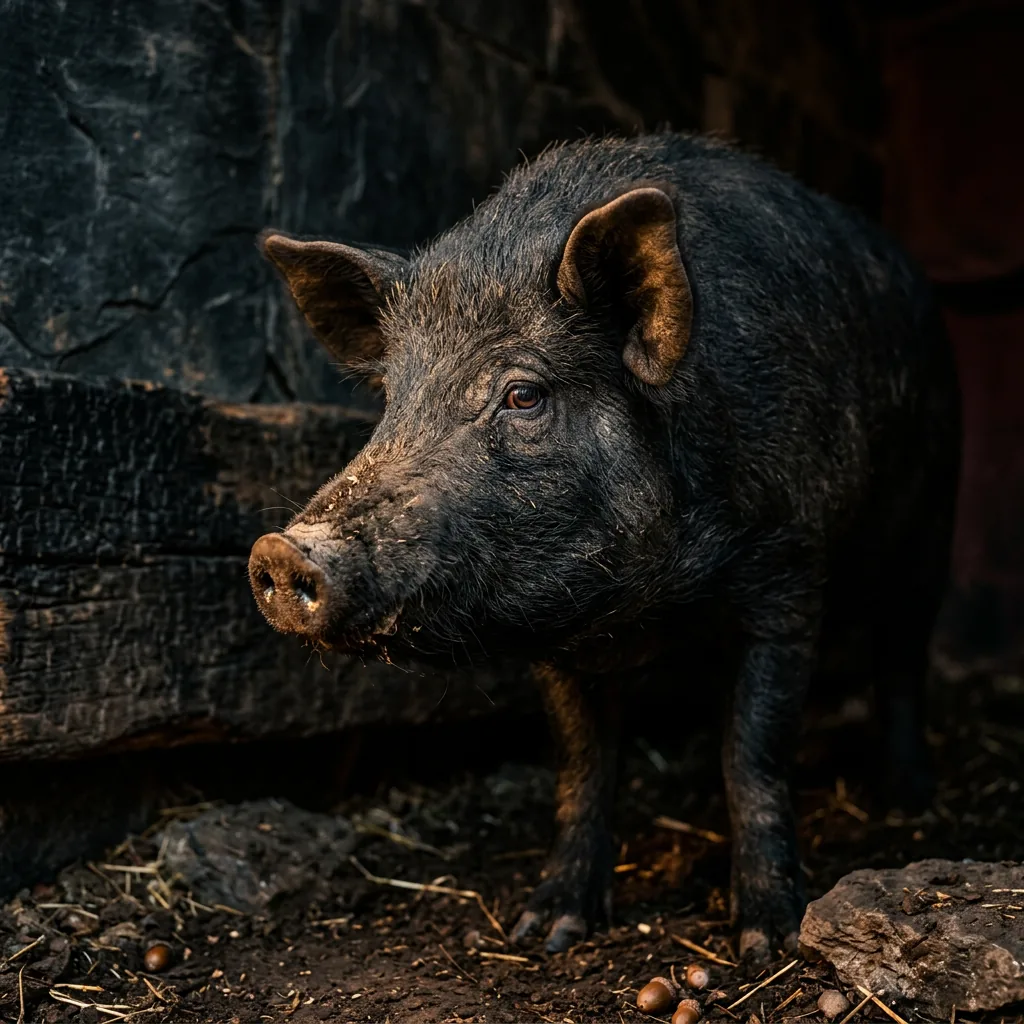
About the breed
Iberian Cebo-fed pork represents the entry-point into the world of the legendary Pata Negra, offering a sophisticated culinary experience defined by superior genetics. While these pigs are finished on high-quality grains rather than acorns, they retain the breed's unique biological ability to infiltrate fat into the muscle fibers. This results in a succulent, deeply flavored meat that far surpasses conventional pork in both texture and complexity. It is highly prized by chefs for its consistency and the luxurious mouthfeel provided by its rich marbling.
Roots & Heritage
The breed is native to the Iberian Peninsula, where it has evolved over millennia within the Mediterranean ecosystem. The 'Cebo' classification was formalized under Spanish law to distinguish pigs fed on certified cereals and legumes, ensuring year-round production of premium Iberian pork. Unlike the seasonal Bellota variety, Cebo production allows for a steady supply while maintaining the strict genetic standards of the Iberian lineage. It represents a vital part of the Spanish heritage, blending ancient genetics with modern, controlled dietary practices.
Meat Profile
The meat is characterized by a vibrant dark red color, contrasting beautifully with its creamy white, soft-melting fat. Its profile is intensely savory and meaty, lacking the heavy nuttiness of acorn-fed versions but offering a cleaner, more versatile flavor. The high intramuscular fat content ensures the meat remains exceptionally moist during cooking, delivering a buttery texture that dissolves on the palate. Its lipid profile is rich in oleic acid, making the fat both healthier and more aromatic than standard pork.
In the Kitchen
To maximize the potential of Iberian Cebo, cuts like the Secreto, Presa, or Pluma should be cooked using high-heat methods such as searing or grilling to render the abundant fat. It is best served medium-rare to medium (approximately 54-58°C internal temperature) to preserve its delicate juices and silky texture. Overcooking should be strictly avoided, as it causes the precious intramuscular fat to escape, leaving the meat dry. Resting the meat after cooking is essential to allow the internal fats to stabilize and redistribute.