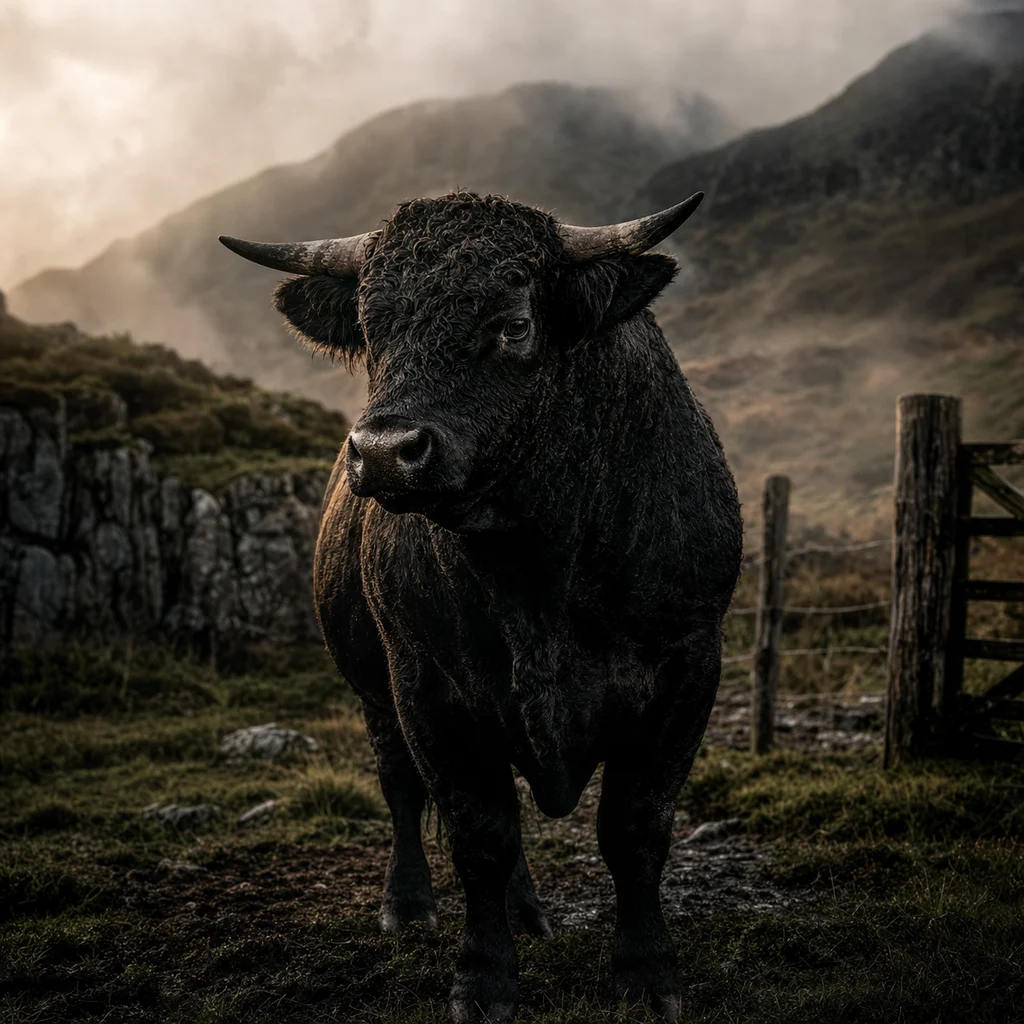
About the breed
The Maine-Anjou, officially known in France as Rouge des Prés, is one of the heaviest and most imposing beef breeds in the world. Celebrated by connoisseurs for its impressive scale and exceptional carcass traits, it represents a pinnacle of French livestock heritage. It offers a unique combination of massive frame and culinary finesse, making it a sought-after choice for premium butchery and high-end gastronomy.
Roots & Heritage
Originating in the 19th century within the Loire Valley, the breed was developed by crossing the hardy local Mancelle cattle with British Durham (Shorthorn) stock. This strategic union combined French environmental resilience with the superior marbling and early maturity of the English lineage. In 2004, the French population was renamed Rouge des Prés, and specific production in its home region is protected under the prestigious AOP (Appellation d'Origine Protégée) status.
Meat Profile
The meat is characterized by a deep, vibrant red hue and remarkably fine muscle fibers despite the animal's large size. Thanks to its Shorthorn ancestry, it possesses excellent intramuscular fat distribution, resulting in a buttery texture and an intense, savory flavor profile. The fat is typically firm and snowy white, providing a clean, rich finish on the palate that distinguishes it from lighter breeds.
In the Kitchen
To honor the breed's quality, primary cuts like the côte de boeuf should be prepared using high-heat methods to develop a robust Maillard crust while keeping the interior succulent. It is best served rare to medium-rare to preserve the delicate structure of its fibers and ensure the marbling fully renders. Given the density of the muscle, a generous resting period after cooking is essential to allow the juices to redistribute perfectly.