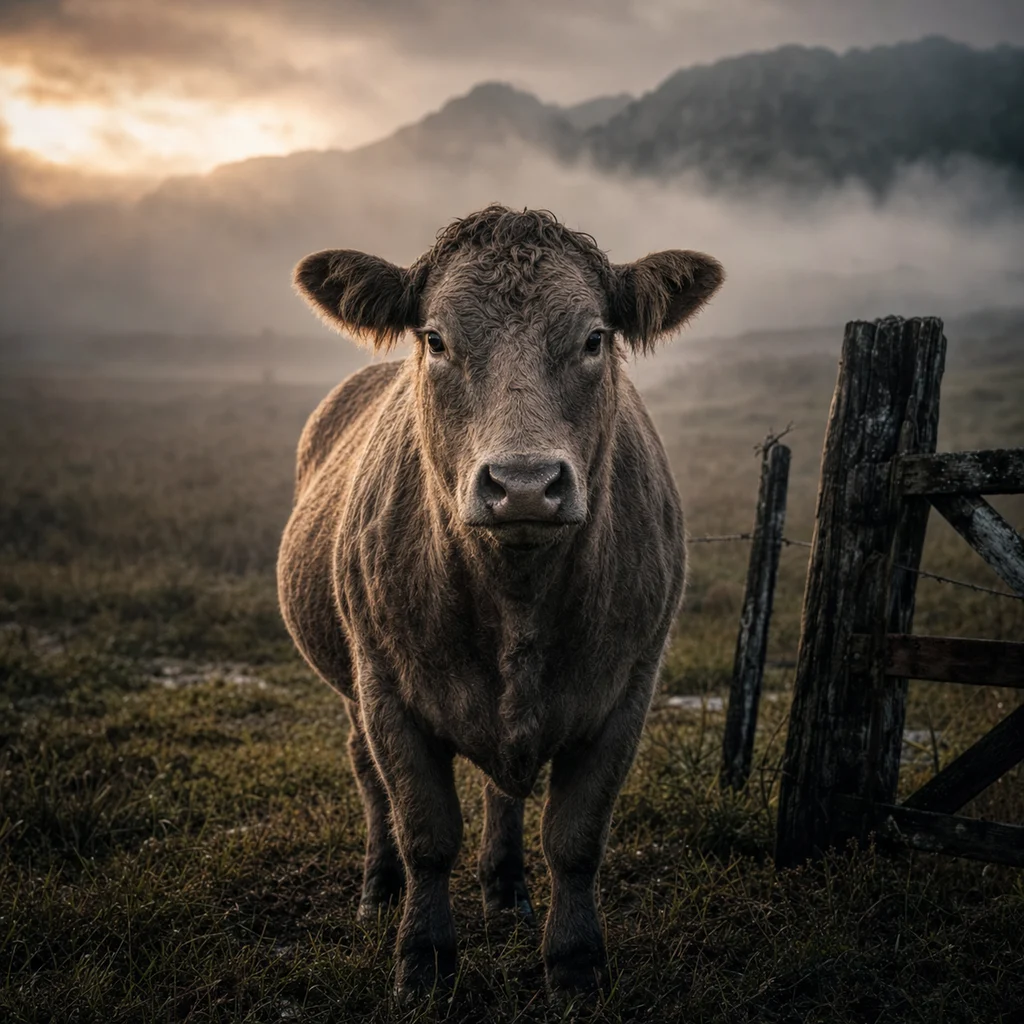
About the breed
The Murray Grey is a cornerstone of Australian premium beef, celebrated for its docile nature and distinctive silver-grey coat. It bridges the gap between the intense marbling of the Angus and the structural integrity of the Shorthorn, resulting in a world-class carcass. Connoisseurs prize it for its consistent tenderness and the sophisticated balance of intramuscular fat that avoids excessive external waste.
Roots & Heritage
Emerging from a serendipitous cross of a black Angus bull and a roan Shorthorn cow in 1905 at the Thologolong station, this breed was developed in the fertile Murray River Valley. Originally a fluke of genetics, its superior beef qualities led to the formal establishment of the breed society in 1962. It has since become a global contender, particularly favored in high-end Japanese and Korean export markets for its feedlot performance.
Meat Profile
Characterized by exceptional intramuscular marbling without the burden of excessive external seam fat, Murray Grey beef offers a buttery texture and a clean, nutty finish. The meat displays a vibrant cherry-red hue and boasts some of the highest genetic tenderness scores (GeneSTAR) in the industry. Its fine-grained fiber structure ensures a melt-in-the-mouth experience that rivals the finest heritage breeds.
In the Kitchen
To honor its natural tenderness, primary cuts like the ribeye or striploin should be cooked to medium-rare using dry-heat methods like cast-iron searing or grilling. The low external fat cover means it benefits from careful temperature control to prevent drying, while the high marbling renders beautifully at moderate heat. Resting is critical for at least five to ten minutes to allow the internal juices to stabilize within its fine-textured fibers.