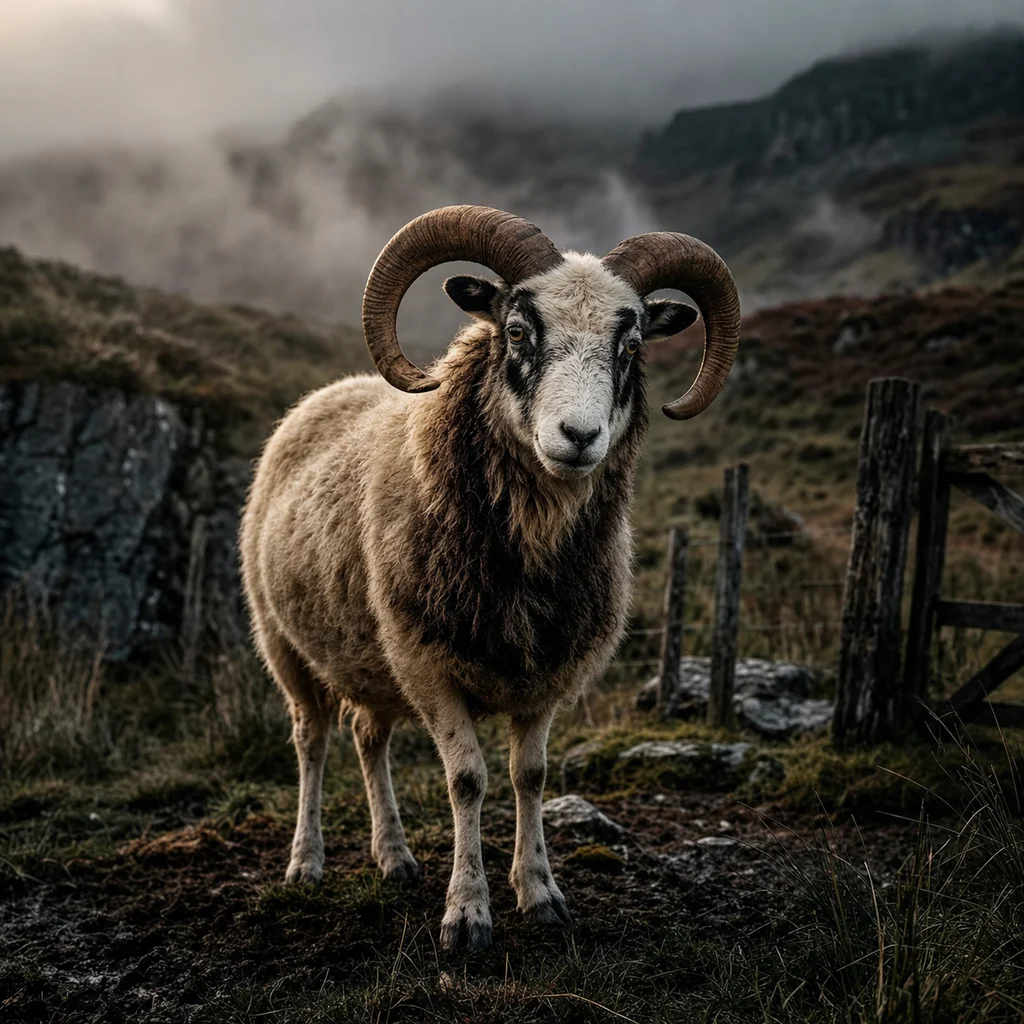
 Heritage Breeds
Navajo-Churro
About the breed
The Navajo-Churro is a resilient, heritage sheep breed and a cornerstone of Southwestern American culinary and cultural identity. Renowned among connoisseurs for its lean yet complex profile, it offers a 'taste of the desert' that is impossible to replicate through industrial farming. Unlike modern commercial breeds, it possesses a primitive elegance that reflects centuries of adaptation to the high-desert plateaus of the Navajo Nation. It is considered a gourmet rarity, prized for its clean finish and lack of heavy lanolin notes.
Roots & Heritage
Descended from the Spanish Churra sheep brought by Conquistadors in the 16th century, this breed became the lifeblood of the Navajo (Diné) people. Following near-extinction due to mid-20th-century government livestock reduction programs, the breed was saved by dedicated conservationists and tribal elders. Today, it is recognized as a critical heritage breed and is featured in the Slow Food Ark of Taste, representing a unique North American terroir.
Meat Profile
The meat is remarkably lean compared to commercial lamb, featuring a fine-grained texture and a distinctively sweet, herbal flavor profile derived from grazing on desert sage and juniper. Its fat is clean and light, lacking the tallowy character often found in grain-finished breeds. The muscle color is a vibrant rose-red, indicating a slow-growth cycle and a life of active foraging on the range.
In the Kitchen
Due to its lean nature, Navajo-Churro meat should be handled with care, favoring low-and-slow methods or precise quick-searing to prevent drying out. Prime cuts like the loin or rack are best served medium-rare to highlight the delicate, sage-infused aromatic qualities of the fat. Secondary cuts, such as the shoulder or shanks, transform beautifully when braised with southwestern aromatics like dried chilies and garlic.