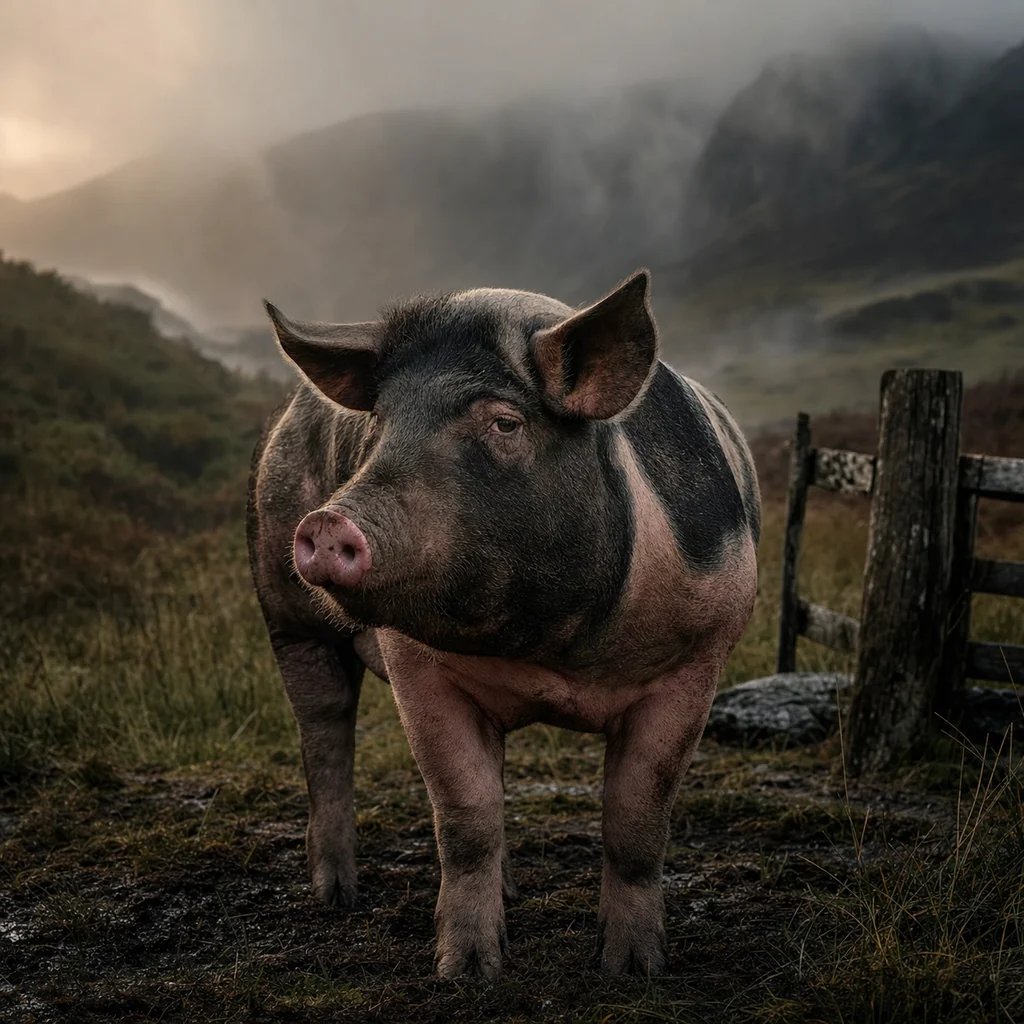
 Heritage Breeds
Pietrain
About the breed
The Pietrain is celebrated as the world's most muscular pig, renowned for an extraordinary lean-to-fat ratio that defines the pinnacle of meat-type swine. To the master butcher, it represents the ultimate yield breed, offering massive primal cuts with significantly less waste than traditional lard-type breeds. While it lacks the heavy marbling of heritage breeds, it is the gold standard for high-protein, lean pork production in the modern culinary landscape.
Roots & Heritage
Originating in the 1950s in the Belgian village of Piétrain in the Brabant region, this breed emerged from local stocks likely influenced by Berkshire and Bayeux genetics. It rose to prominence during the post-war era when consumer demand shifted sharply toward leaner meat and away from animal fats. Today, it serves as the cornerstone terminal sire across Europe, particularly in Germany and the Benelux countries, for producing high-quality lean carcasses.
Meat Profile
The meat is characterized by its pale pink color and a remarkably firm texture with virtually no intramuscular marbling or external fat cover. It offers a clean, mild, and subtle flavor profile that is highly valued for its purity and lack of greasiness. The muscle fibers are dense, providing a substantial 'bite' and excellent water-binding capacity for processed meats.
In the Kitchen
Precision is paramount when cooking Pietrain pork, as the lack of fat provides no buffer against overcooking, which can lead to dryness. It is best suited for quick, high-heat methods like pan-searing or for controlled environments like sous-vide to preserve succulence. Expert chefs often use it for premium charcuterie, particularly boiled hams and lean loins, where its structural integrity and high yield are most beneficial.