About the breed
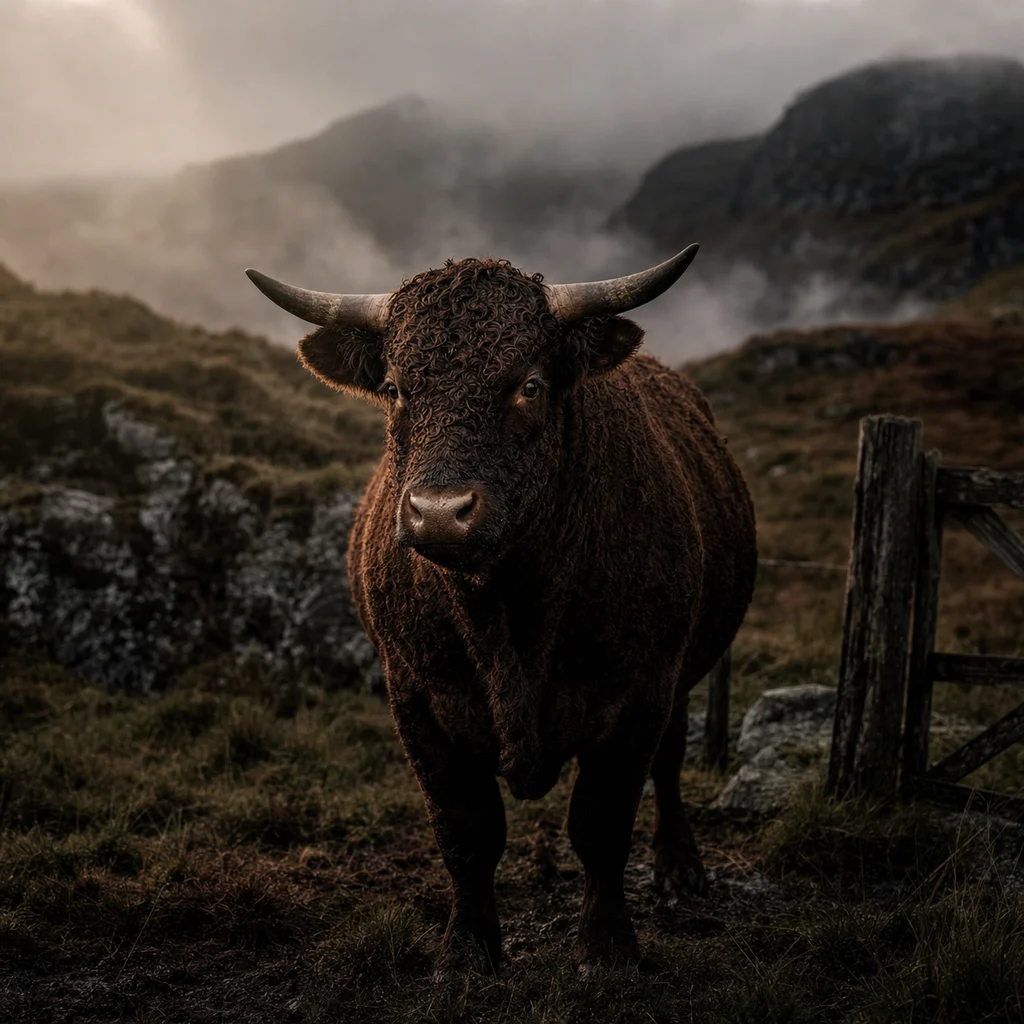
The Salers is a prestigious heritage breed from the Auvergne region, celebrated by connoisseurs for its remarkable hardiness and rustic elegance. Recognizable by its mahogany coat and lyre-shaped horns, it represents the soul of French mountain farming. It is highly regarded in the culinary world for delivering a sophisticated flavor profile that bridges the gap between lean continental beef and highly marbled heritage cuts.
Roots & Heritage
Originating in the volcanic Massif Central of France, the Salers is one of Europe's oldest breeds, with ancestry potentially depicted in ancient cave paintings. Historically a triple-purpose animal used for meat, milk, and draft, it was the cornerstone of the local economy, producing milk for the PDO-protected Cantal and Salers cheeses. Today, it remains a vital heritage breed, primarily focused on high-quality beef production and maternal excellence.
Meat Profile
Salers beef is characterized by a deep, vibrant red color and a surprisingly fine intramuscular marbling for a continental breed. The flavor is intense and mineral-rich, reflecting its mountain pasture diet, with a firm but tender texture that offers a satisfying bite. It provides a clean finish on the palate with distinct notes of terroir and natural aging.
In the Kitchen
For premium cuts like the entrecôte, dry-aging for at least 28 days is essential to fully develop its textural potential and concentrate the flavor. Chefs recommend a high-heat sear to create a mahogany crust, followed by a gentle resting period to ensure even heat distribution. Its robust flavor also makes it an ideal candidate for traditional French slow-cooking methods, where the meat holds its structure while enriching the braising liquid.