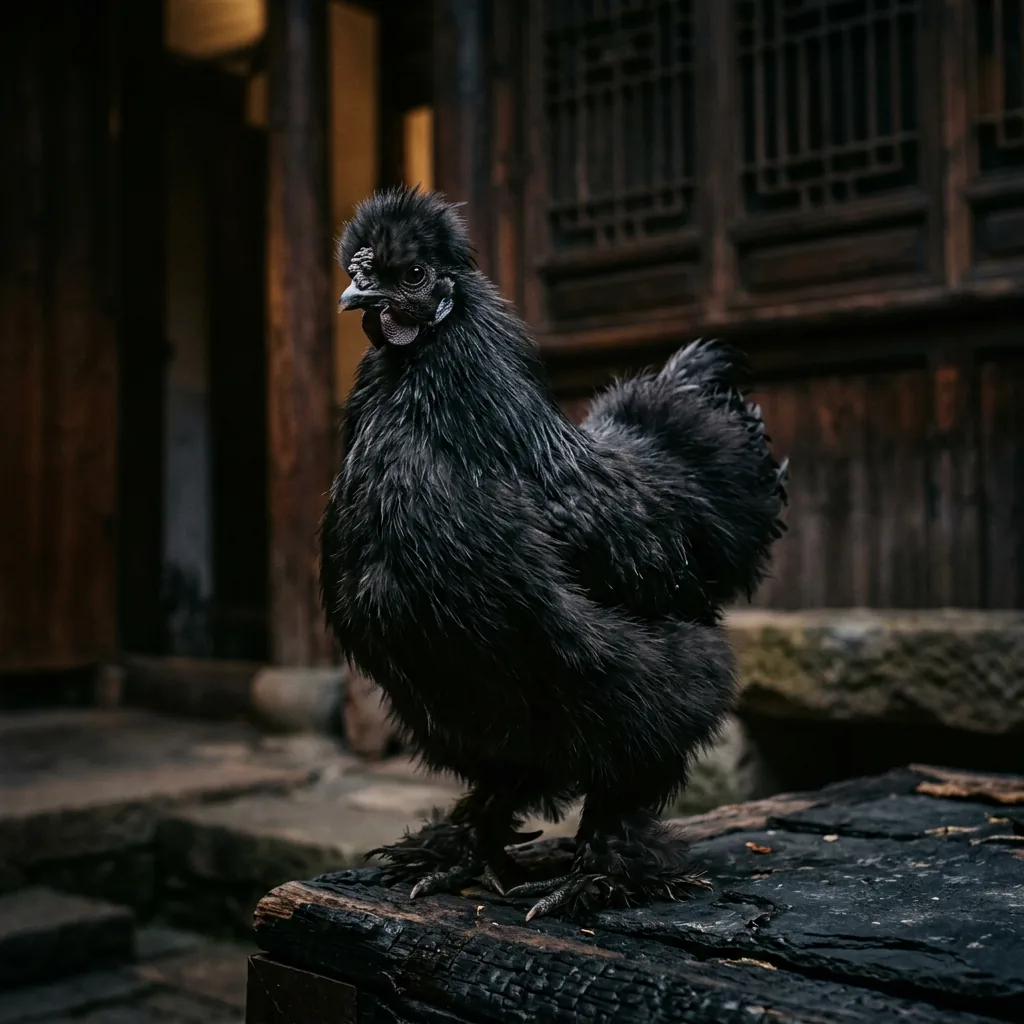
About the breed
The Silkie is an extraordinary poultry breed renowned for its jet-black skin, bones, and meat, coupled with distinctively fluffy, fur-like plumage. Among connoisseurs, it is celebrated as a luxury specialty, prized less for its muscle mass and more for its intense nutrient density and restorative properties. Its striking appearance and unique biological makeup place it in a category of its own within high-end gastronomy.
Roots & Heritage
Originating in ancient China with documentation dating back over a millennium, the Silkie was famously described by Marco Polo during his 13th-century travels. It has been a cornerstone of Traditional Chinese Medicine (TCM) for centuries, valued for its supposed medicinal benefits. Today, it remains a prestigious heritage breed across East Asia and in specialized Western poultry circles.
Meat Profile
The meat is characterized by a deep indigo-black hue and a lean, firm texture that differs significantly from conventional broilers. It offers a complex, slightly gamey, and earthy flavor profile with subtle sweet notes. The skin is thin yet rich in melanin, providing a unique aesthetic and tactile experience on the plate.
In the Kitchen
Expert preparation focuses on long-simmered herbal soups and tonic broths to extract the bird's deep flavors and nutrients. Roasting or quick-searing is generally avoided as the lean meat can toughen; instead, a "low and slow" approach with aromatics like ginger and red dates is preferred. For a modern culinary application, gentle poaching in a flavored master stock preserves its delicate, firm texture.