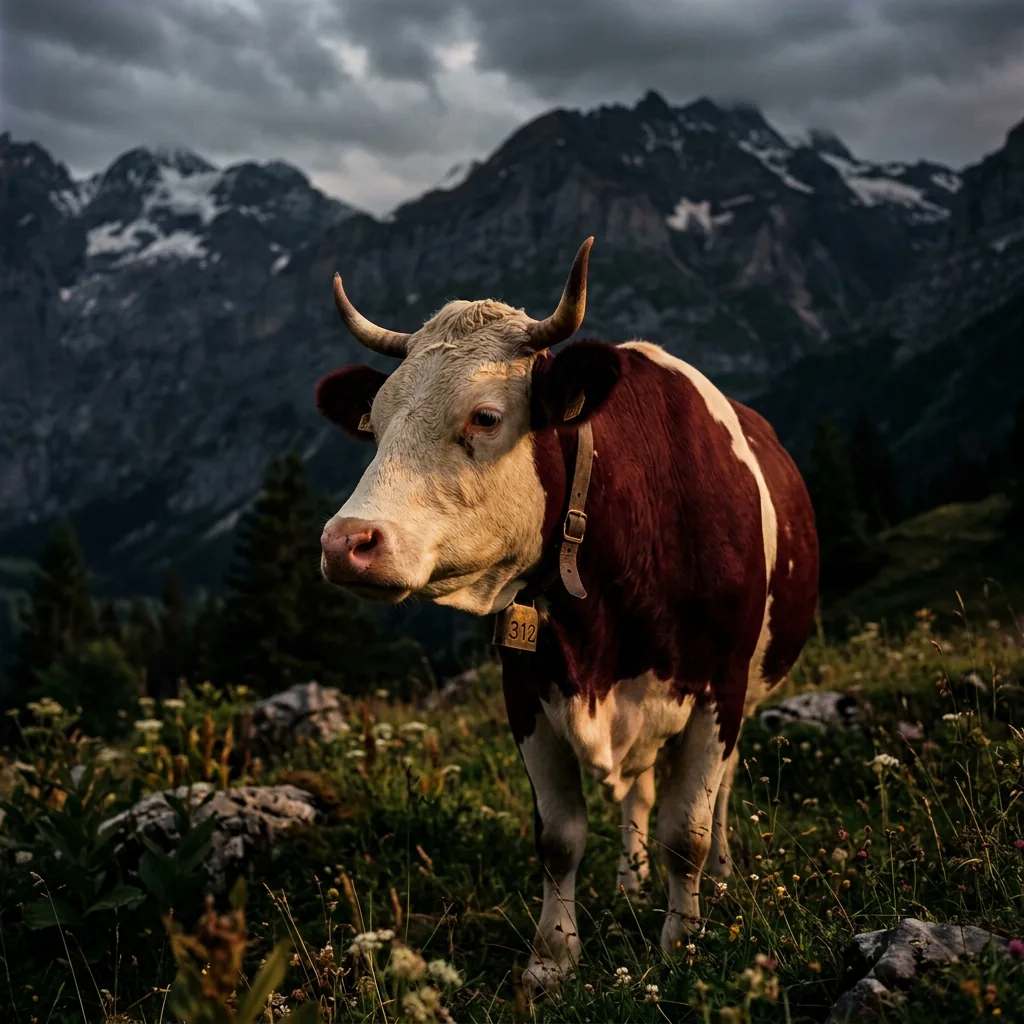
About the breed
The Simmental, or Fleckvieh, represents the pinnacle of European dual-purpose cattle, striking a perfect balance between muscle development and milk quality. Known among connoisseurs for its honest, beefy character, it avoids the excessive fattiness of modern Angus while maintaining a refined texture. Its reputation is built on centuries of Alpine adaptation, resulting in a robust animal that produces some of the world's most versatile and sought-after beef.
Roots & Heritage
Originating in the Simme Valley of the Swiss Bernese Oberland, the breed has been documented since the Middle Ages for its resilience. Over centuries, it spread across the Alpine region, leading to the development of the Bavarian and Austrian Fleckvieh strains. Today, it is globally recognized as one of the oldest and most influential cattle lineages, often benefiting from strict regional rearing traditions in Central Europe.
Meat Profile
The meat is characterized by a distinctively fine-grained texture and a sophisticated marbling that is present but never overwhelming. One of its most striking features is the creamy, pale-yellow fat, a direct result of a forage-heavy diet rich in carotenoids from Alpine grasses. The flavor is deep and savory, offering a complex umami profile that reflects the mineral-rich pastures of its heritage.
In the Kitchen
For premium cuts like the Ribeye or Entrec$te, a dry-aging period of at least 28 to 42 days is recommended to maximize tenderness and flavor depth. Use high heat to create a Maillard crust that complements the yellow fat, aiming for a medium-rare finish to preserve the internal moisture. Beyond steaks, the Simmental’s lean muscle structure makes it the gold standard for traditional European boiled beef dishes and slow-braised stews.