 Heritage Breeds
Suffolk
About the breed
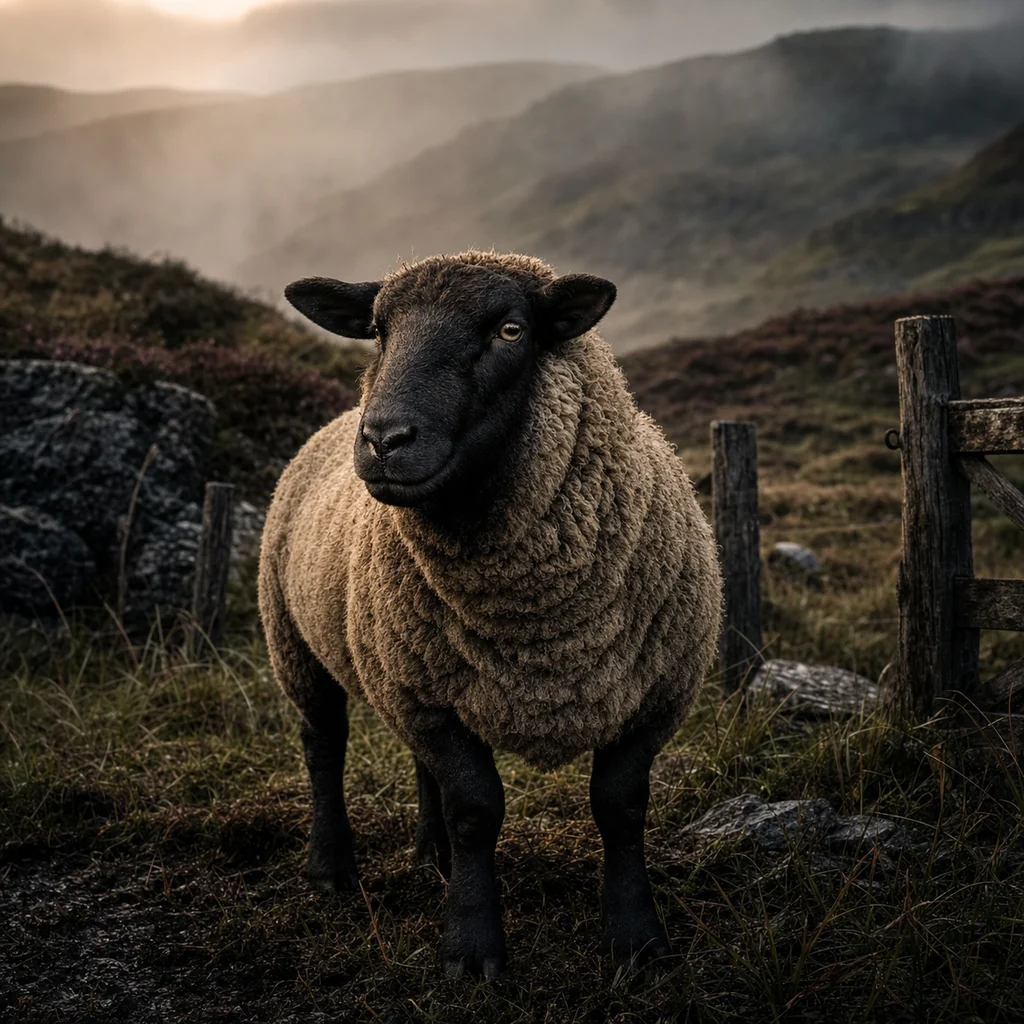
The Suffolk is widely regarded as the premier terminal sire breed in the world, renowned for its exceptional growth rates and superior carcass quality. Characterized by its iconic black face and legs, it bridges the gap between traditional heritage and modern commercial excellence. For connoisseurs, Suffolk lamb offers a robust, quintessential lamb flavor that remains consistent and reliable. Its muscular build ensures a high meat-to-bone ratio, making it a favorite among high-end butchers and chefs seeking volume and quality.
Roots & Heritage
Developed in the early 1800s in the Suffolk region of England, the breed was born from crossing the hardy Norfolk Horned ewes with meaty Southdown rams. This hybridization combined the ruggedness of the East Anglian heathland sheep with the superior meat conformation of the Southdown. It quickly became the dominant meat sheep in the UK and eventually the most exported terminal sire globally. The Suffolk Sheep Society was established in 1886 to preserve and refine these elite meat-producing genetics.
Meat Profile
Suffolk lamb is celebrated for its deep, savory profile and lean, well-developed muscle structure. The meat typically exhibits a vibrant ruby-red color and a fine texture that holds its shape exceptionally well under various cooking methods. While leaner than some traditional mountain breeds, the fat is clean and white, providing a sweet finish without being overly greasy. It offers a balanced marbling that enhances succulence while maintaining a firm, satisfying bite.
In the Kitchen
Given its lean but muscular nature, Suffolk lamb is ideally suited for dry-heat methods like roasting and grilling. The loin and rack respond beautifully to a medium-rare finish, allowing the natural sweetness of the grass-fed fat to shine. Overcooking should be strictly avoided as the lean muscle can toughen; resting the meat for at least half the cooking time is essential for optimal juice retention. For secondary cuts like the shoulder, slow-braising reveals a deep complexity of flavor and a fork-tender texture.