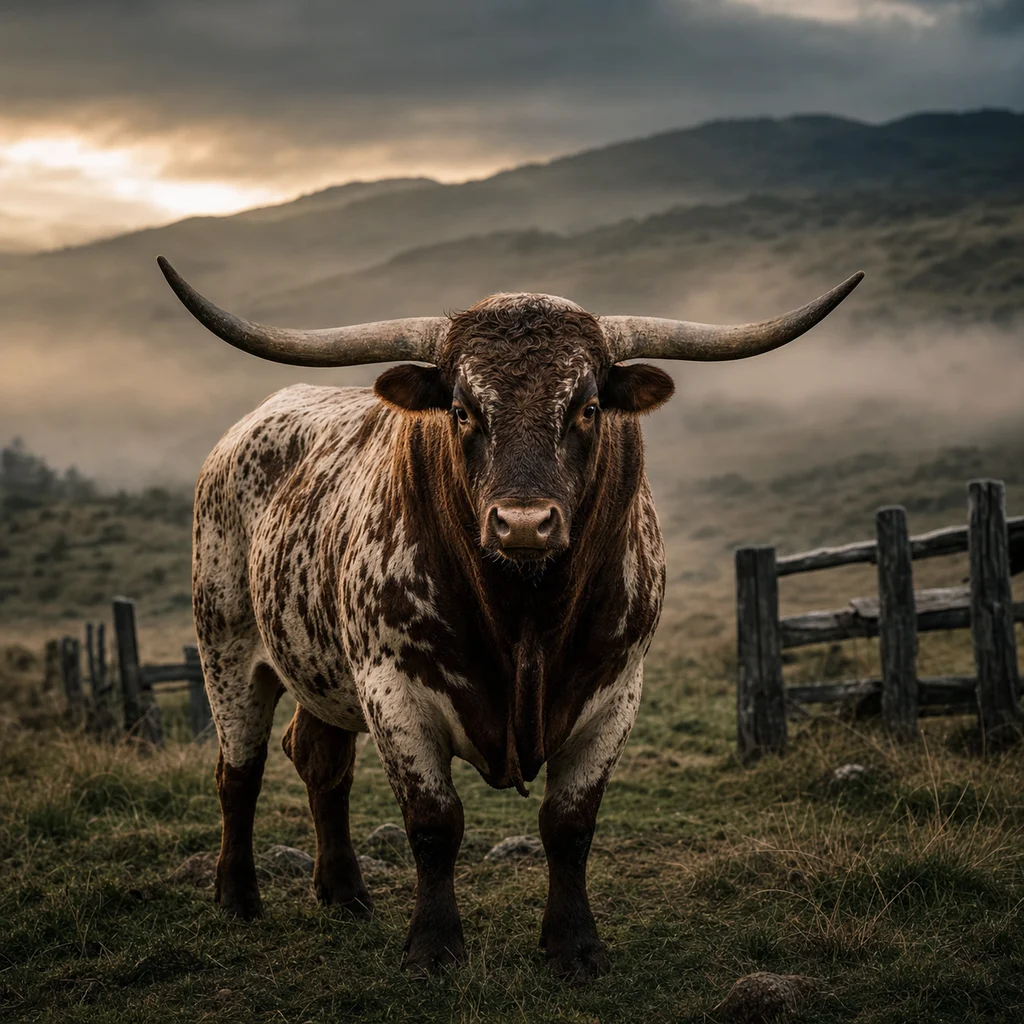
 Heritage Breeds
Texas Longhorn
About the breed
The Texas Longhorn is a legendary icon of the American West, celebrated by connoisseurs for its incredibly lean and nutrient-dense beef. Unlike modern industrial breeds, it possesses a rugged elegance and a flavor profile that mirrors the wild rangelands it once inhabited as a feral animal. Its status as a premier heritage breed makes it a prized choice for health-conscious gourmets seeking an authentic, grass-fed depth that modern feedlot cattle cannot replicate.
Roots & Heritage
Descended from Spanish Retinta and Andalusian cattle brought by conquistadors in the 16th century, the breed evolved through three centuries of natural selection in the Texas wild. These cattle formed the backbone of the great 19th-century trail drives before being nearly driven to extinction by the influx of British beef breeds. Today, they are preserved through dedicated conservation programs as a vital link to North American agricultural history.
Meat Profile
The meat is distinctively lean, often containing less fat and cholesterol than chicken breast, yet it offers a surprisingly robust, mineral-driven depth. The fat that does exist is high in Omega-3 fatty acids and possesses a clean, non-greasy finish on the palate. The texture is firm with a fine grain, delivering a concentrated beefy flavor without the buttery heaviness typical of grain-finished commercial beef.
In the Kitchen
Due to its extremely low intramuscular fat, the primary rule is to cook it at lower temperatures or for significantly shorter durations to avoid toughening. Steaks should ideally be served no further than medium-rare to preserve succulence and the integrity of the lean muscle fibers. A generous resting period is non-negotiable, as it allows the juices to redistribute within the dense protein structure after searing.